
Mexico: Alstom Wins €920M Deal for New DMU Trains
Mexico’s Trenes del Norte project gets a €920M boost with Alstom, delivering 47 DMU trains and modernizing rail infrastructure for improved safety.
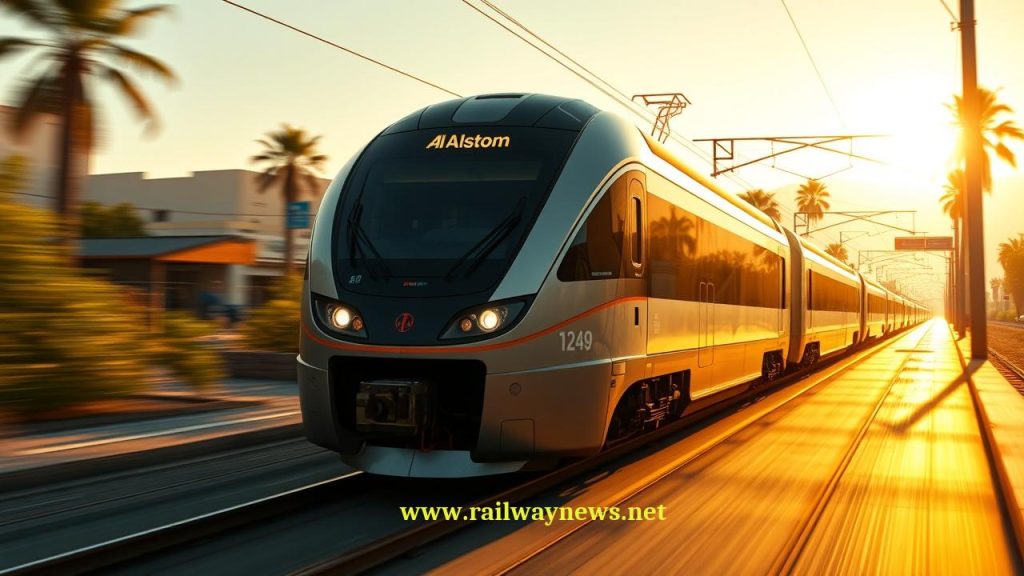
MEXICO CITY – Alstom has secured a landmark €920 million (approx. 20.2 billion MXN) contract to supply 47 modern Diesel Multiple Unit (DMU) trains for Mexico’s ambitious ‘Trenes del Norte’ project, with manufacturing to be heavily localized at its plant in Ciudad Sahagún. The deal, announced on December 15, 2025, represents a critical step in the country’s National Development Plan 2025-2030 and aims to overhaul passenger services on key economic corridors, a move underscored by recent safety concerns on the nation’s rail network.
| Category | Details |
|---|---|
| Project Name | Trenes del Norte |
| Contract Value | Approx. €920 million / 20.2 billion MXN |
| Supplier | Alstom |
| Client | Railway Transport Regulatory Agency (ARTF), Mexico |
| Fleet | 47 DMU Trains (33 long-haul, 14 short-haul) |
| Train Platform | Alstom Adessia Stream (catenary-free) |
| Top Speed | Approx. 165 km/h |
| Local Content | 76.6% to be manufactured in Mexico |
The detailed agreement signed with Mexico’s Railway Transport Regulatory Agency (ARTF) covers the design, manufacturing, and commissioning of 47 passenger trains. The fleet will consist of 33 long-haul units and 14 short-haul units destined for vital routes including Mexico City–Querétaro–Irapuato and Saltillo–Monterrey–Nuevo Laredo. Beyond the rolling stock, the contract includes a five-year maintenance package, the outfitting of depots, and the provision of inspection and refuelling stations, ensuring a turnkey solution for the new services. Alstom will also deliver technical training for local staff, reinforcing its long-term commitment to the project’s operational success.
The trains are based on Alstom’s proven Adessia Stream platform, a versatile solution designed for non-electrified routes. Each 100-metre-long unit can be coupled to form up to eight-car configurations, offering flexible capacity for approximately 300 passengers on long-distance services and up to 600 for commuter journeys. Engineered for a top speed of 165 km/h, the trains feature modern amenities such as real-time information systems and full accessibility for passengers with reduced mobility. In a unique tribute to national heritage, the train’s design is inspired by Mexican culture, with an aerodynamic front reminiscent of a puma’s gaze and a colour palette drawn from the historic Codex Boturini.
This major investment in passenger rail comes at a pivotal moment for Mexico. The project is a cornerstone of the 2025-2030 National Development Plan, signalling the government’s renewed focus on public transport infrastructure. The urgency of this modernization was tragically highlighted in late December 2025 by the derailment of an Interoceanic Train in Oaxaca, which resulted in multiple fatalities and injuries. The ‘Trenes del Norte’ initiative, with its emphasis on new, reliable rolling stock and predictive maintenance via Alstom’s HealthHub system, is seen as a direct response to the need for enhanced safety and efficiency across the country’s railway network.
Key Takeaways
- Strategic Investment: A €920 million contract for 47 trains marks a significant government commitment to revitalizing passenger rail on Mexico’s core economic corridors.
- Domestic Manufacturing Boost: With over 76% of train content produced locally at the Ciudad Sahagún plant, the project will create hundreds of skilled jobs and strengthen the national supply chain.
- Modernization and Safety: The new fleet promises a major upgrade in passenger experience, reliability, and safety, addressing critical needs highlighted by recent incidents on the Mexican rail network.
Editor’s Analysis
Alstom’s ‘Trenes del Norte’ contract is more than a rolling stock deal; it’s a blueprint for public-private partnership in emerging rail markets. By committing to an exceptionally high level of local content (76.6%), Alstom not only secures a major order but also embeds itself as a strategic partner in Mexico’s long-term industrial development. The choice of modern DMUs over full electrification reflects a pragmatic approach to infrastructure renewal, enabling rapid deployment on key routes where catenary installation would be prohibitively expensive or time-consuming. For the global rail industry, this project demonstrates that highly efficient, diesel-powered trains remain a critical transitional technology for countries expanding their passenger services, while Alstom’s “in Mexico, for Mexico” strategy sets a high bar for competitors vying for large-scale national transport projects.
Frequently Asked Questions
- What is the ‘Trenes del Norte’ project?
- The ‘Trenes del Norte’ is a major Mexican railway initiative to introduce modern passenger train services on key corridors, including Mexico City–Querétaro–Irapuato and Saltillo–Monterrey–Nuevo Laredo. It is part of the country’s National Development Plan 2025-2030 to improve public transportation and connectivity.
- Where will the new Alstom trains be built?
- The trains will be manufactured at Alstom’s plant in Ciudad Sahagún, Hidalgo, Mexico. This facility is Alstom’s largest in the Americas, and the project mandates that 76.6% of the train content will be produced locally, boosting the national railway industry.
- What is unique about the design of these trains?
- The train’s aesthetic is deeply rooted in Mexican culture. The design draws inspiration from the Nahuatl language and the Codex Boturini, using earthy tones. The front of the train is designed to evoke the gaze of a puma, a symbol of strength and agility in Mexican heritage.

Railway infrastructure, rolling stock and transport technologies specialist focused on global rail industry developments, high-speed rail systems, signaling technologies and freight transportation. Covering railway investments, public transport modernization, rail operations and international mobility projects across Europe, Asia and North America.
RELATED POSTS

October 8, 2026 1:15 pm
Alstom secured a €1bn contract to build 13 automated trains,...

October 1, 2026 7:09 am
United States regulators confirmed a September 30 deadline for the...

October 8, 2026 12:18 pm
Siemens Mobility signed an agreement with VinSpeed to supply 350...

October 4, 2026 5:14 pm
Alstom secured a CA$4.7 billion order from VIA Rail Canada...

October 5, 2026 6:12 pm
AECOM and Jacobs secured a contract in September 2026 to...

October 6, 2026 12:16 am
FTA awarded $233 million in grants to eight US rail...