
AI-Powered Trains: Revolutionizing Rail Safety
The introduction of semi-autonomous locomotives powered by AI technology marks a pivotal shift towards proactive safety measures within the rail industry, enhancing operational efficiency and reducing risks through real-time data processing and intelligent control systems like Rail Vision’s.
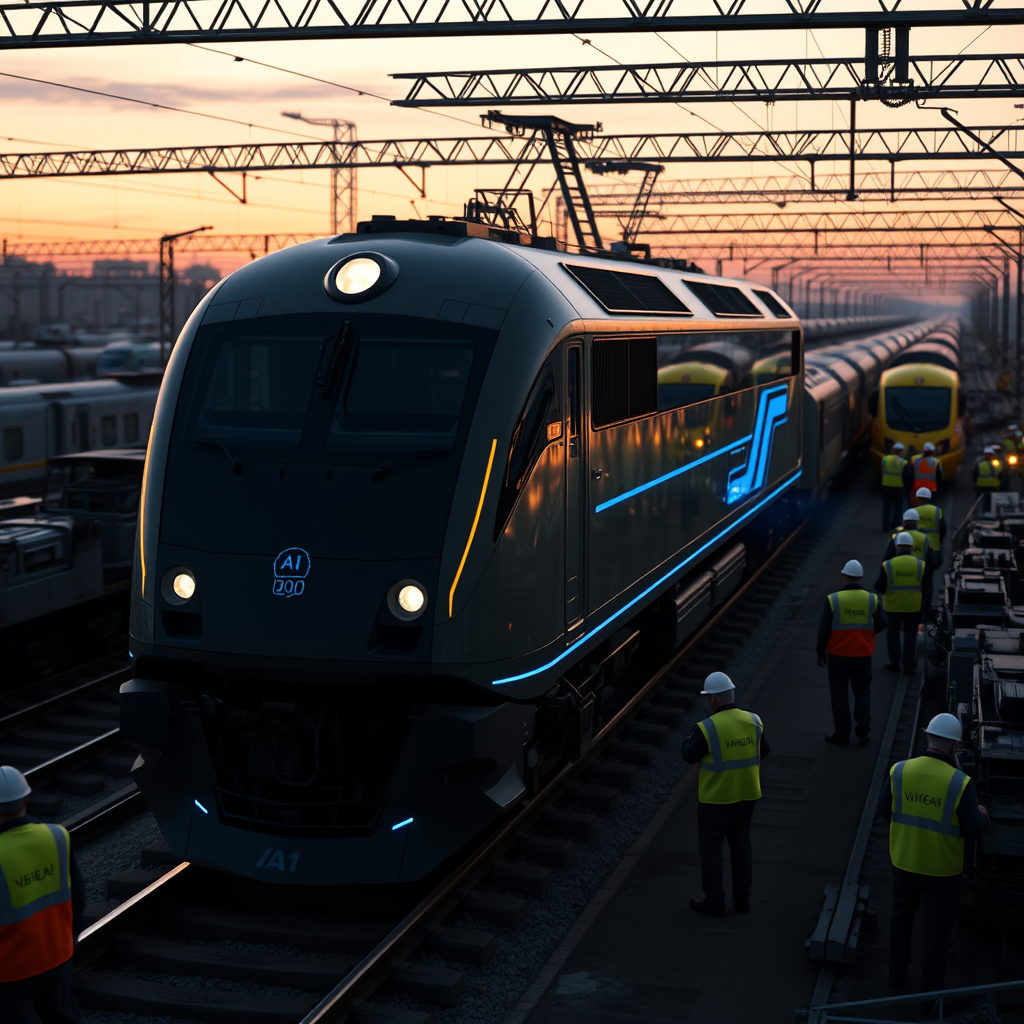
The railway industry stands on the cusp of a significant transformation, driven by the integration of advanced technologies. This article explores the recent introduction of semi-autonomous capabilities for locomotives, focusing on the implications for safety, efficiency, and the future of rail operations. The advent of systems like Rail Vision’s AI-powered technology signifies a paradigm shift from passive safety mechanisms to proactive, active control of locomotive movement. This development, poised for initial deployment in late 2024 on a major US rail fleet, marks a critical step toward autonomous rail operations. We will examine the technology behind this advancement, its operational benefits, its potential challenges, and its broader implications for the future of railway systems. This analysis will highlight the critical role of Artificial Intelligence (AI) and Intelligent Transportation Systems (ITS) in enhancing safety and operational efficiency within the rail sector.
AI-Powered Active Control for Shunting Operations
Rail Vision’s new system represents a significant departure from traditional passive safety systems. Instead of simply providing alerts, the system actively controls the locomotive’s throttle and brakes, using advanced AI algorithms to process real-time data from various sensors. This active control is particularly beneficial in shunting yards (areas where trains are assembled and disassembled), where the risk of collisions is high due to complex maneuvers in confined spaces and the presence of personnel and equipment. The AI’s ability to identify potential hazards – including people, vehicles, and animals – and instantaneously react to prevent collisions is a game-changer for rail safety.
Seamless Integration and Enhanced Operational Efficiency
A key feature of Rail Vision’s system is its seamless integration with existing locomotive control systems. This avoids the need for costly and disruptive retrofits, making the transition to semi-autonomous operation smoother and more cost-effective. The real-time insights provided by the system allow for improved operational efficiency. By optimizing braking and acceleration, the system can reduce wear and tear on equipment, lower fuel consumption, and increase overall throughput. This translates to significant cost savings for railway operators, along with a reduction in environmental impact.
Addressing Challenges and Mitigating Risks
While the benefits of semi-autonomous locomotives are undeniable, the transition presents certain challenges. Robust cybersecurity measures are crucial to protect the system from malicious attacks that could compromise its integrity and safety. The need for detailed training programs for railway personnel to work effectively alongside the AI system is equally important. Additionally, regulatory frameworks will need to evolve to accommodate the unique safety considerations associated with semi-autonomous operations. Careful consideration must also be given to the ethical implications of AI decision-making in critical safety scenarios.
The Future of Autonomous Rail: A Vision for the Industry
Rail Vision’s semi-autonomous system represents a critical stepping stone toward fully autonomous rail operations. The successful deployment of this technology validates the potential of AI and ITS to revolutionize the railway industry. The benefits extend beyond improved safety and efficiency, promising reduced operational costs, increased capacity, and enhanced environmental sustainability. However, realizing the full potential of autonomous rail requires continued investment in research and development, the establishment of clear safety standards and regulations, and the collaborative effort of industry stakeholders, researchers, and regulators. The successful integration of AI into railway operations offers a compelling vision for the future of transportation, one characterized by improved safety, enhanced efficiency, and reduced environmental impact. The transition, while challenging, promises to redefine the landscape of the rail industry, shaping a future where technological advancements drive a safer, more efficient, and sustainable rail network. This signifies a profound shift toward proactive safety management, moving beyond reactive measures and paving the way for more intelligent and responsive rail operations. The ongoing development and implementation of such systems will undoubtedly reshape the railway industry, setting new benchmarks for safety, efficiency, and operational excellence.

Railway infrastructure, rolling stock and transport technologies specialist focused on global rail industry developments, high-speed rail systems, signaling technologies and freight transportation. Covering railway investments, public transport modernization, rail operations and international mobility projects across Europe, Asia and North America.
RELATED POSTS

October 1, 2026 7:09 am
United States regulators confirmed a September 30 deadline for the...

October 8, 2026 1:15 pm
Alstom secured a €1bn contract to build 13 automated trains,...

October 4, 2026 5:14 pm
Alstom secured a CA$4.7 billion order from VIA Rail Canada...

October 8, 2026 12:18 pm
Siemens Mobility signed an agreement with VinSpeed to supply 350...

October 5, 2026 6:12 pm
AECOM and Jacobs secured a contract in September 2026 to...

October 4, 2026 11:08 pm
Sound Transit confirmed the September 30 opening of Seattle Pinehurst...