
LÜTZE Launches 22.5mm Four-Changeover 24-110V Railway Relay
LÜTZE TRANSPORTATION in Germany launched a 22.5mm four-changeover railway relay module featuring dual 24-110V coil inputs.
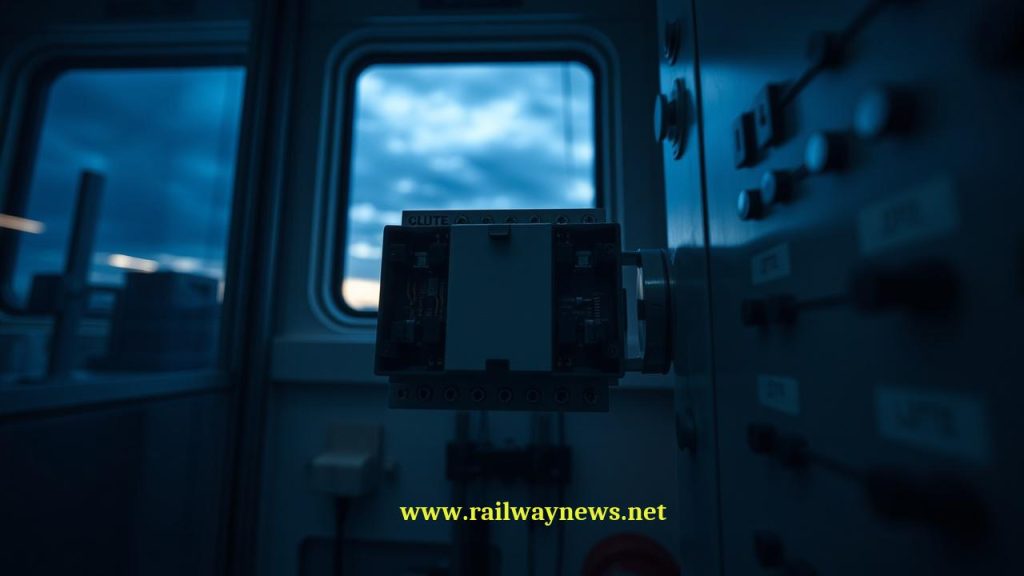
⚡ In Brief: LÜTZE TRANSPORTATION in Germany has launched a 22.5 mm wide four-changeover relay module for railway applications, featuring dual coil inputs to support on-board power systems from 24 V to 110 V.
WEINSTADT, GERMANY – LÜTZE TRANSPORTATION has expanded its railway component portfolio with a new four-changeover relay module. The new unit has a width of only 22.5 mm and is designed to operate across multiple on-board power systems, including 24 V, 36 V, 72 V, and 110 V. The module is delivered fully assembled under a single part number to reduce installation and storage costs.
What Are the Technical Specifications?
The module integrates four changeover contacts within a 22.5 mm housing, offering a compact alternative to larger contactors. It features two separate coil inputs with different activation thresholds: input A1.2 activates from 13 V for 24/36 V systems, while input A1.1 activates from 33 V for 72/110 V systems to prevent false triggering. The relay is permanently soldered to the PCB to eliminate contact problems from vibration (fretting corrosion), and its hard gold-plated contacts ensure reliable switching of low-load signals.
Key Technical Data
| Parameter | Value |
|---|---|
| Technology / System Name | LÜTZE Four-Changeover Relay Module |
| Total Value | Not disclosed |
| Parties Involved | LÜTZE TRANSPORTATION |
| Timeline / Completion | Product availability not specified |
| Country / Corridor | Germany (Global application) |
Where Does This Technology Stand in the Market?
The LÜTZE module’s primary competitive advantage is its high contact density in a narrow 22.5 mm profile. Competing products, such as Phoenix Contact’s RIF-1 series relay modules, typically offer a four-changeover contact configuration in a wider 27 mm housing (Source: Phoenix Contact, 2024). Similarly, Weidmüller’s D-SERIES relay solutions for comparable railway applications often exceed this width. The LÜTZE design’s permanently soldered relay also contrasts with common plug-in relay systems, trading field serviceability for enhanced vibration resistance, a critical factor in rolling stock applications.
Editor’s Analysis
LÜTZE’s launch of a space-saving, vibration-resistant component is timed to capitalize on the massive modernization of German railway infrastructure. With Germany planning to increase the number of rail construction sites to 28,000 in 2025 under a €500bn infrastructure fund, demand for high-reliability components for both new builds and retrofits is set to surge (Source: Financial Times, 2024). This product directly addresses the need for densification in modern rolling stock control cabinets, where physical space is at an absolute premium.
FAQ
Q: What specific problem does this dual-input coil design solve?
A: The dual-input design allows a single part number to be used across rolling stock with different on-board voltage systems, from 24 V to 110 V. This separation prevents false switching that can be caused by residual voltages on the lines.
Q: What is the main advantage of soldering the relay to the PCB?
A: Soldering the relay directly prevents micro-vibrations from causing fretting corrosion at the contact points between a relay and a socket. This increases long-term reliability and prevents high contact resistance and potential overheating common in high-vibration environments.
Q: Is this relay module intended for new trains or for retrofitting older ones?
A: The module’s compliance with modern standards like EN 50155 and the EN 45545-2 fire safety standard makes it suitable for new rolling stock. Its versatility and compact size also make it a viable option for upgrading and retrofitting existing control cabinets.

Railway infrastructure, rolling stock and transport technologies specialist focused on global rail industry developments, high-speed rail systems, signaling technologies and freight transportation. Covering railway investments, public transport modernization, rail operations and international mobility projects across Europe, Asia and North America.
RELATED POSTS

October 8, 2026 1:15 pm
Alstom secured a €1bn contract to build 13 automated trains,...

October 1, 2026 7:09 am
United States regulators confirmed a September 30 deadline for the...

October 8, 2026 12:18 pm
Siemens Mobility signed an agreement with VinSpeed to supply 350...

October 4, 2026 5:14 pm
Alstom secured a CA$4.7 billion order from VIA Rail Canada...

October 1, 2026 12:13 am
Illinois approved $1.5 billion annually for the Northern Illinois Transit...

October 5, 2026 6:12 pm
AECOM and Jacobs secured a contract in September 2026 to...