
STB Orders Belt Railway to Explain Clearing Yard Congestion
STB ordered Belt Railway Co. of Chicago on Aug. 3, 2026 to explain a 57% Clearing Yard car-inventory rise to 5,048 cars and a 72% dwell-time jump to 31 hours.
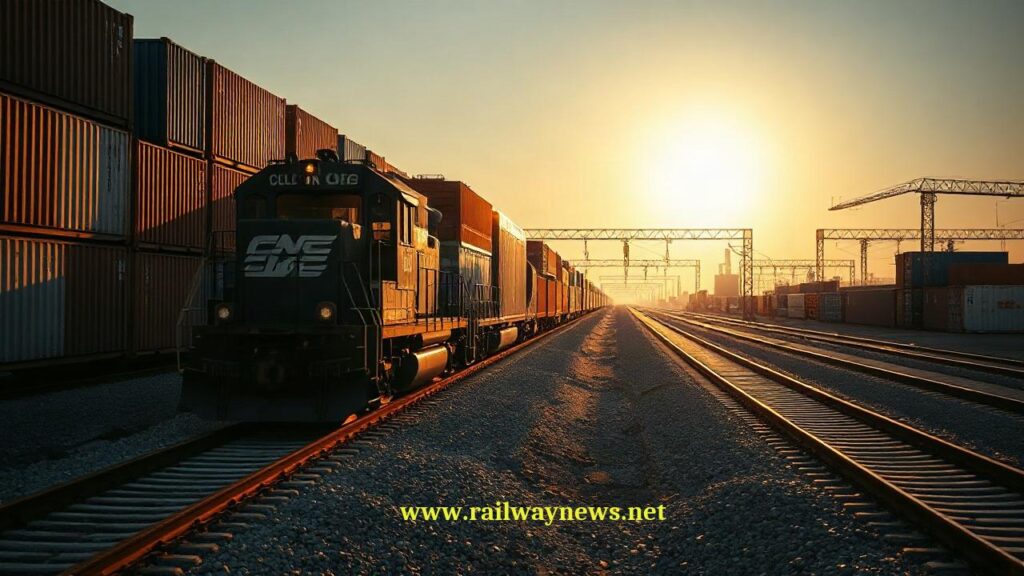
⚡ In Brief: The STB on Aug. 3, 2026, requested explanations from the Belt Railway Co. of Chicago for a 57% rise in Clearing Yard car inventory to 5,048 cars and a 72% jump in dwell time to 31 hours, citing threats to US freight fluidity.
WASHINGTON, DC – The US Surface Transportation Board (STB) on Aug. 3, 2026, formally requested an explanation from the Belt Railway Co. of Chicago (BRC) for a 57% year-over-year increase in average car inventory at Clearing Yard, from 3,212 cars in Week 30 of 2025 to 5,048 cars in Week 30 of 2026. Average dwell time at the 786-acre yard rose 72%, from 18 hours to 31 hours, over the same period.
What Does This Regulation Cover?
The STB letter requests additional weekly Clearing Yard reports from BRC and written explanations for the elevated car-inventory and dwell-time metrics — a precursor to formal enforcement under the board’s rail-service oversight authority. The letter warns that congestion in the Chicago gateway can impair regional fluidity and affect US manufacturing, energy, and agriculture supply chains. The STB’s cited data shows the yard’s average car inventory grew from 3,212 cars in Week 30 of 2025 to 5,048 cars in the same week of 2026, with average dwell time rising from 18 to 31 hours.
Key Regulatory Data
| Parameter | Value |
|---|---|
| Regulation / Policy Name | STB letter of inquiry on BRC Clearing Yard congestion |
| Total Value | Not disclosed — no fine or financial remedy specified |
| Parties Involved | STB; Belt Railway Co. of Chicago; six Class I railroads (BNSF, CN, CPKC, CSX, NS, UP) |
| Timeline / Completion | Letter issued Aug. 3, 2026; BRC response deadline not disclosed |
| Country / Corridor | United States — Chicago Gateway, Clearing Yard (786 acres) |
How Does This Compare to Global Standards?
Clearing Yard’s 31-hour average dwell time has no equivalent binding threshold in US regulation, but the European Union mandates standing performance targets for rail freight corridors. Under EU Regulation 913/2010, corridor management bodies set annual performance targets and publish monitoring results, providing regulators an earlier intervention point than the STB’s case-by-case inquiry. (Source: European Commission, 2010)
The BRC letter is also one element of a two-front STB campaign. On Aug. 18, 2026, the board lifted the Union Pacific–Norfolk Southern merger proceeding from abeyance, adopted a procedural schedule, and set a Sept. 30, 2026, deadline for Notices of Intent to Participate; the board stressed it has not approved the merger. BRC is jointly owned by the six Class I railroads — BNSF, CN, CPKC, CSX, NS, and UP — including the two merger applicants, so the transaction’s network configuration will directly influence future Clearing Yard workloads. (Source: BRC, 2026; STB, 2026)
Global rail freight revenue projections diverge by market definition: Future Market Insights sees the market growing from USD 370.0 billion in 2025 to USD 602.7 billion by 2036 (4.5% CAGR), while Market Research Future estimates the transport segment reached USD 1.56 trillion in 2024 and will hit USD 2.13 trillion by 2035 (2.84% CAGR). (Source: Future Market Insights, 2026; Market Research Future, 2026)
Not disclosed: the STB letter did not specify a BRC response date, and neither the board nor the railroad has publicly attributed the backlog to crew availability, locomotive supply, or track and crossing failures at Clearing Yard.
Editor’s Analysis
Clearing Yard cannot fix itself: BRC is a terminal railroad whose workload is determined by the arrival patterns of its six Class I owners. The 31-hour dwell reading is a lagging symptom of upstream schedule variability, so the STB’s next escalation point — a formal service hearing or emergency order — remains possible if joint operating changes are not delivered. The UP-NS merger docket, with participation filings due Sept. 30, 2026, will be the venue where shippers try to convert temporary regulatory scrutiny into permanent gateway performance commitments. (Source: STB, 2026)
FAQ
Q: Why is BRC’s Clearing Yard vital to the US freight network?
A: All six Class I railroads interchange traffic in the Chicago region, and Clearing Yard is BRC’s 786-acre hub for those transfers. The STB letter says congestion here can ripple into manufacturing, energy, and agriculture shipments nationwide.
Q: What happens if BRC does not fix the congestion?
A: The STB can escalate from a letter of inquiry to a formal service investigation or issue an emergency service order under 49 U.S.C. §11123. The Aug. 3 letter is an administrative warning, not a final enforcement action, and no penalty has yet been proposed.
Q: What does the UP-NS merger timeline mean for shippers using Chicago?
A: Shippers and other stakeholders must file a Notice of Intent to Participate by Sept. 30, 2026, to preserve their right to comment in the STB merger docket. This is the vehicle for raising concerns about how a combined UP-NS network would affect interchange volumes at BRC’s Clearing Yard.

Railway infrastructure, rolling stock and transport technologies specialist focused on global rail industry developments, high-speed rail systems, signaling technologies and freight transportation. Covering railway investments, public transport modernization, rail operations and international mobility projects across Europe, Asia and North America.
RELATED POSTS

October 8, 2026 1:15 pm
Alstom secured a €1bn contract to build 13 automated trains,...

October 1, 2026 7:09 am
United States regulators confirmed a September 30 deadline for the...

October 8, 2026 12:18 pm
Siemens Mobility signed an agreement with VinSpeed to supply 350...

October 4, 2026 5:14 pm
Alstom secured a CA$4.7 billion order from VIA Rail Canada...

October 5, 2026 6:12 pm
AECOM and Jacobs secured a contract in September 2026 to...

October 1, 2026 12:13 am
Illinois approved $1.5 billion annually for the Northern Illinois Transit...