
Lineas Secures Two Stadler EURO9000 For Rhine Alpine
Lineas secured two Stadler EURO9000 hybrid locomotives for the Rhine Alpine corridor, with first delivery March 2026.
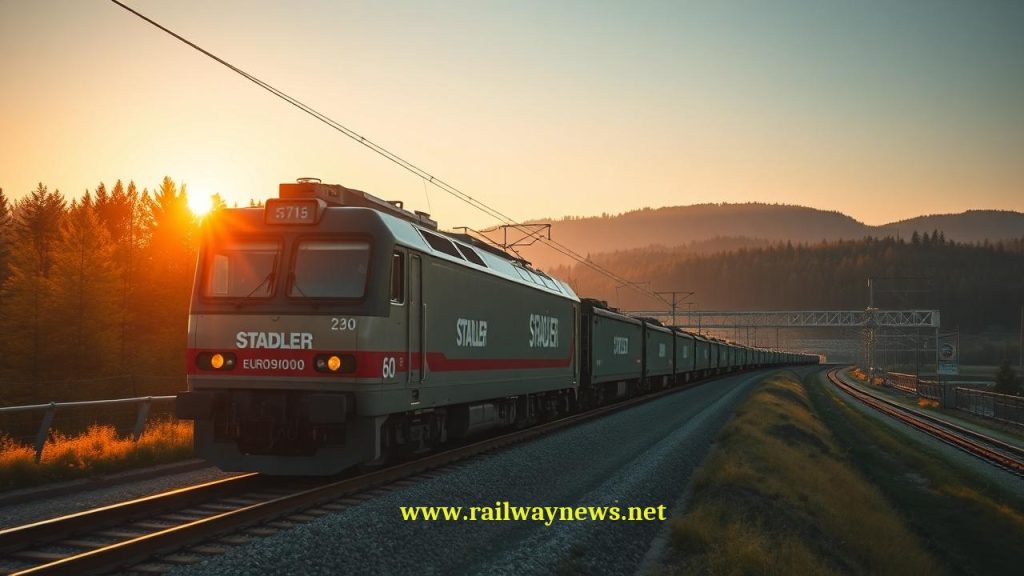
⚡ In Brief: Lessor Alpha Trains and operator Lineas have agreed to a full-service lease for two Stadler EURO9000 hybrid locomotives, set for delivery in March 2026 to support lower-emission freight on the Rhine Alpine corridor.
GERMANY – Rail freight operator Lineas will lease two Stadler EURO9000 hybrid locomotives from asset manager Alpha Trains for deployment on the Rhine Alpine corridor. The first of the two units, part of a larger 12-locomotive order by Alpha Trains, is scheduled for delivery in March 2026. The agreement is supported by German federal funding for alternative drive systems in transport.
What Does This Contract Cover?
The agreement covers the supply of two six-axle Stadler EURO9000 multi-system locomotives under a full-service lease model. This arrangement includes maintenance and technical support provided directly by Stadler Rail Services. Lineas intends to use the locomotives primarily in Germany to bridge infrastructure gaps between electrified and non-electrified sections of its network, enhancing operational flexibility for heavy freight services.
Key Contract Data
| Parameter | Value |
|---|---|
| Contract Name | Alpha Trains / Lineas EURO9000 Lease Agreement |
| Total Value | Not disclosed |
| Parties Involved | Alpha Trains (lessor), Lineas (operator), Stadler Rail (manufacturer), Stadler Rail Services (maintenance) |
| Timeline / Completion | First unit delivery expected March 2026 |
| Country / Corridor | Germany / Rhine Alpine corridor |
Where Does This Technology Stand in the Market?
The Stadler EURO9000 is positioned as a high-power solution for heavy, cross-border freight, a segment with specific operational demands. Its key feature is the combination of up to 9 MW of electric power with significant diesel power, enabling continuous operation across varying infrastructure. This capability distinguishes it from other dual-mode locomotives in the European market.
For comparison, the Siemens Vectron Dual Mode offers bi-mode (electric and diesel) capability but is a four-axle locomotive with a lower diesel power output, typically aimed at last-mile and shunting operations rather than heavy mainline haulage. Similarly, Alstom’s Traxx MS3 locomotive can be equipped with a low-power “Last Mile” diesel engine, but this is designed for yard movements, not for bridging long, non-electrified mainline sections under heavy load. The EURO9000’s six-axle design and high power output place it in a more specialised category for operators tackling the north-south European corridors.
Editor’s Analysis
This investment in high-flexibility, lower-emission locomotives is a strategic necessity for rail freight operators like Lineas. The move addresses the operational challenge of inconsistent electrification on key corridors while improving environmental credentials. This is increasingly critical as rail freight faces growing competition from road transport, where the adoption of zero-emission trucks in Germany is accelerating, partly due to CO2-based tolling schemes (Source: CleanTechnica, 2026). By deploying powerful hybrid locomotives, rail can better defend its position as the more sustainable mode for long-distance haulage.
FAQ
Q: What makes the EURO9000 locomotive a hybrid?
A: The EURO9000 is a hybrid multi-system locomotive because it can draw power from overhead electric lines across different European voltage systems and also operate independently using its integrated diesel engines on non-electrified routes.
Q: When will the new locomotives enter service?
A: The first unit from this agreement is scheduled for delivery to Alpha Trains in March 2026. It will be subsequently deployed by Lineas for service on the Rhine Alpine corridor.
Q: How is this project being funded?
A: The acquisition is supported by the German Federal Ministry of Transport through a program promoting alternative drive systems in rail. This initiative helps offset the higher investment costs associated with low-emission propulsion technologies.

Railway infrastructure, rolling stock and transport technologies specialist focused on global rail industry developments, high-speed rail systems, signaling technologies and freight transportation. Covering railway investments, public transport modernization, rail operations and international mobility projects across Europe, Asia and North America.
RELATED POSTS

October 8, 2026 1:15 pm
Alstom secured a €1bn contract to build 13 automated trains,...

October 1, 2026 7:09 am
United States regulators confirmed a September 30 deadline for the...

October 4, 2026 5:14 pm
Alstom secured a CA$4.7 billion order from VIA Rail Canada...

October 1, 2026 12:13 am
Illinois approved $1.5 billion annually for the Northern Illinois Transit...
October 5, 2026 1:13 pm
New York MTA confirmed a late 2026 DEIS release for...

October 1, 2026 6:10 am
Amtrak approved a System Expansion Committee on July 30 to...