
Koleje Wielkopolski Orders 20 Stadler FLIRT EMUs by 2028
Koleje Wielkopolski ordered 20 Stadler FLIRT EMUs for EUR 263 million to modernize its Polish fleet by 2028.
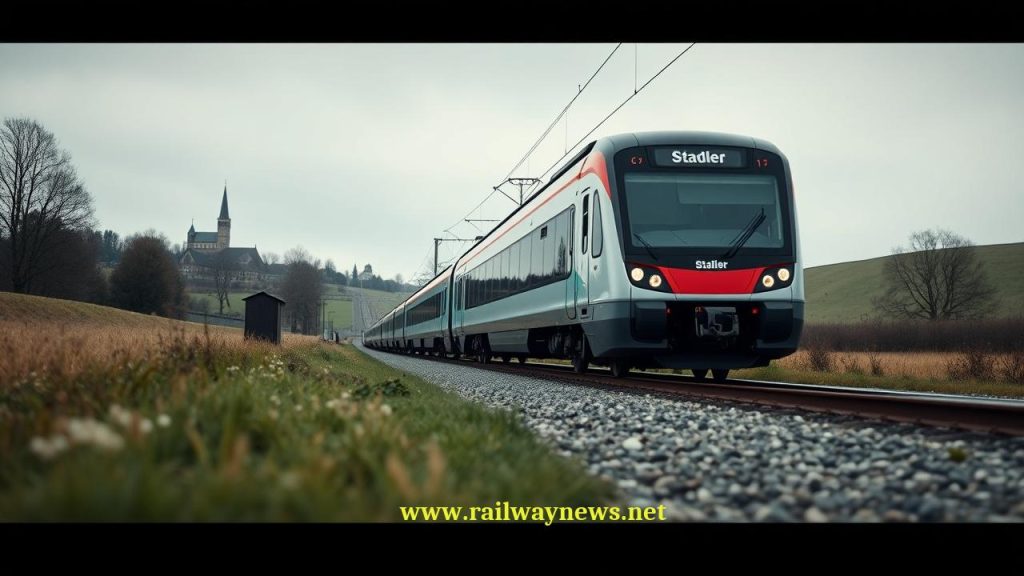
⚡ In Brief: Regional Polish operator Koleje Wielkopolski has signed a EUR 263 million contract with Stadler for up to 20 five-car FLIRT electric multiple units, with the first deliveries scheduled for early 2028 to modernize its commuter fleet in the Greater Poland region.
POZNAŃ, POLAND – Koleje Wielkopolski, the regional rail operator for the Greater Poland (Wielkopolska) voivodeship, has finalized a contract with Stadler for a new fleet of electric trains. The agreement covers a firm order for 10 five-car FLIRT units with an option for an additional 10, valued at approximately EUR 263 million for the full order. The first units are slated to enter passenger service in early 2028.
What Does This Contract Cover?
The contract provides for the design, manufacture, and delivery of up to 20 FLIRT electric multiple units (EMUs) configured for regional and commuter services. The entire manufacturing process, from design by Polish engineers to final assembly, will take place within Poland at Stadler’s facilities in Siedlce and Poznań. Each five-car train will have a total capacity of 632 passengers, including 266 seats, and will be designed for a maximum operational speed of 160 km/h. The specific routes these new trains will serve have not yet been disclosed.
Key Contract Data
| Parameter | Value |
|---|---|
| Contract Name | Koleje Wielkopolski FLIRT EMU Procurement |
| Total Value | Approx. EUR 263 million (for 10 firm + 10 optional units) |
| Parties Involved | Koleje Wielkopolski (Buyer), Stadler Polska (Supplier) |
| Timeline / Completion | First deliveries scheduled for early 2028 |
| Country / Corridor | Poland / Greater Poland (Wielkopolska) region |
How Does This Compare to Similar Contracts?
Comparable data for similar regional EMU contracts in Poland during 2024 was not publicly available at the time of publication. However, this order aligns with a consistent pattern of large-scale fleet renewals across the country. For instance, national operator PKP Intercity has an active framework agreement with Stadler for 12 FLIRT units, an extension of a previous order, while also procuring rolling stock from domestic manufacturer Newag. The scale of the Koleje Wielkopolski deal is significant for a regional operator, surpassing smaller, more frequent top-up orders seen from other voivodeships, and underscores a major capital investment in its services.
Editor’s Analysis
This procurement by Koleje Wielkopolski is a direct reflection of Poland’s broader national strategy to modernize its public transport infrastructure, leveraging strong economic growth and European Union funding. The decision to have the trains designed and built entirely within Poland highlights a mature industrial policy, supporting domestic manufacturing and engineering jobs, even when the parent company is Swiss. This “local-for-local” approach strengthens the national supply chain and solidifies Poland’s position as a key European hub for rolling stock production. (Source: World Bank, Polish Economic Reports, 2023).
FAQ
Q: Where will these new Stadler trains be built?
A: The trains will be manufactured entirely in Poland at Stadler’s production facility in Siedlce. The design work will also be handled by Stadler’s engineering teams in Poland, including its office in Poznań.
Q: What is the approximate cost per train in this contract?
A: Based on the total value of EUR 263 million for up to 20 units, the average cost is approximately EUR 13.15 million per five-car train. The specific cost for the initial 10-unit firm order was not disclosed separately.
Q: How will this order impact passengers in the Wielkopolska region?
A: Passengers can expect increased capacity and improved comfort on regional and commuter lines once the trains enter service in 2028. The new FLIRT units will likely replace older rolling stock, leading to better reliability and accessibility across the network, though specific deployment routes have not been announced.

Railway infrastructure, rolling stock and transport technologies specialist focused on global rail industry developments, high-speed rail systems, signaling technologies and freight transportation. Covering railway investments, public transport modernization, rail operations and international mobility projects across Europe, Asia and North America.
RELATED POSTS

October 8, 2026 1:15 pm
Alstom secured a €1bn contract to build 13 automated trains,...

October 1, 2026 7:09 am
United States regulators confirmed a September 30 deadline for the...

October 8, 2026 12:18 pm
Siemens Mobility signed an agreement with VinSpeed to supply 350...

October 4, 2026 5:14 pm
Alstom secured a CA$4.7 billion order from VIA Rail Canada...

October 5, 2026 6:12 pm
AECOM and Jacobs secured a contract in September 2026 to...

October 1, 2026 12:13 am
Illinois approved $1.5 billion annually for the Northern Illinois Transit...