
Jakarta-Bandung HSR: A Southeast Asia Milestone
The Jakarta-Bandung High-Speed Railway project in Indonesia successfully demonstrates China’s technological advancements in high-speed rail, showcasing innovative systems like earthquake monitoring, corrosion-resistant technologies, and advanced signaling for a safe operation despite seismic activity. This project represents a significant milestone in Southeast Asian railway development, with substantial economic implications including workforce creation and infrastructure upgrades that will impact the region’s transportation landscape.
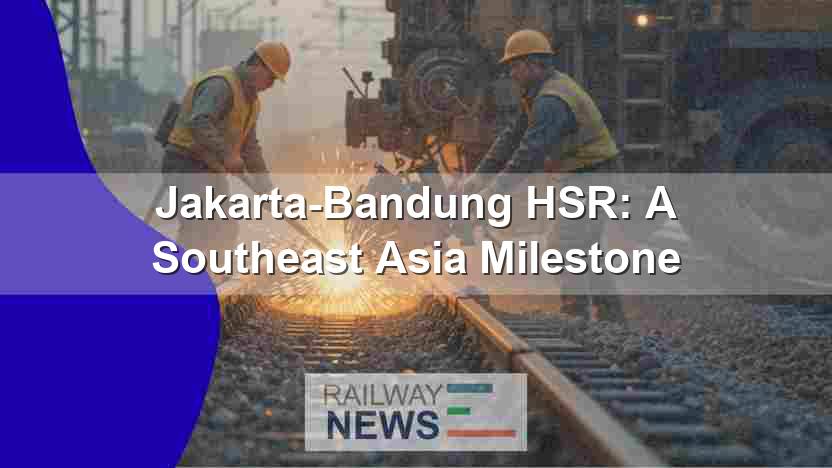
This article explores the successful trial run of the Jakarta-Bandung High-Speed Railway (HSR) project in Indonesia, a significant milestone in Southeast Asian railway development. The project, a component of China’s Belt and Road Initiative (BRI), represents a substantial investment in Indonesian infrastructure and signifies a technological leap forward for the nation’s railway system. The successful trial run, encompassing rigorous testing of various crucial systems, paves the way for commercial operations and highlights the project’s potential to significantly impact Indonesia’s economy and transportation landscape. We will delve into the technological advancements incorporated into the project, its economic implications, the collaborative efforts involved in its construction, and finally, the broader implications for railway infrastructure development in the Southeast Asian region. The analysis will consider aspects ranging from the specific technologies employed to the wider geopolitical and economic consequences of this ambitious undertaking.
Technological Advancements in High-Speed Rail
The Jakarta-Bandung HSR boasts cutting-edge technology, primarily sourced from China. The project showcases the first overseas application of a complete Chinese high-speed rail system, including the trains themselves. These trains are equipped with intelligent sensing technology, providing real-time data on the train’s performance and surrounding environment. Crucially, they also feature earthquake monitoring and early warning systems, a vital consideration given Indonesia’s seismic activity. Additionally, advanced protection technologies are incorporated to withstand the corrosive effects of salt spray and ultraviolet radiation, ensuring longevity and reliability in the Indonesian climate. The system’s signaling and communication systems were also thoroughly tested and deemed to perform well during the trials, assuring a smooth and safe operation for the high-speed line.
Economic Impact and Infrastructure Development
The project’s economic impact is substantial. The total contract value under PowerChina’s construction alone exceeds $3 billion, demonstrating the considerable investment involved. The project also includes the laying of 279.4 km of main track, a major undertaking that necessitates a significant workforce and stimulates related industries. Beyond direct construction, the project is expected to upgrade Indonesia’s railway technology and associated sectors, creating a ripple effect throughout the national economy. The reduced travel time between Jakarta and Bandung – from over three hours to approximately 40 minutes – is anticipated to boost tourism, trade, and overall economic activity in both cities.
International Collaboration and the Belt and Road Initiative
The Jakarta-Bandung HSR is a prime example of international collaboration, specifically within the framework of China’s Belt and Road Initiative (BRI). The project’s success hinges on the collaborative efforts of Indonesian and Chinese engineers and construction firms. This collaboration extends beyond the provision of technology and equipment; it includes knowledge transfer and capacity building within the Indonesian railway sector. The BRI’s support underscores its commitment to infrastructure development in Southeast Asia and its potential influence on regional connectivity.
Implications for Southeast Asian Railway Development
The successful completion of the trial run marks a significant milestone not just for Indonesia, but for the entire Southeast Asian region. Indonesia becomes the first Southeast Asian nation to operate a high-speed railway system, setting a precedent for future projects. This accomplishment can inspire other nations in the region to invest in similar infrastructure development, leading to improved connectivity and economic growth across the region. The project serves as a case study for other nations considering the implementation of high-speed rail, demonstrating the technological feasibility and potential economic benefits. However, it also highlights the challenges involved in such large-scale projects, including securing funding, managing international collaborations, and navigating complex regulatory environments.
Conclusions
The successful trial run of the Jakarta-Bandung High-Speed Railway marks a pivotal moment for Indonesia’s infrastructure development and its position within the Southeast Asian region. This project, a significant undertaking under the Belt and Road Initiative, demonstrates the successful integration of advanced Chinese high-speed rail technology into a new geographical and environmental context. The incorporation of intelligent sensing, earthquake monitoring, and advanced protection systems showcases a commitment to both technological excellence and safety. The economic impact extends far beyond the initial investment, stimulating related industries, improving inter-city connectivity, and potentially boosting tourism and trade. The collaboration between Indonesian and Chinese entities highlights the effectiveness of international partnerships in large-scale infrastructure projects, and the knowledge transfer embedded within the project will undoubtedly contribute to the growth of Indonesia’s railway sector. The success of this project has significant implications for the future of high-speed rail development in Southeast Asia, offering a model for other nations looking to improve their transportation networks and stimulate economic growth. However, future projects should carefully consider the project’s challenges, such as meticulous planning, effective resource management, and navigating potential geopolitical complexities.

Railway infrastructure, rolling stock and transport technologies specialist focused on global rail industry developments, high-speed rail systems, signaling technologies and freight transportation. Covering railway investments, public transport modernization, rail operations and international mobility projects across Europe, Asia and North America.
RELATED POSTS

October 8, 2026 1:15 pm
Alstom secured a €1bn contract to build 13 automated trains,...

October 1, 2026 7:09 am
United States regulators confirmed a September 30 deadline for the...

October 8, 2026 12:18 pm
Siemens Mobility signed an agreement with VinSpeed to supply 350...

October 4, 2026 5:14 pm
Alstom secured a CA$4.7 billion order from VIA Rail Canada...

October 5, 2026 6:12 pm
AECOM and Jacobs secured a contract in September 2026 to...

October 4, 2026 11:08 pm
Sound Transit confirmed the September 30 opening of Seattle Pinehurst...