
Italy’s €100B Rail Plan: High-Speed Ambitions Amid Global Delays
Italy’s €100B railway modernization plan by 2030 accelerates high-speed rail, ERTMS implementation, and fleet renewal, contrasting global project setbacks.
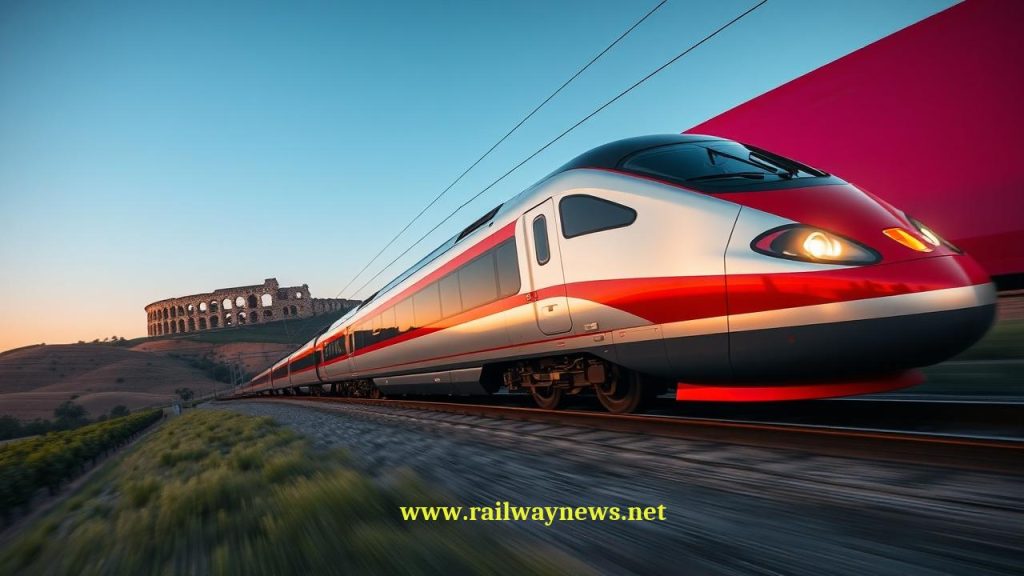
ROME, Italy – Italy is embarking on a transformative €100 billion railway modernization plan, aiming for a detailed network overhaul by 2030 with a massive €18 billion injection slated for 2025 alone. This ambitious strategy positions Italy as a leader in European high-speed rail development, contrasting sharply with the schedule and budget setbacks facing similar megaprojects in the UK and the United States.
| Category | Details |
|---|---|
| Total Investment (2025-2029) | €100 Billion |
| Key Technology Focus | Nationwide ERTMS implementation, predictive maintenance, 5G connectivity |
| High-Speed Rolling Stock | 46 new Frecciarossa 1000 trains (360 km/h max speed) by 2034 |
| Regional Fleet Renewal | 1,061 new-generation trains by 2027, renewing 80% of the fleet |
| International Expansion Goals | Services planned for Paris-Brussels and London-Paris corridors; analysis of US market |
Main Body:
Under its Strategic Plan 2025–2029, Italy’s state-owned railway group Ferrovie dello Stato Italiane (FS) is set to profoundly reshape the nation’s transport landscape. The €100 billion program prioritizes the modernization of existing infrastructure, the expansion of high-speed lines, the digitization of signaling systems, and a significant increase in regional and metropolitan capacity. Funding is secured through a combination of national and European sources, heavily supported by the National Recovery and Resilience Plan (PNRR). An unprecedented €18 billion is allocated for 2025, demonstrating an aggressive timeline to achieve the plan’s objectives of enhancing safety, reliability, and punctuality while cementing rail as the backbone of sustainable mobility.
At the heart of the strategy is a €20 billion Technological Plan dedicated to innovation. A core project is the nationwide implementation of the European Rail Traffic Management System (ERTMS), with plans to equip 2,000 trains with the digital system by 2030 and the entire FS Logistix freight fleet by 2033. This digital leap is complemented by a massive fleet renewal. By 2034, 46 new Frecciarossa 1000 high-speed trains, capable of 360 km/h, will enter service. Simultaneously, a €7 billion investment will see 1,061 new-generation trains delivered for regional transport by 2027, renewing 80% of the fleet and drastically improving commuter services. A successful pilot project on the Turin-Milan high-speed line has also paved the way for advanced predictive maintenance and continuous 5G connectivity for passengers.
Italy’s decisive and well-funded strategy stands in stark contrast to the challenges plaguing similar projects elsewhere. In the United Kingdom, the HS2 project recently confirmed it cannot achieve its 2033 operational target for the London-Birmingham line after facing what its CEO called a “detailed reset.” Similarly, the California High-Speed Rail project has faced over 15 years of delays and funding disputes, with a state spokesperson noting the federal government has not been a “reliable, constructive, or trustworthy partner.” Italy’s progress, backed by stable PNRR funding and clear political will, not only serves its domestic goals but also powers an aggressive international expansion, with FS Group actively exploring entry into the Paris-Brussels, London-Paris, and even the high-potential US rail markets.
Key Takeaways
- Massive, Secured Investment: Over €100 billion is committed through 2029, with a significant €18 billion fast-tracked for 2025, ensuring momentum from the outset.
- Technology at the Core: A dedicated €20 billion technology plan focuses on ERTMS, predictive maintenance, and 5G connectivity to create a truly modern, digital railway.
- Global Ambition: The plan is not just domestic; it’s a platform for international expansion, targeting major European corridors and the US market to establish FS Group as a global mobility player.
Editor’s Analysis
Italy’s Strategic Plan is more than an infrastructure upgrade; it’s a powerful statement of intent on the global stage. While other Western nations see their high-speed rail ambitions stall amidst political and financial turmoil, Italy is demonstrating how to execute a clear, well-funded vision. By leveraging post-pandemic recovery funds (PNRR) and aligning its goals with EU-wide decarbonization targets, FS Group is creating a blueprint for the future of rail. This move positions Italy not just as a leader in sustainable transport but as a benchmark for delivering complex, large-scale infrastructure projects, a capability that will be crucial in its bid to become a major operator on the most competitive international rail corridors.
Frequently Asked Questions
- What is Italy’s Strategic Plan 2025–2029 for its railways?
- It is a €100 billion investment program by Ferrovie dello Stato Italiane (FS) to modernize infrastructure, expand the high-speed network, digitize operations with ERTMS, and renew the national and regional train fleet by 2030.
- How is the plan being funded?
- The plan is supported by a mix of national funds and European Union funds, including significant allocations from Italy’s National Recovery and Resilience Plan (PNRR).
- What are the key technology upgrades involved?
- The core technology upgrade is the nationwide implementation of the ERTMS digital signaling system. Other key projects include developing predictive maintenance systems and building infrastructure for continuous 5G connectivity on board trains.

Railway infrastructure, rolling stock and transport technologies specialist focused on global rail industry developments, high-speed rail systems, signaling technologies and freight transportation. Covering railway investments, public transport modernization, rail operations and international mobility projects across Europe, Asia and North America.
RELATED POSTS

October 1, 2026 7:09 am
United States regulators confirmed a September 30 deadline for the...

October 8, 2026 1:15 pm
Alstom secured a €1bn contract to build 13 automated trains,...

October 4, 2026 5:14 pm
Alstom secured a CA$4.7 billion order from VIA Rail Canada...

October 1, 2026 12:13 am
Illinois approved $1.5 billion annually for the Northern Illinois Transit...

October 6, 2026 2:14 am
Union Pacific launched export rail shipments with Ferromex to deliver...

October 1, 2026 6:10 am
Amtrak approved a System Expansion Committee on July 30 to...