
India’s Bullet Train: Ahmedabad-Mumbai HSR
High-Speed Rail Development in India: The Ahmedabad-Mumbai Corridor showcases significant investment in modernizing transportation infrastructure, despite facing challenges like land acquisition issues, highlighting complex socio-political landscapes intertwined with financial investments and technological complexities.
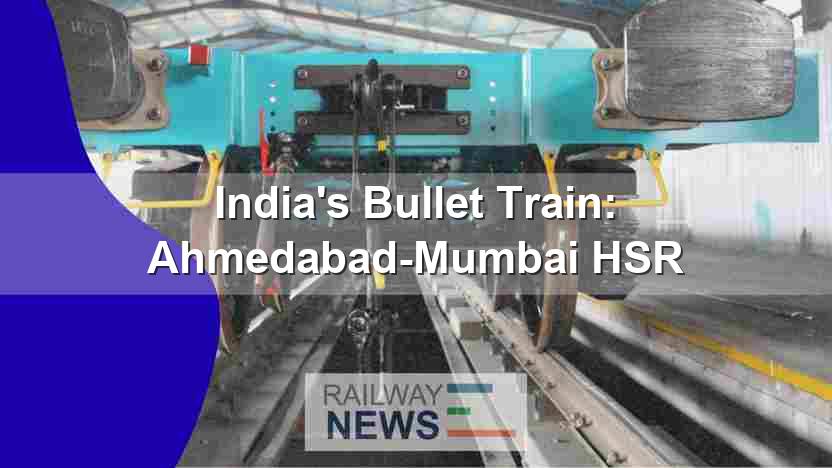
High-Speed Rail Development in India: The Ahmedabad-Mumbai Corridor
This article explores the significant undertaking of constructing a high-speed rail (HSR) corridor between Ahmedabad and Mumbai in India. The project, a testament to India’s ambitions in modernizing its transportation infrastructure, faces numerous challenges, from land acquisition hurdles to the sheer scale of engineering required for such a high-speed network. We will delve into the financial aspects of the project, focusing on recent budgetary allocations, examining the proposed route and its technical specifications, and analyzing the potential impact on the region and national economy. The substantial investment and technological complexity involved make this project a case study in large-scale infrastructure development, revealing both the opportunities and difficulties inherent in creating advanced rail networks within a complex socio-political and geographical landscape. The timely completion and successful operation of the Ahmedabad-Mumbai HSR will have profound implications for India’s overall railway infrastructure and its capacity for future high-speed rail projects.
Financial Investment and Allocations
The Indian state of Gujarat has committed Rs 15 billion (approximately $205 million USD) to the Ahmedabad-Mumbai bullet train project. This substantial allocation underscores the project’s importance to the state’s economic development strategy. However, this represents only a fraction of the total project cost, highlighting the significant financial investment required from both the central government and other stakeholders. Securing the remaining funds and effectively managing the project’s budget are critical for its successful completion. The budgetary process reveals the complex interplay between national and state governments in funding large-scale infrastructure endeavors, demonstrating the financial challenges inherent in such massive projects. Delays, as evidenced by the postponement of the 2023 completion date due to land acquisition issues in Maharashtra, can further strain the budget and necessitate re-evaluation of the financial plan.
Route and Technical Specifications
The 508.17 km Ahmedabad-Mumbai HSR corridor will feature twelve stations, traversing Gujarat, Maharashtra, and the Union Territory of Dadra and Nagar Haveli. The route’s distribution across these regions illustrates the project’s geographic scope and the collaborative efforts required across multiple administrative jurisdictions. The planned operational speed of 320 km/h necessitates a high level of precision in track alignment and construction. The majority of the track will be elevated, except for a 26 km underground section in Mumbai, accommodating the city’s dense urban environment and requiring specialized tunnel-boring techniques. The Bandra Kurla Complex station will be an underground station, while other stations will be elevated structures, demanding diverse engineering solutions. The selection of construction materials and techniques, such as the awarding of contracts for steel bridge fabrication to Larson & Toubro–IHI Infrastructure Systems (Consortium), reflects the advanced engineering standards needed for HSR projects.
Operational Considerations and Travel Times
The projected travel time between Ahmedabad and Mumbai varies based on the type of service: an all-stops service is anticipated to take approximately two hours and 57 minutes, while a limited-stop service is expected to take one hour and 58 minutes. This significant reduction in travel time compared to existing conventional rail services underlines the HSR’s potential to drastically improve connectivity between these major Indian cities. Efficient scheduling, train maintenance, and passenger management will be crucial for operating the service reliably and meeting passenger expectations. The operational strategies developed will serve as a valuable benchmark for future HSR projects in India, demonstrating effective passenger throughput and optimal scheduling for high-speed services.
Conclusion
The Ahmedabad-Mumbai bullet train project represents a substantial investment in India’s future, aiming to revolutionize high-speed rail travel within the country. The Gujarat government’s allocation of Rs 15 billion is a significant commitment, though it only represents a part of the overall project cost, emphasizing the financial magnitude of such ventures. The project’s technical specifications, including the route’s length, the planned speed of 320 km/h, and the mix of elevated and underground sections, present unique engineering challenges. Addressing land acquisition delays and ensuring efficient project management remain crucial for timely completion. The anticipated reduction in travel times, from approximately 7 hours to under two hours, promises to significantly improve connectivity and boost economic growth across the corridor. The success of the Ahmedabad-Mumbai HSR corridor will not only transform travel between these two major cities but will also serve as a vital demonstration project, shaping the future of high-speed rail development in India and informing strategies for future projects across the nation. Successful implementation would lay the groundwork for a wider network of high-speed rail lines, contributing to economic growth, enhanced regional integration, and improved mobility for millions of passengers. The project’s success hinges on effective financial management, adherence to rigorous engineering standards, and strategic operational planning. Careful consideration of these factors will be key to the successful realization of this ambitious and transformative infrastructure project.

Railway infrastructure, rolling stock and transport technologies specialist focused on global rail industry developments, high-speed rail systems, signaling technologies and freight transportation. Covering railway investments, public transport modernization, rail operations and international mobility projects across Europe, Asia and North America.
RELATED POSTS

October 8, 2026 1:15 pm
Alstom secured a €1bn contract to build 13 automated trains,...

October 1, 2026 7:09 am
United States regulators confirmed a September 30 deadline for the...

October 8, 2026 12:18 pm
Siemens Mobility signed an agreement with VinSpeed to supply 350...

October 4, 2026 5:14 pm
Alstom secured a CA$4.7 billion order from VIA Rail Canada...

October 5, 2026 6:12 pm
AECOM and Jacobs secured a contract in September 2026 to...

October 4, 2026 11:08 pm
Sound Transit confirmed the September 30 opening of Seattle Pinehurst...