
India’s 3000 HP Locomotives: Export to Mozambique
The 3000 HP Cape Gauge locomotives manufactured by Banaras Locomotive Works, featuring advanced technological features like the CCB 2.0 brake system and integrated NVH standards, represent significant advancements in Indian railway technology, showcasing its capabilities in manufacturing high-quality products for export and strengthening India’s role as a global supplier of advanced railway equipment.
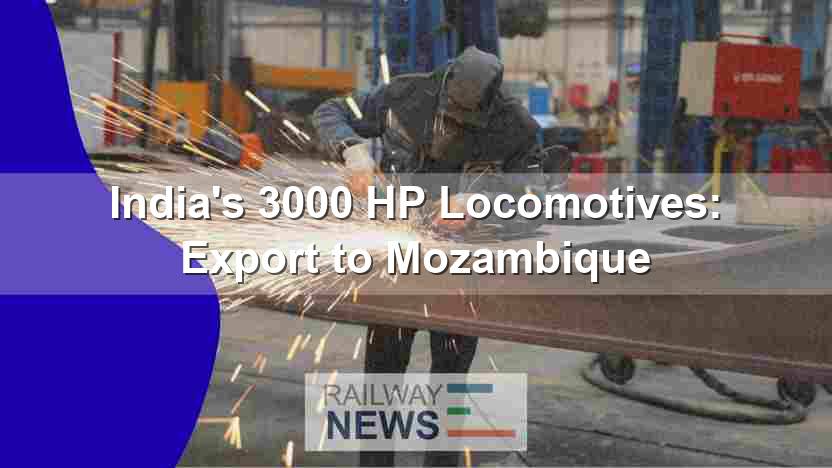
This article examines the export of high-powered Cape Gauge locomotives from Indian Railways to Mozambique, highlighting the technological advancements, economic implications, and strategic partnerships involved. The export represents a significant step in India’s “Make in India” initiative, showcasing its capabilities in manufacturing advanced railway technology and fostering stronger ties with African nations. This case study analyzes the design features of the 3000 HP locomotives, their operational capabilities, and the broader context of India’s growing role in the global railway market. Further, the article will discuss the technological advancements incorporated into these locomotives and the strategic importance of this export deal for both India and Mozambique. Finally, we will explore the wider implications of this partnership for future collaborations in the rail sector and the potential for further technological advancements in railway transportation.
Technological Advancements in Locomotive Design
The 3000 HP Cape Gauge (1067 mm gauge) locomotives, manufactured by Banaras Locomotive Works (BLW), a production unit of Indian Railways, represent a significant leap in Indian railway technology. These locomotives boast a hauling capacity of 2,255 tonnes at a speed of 100 km/h. Key technological features include a sophisticated Computer Controlled Brake system (CCB 2.0) enhancing both safety and maintenance. The driver’s cabin adheres to Noise, Vibration, and Harshness (NVH) standards, incorporating an integrated Graphics Driver Display, improved acoustics, and ergonomically designed seating for enhanced operator comfort. The inclusion of Heating, Ventilation, and Air Conditioning (HVAC) systems, along with onboard amenities such as a toilet module, refrigerator, and hot plate, significantly improves crew comfort during extended operational periods. The use of stainless steel piping further enhances durability and reduces corrosion. The right-hand drive control console is tailored to meet specific operational requirements in Mozambique.
“Make in India” Initiative and Economic Impact
The export of these locomotives is a testament to the success of India’s “Make in India” initiative, showcasing its ability to design, manufacture, and export high-quality railway products globally. This export not only generates revenue for Indian Railways and BLW but also strengthens India’s position as a reliable supplier of advanced railway technology. The project creates jobs within India, boosts domestic manufacturing capabilities and promotes technological advancement within the Indian railway sector. The cost-effectiveness of these locomotives makes them an attractive option for developing nations seeking to upgrade their rail infrastructure.
Strategic Partnerships and International Relations
The export of six locomotives and ninety stainless-steel passenger coaches to Mozambique strengthens Indo-African relations, fostering economic cooperation and technological transfer. This deal showcases India’s commitment to supporting the development of infrastructure in African nations. It paves the way for potential future collaborations on other railway projects in the region, fostering economic growth and strengthening diplomatic ties. This partnership transcends simple trade; it represents a commitment to shared development and mutual benefit.
Safety and Technological Integration
Beyond the immediate benefits, the export also highlights the importance of safety features and technological integration in modern railway systems. The incorporation of advanced braking systems and driver-assistance technologies significantly improves operational safety. The focus on ergonomic design and crew comfort underscores the importance of human factors engineering in rail transportation. The use of advanced materials, like stainless steel, demonstrates a commitment to durability and long-term sustainability of railway assets. The recent allocation of 5 MHz spectrum in the 700 MHz frequency band to Indian Railways by the Indian Government further enhances safety and security through improved communication and monitoring systems.
Conclusions
The export of 3000 HP Cape Gauge locomotives to Mozambique represents a significant achievement for Indian Railways, showcasing its technological prowess, manufacturing capabilities, and commitment to international partnerships. The success of the “Make in India” initiative is clearly demonstrated through this export, boosting the national economy and creating employment opportunities. These locomotives, equipped with advanced features like CCB 2.0 braking systems, NVH compliant cabins, and detailed onboard amenities, represent a substantial upgrade to Mozambique’s railway infrastructure. The strategic partnership with Mozambique fosters stronger diplomatic ties and underscores India’s role as a reliable provider of advanced railway technology to developing nations. The project highlights the importance of integrating advanced technology, prioritizing safety features, and focusing on operator comfort in modern railway systems. The success of this endeavor indicates a promising future for Indian Railways’ international expansion and its continued contribution to global railway development. This export deal serves as a strong foundation for future collaborations, not only in Africa, but potentially worldwide, cementing India’s position as a leader in the global railway industry. The project’s success emphasizes the potential for combining economic growth with strengthened international relations, furthering India’s influence on the global stage through strategic partnerships and technological advancements. This successful collaboration paves the way for further integration of advanced technologies into global railway systems and showcases the benefits of mutually beneficial partnerships in driving sustainable development.

Railway infrastructure, rolling stock and transport technologies specialist focused on global rail industry developments, high-speed rail systems, signaling technologies and freight transportation. Covering railway investments, public transport modernization, rail operations and international mobility projects across Europe, Asia and North America.
RELATED POSTS

October 8, 2026 1:15 pm
Alstom secured a €1bn contract to build 13 automated trains,...

October 1, 2026 7:09 am
United States regulators confirmed a September 30 deadline for the...

October 8, 2026 12:18 pm
Siemens Mobility signed an agreement with VinSpeed to supply 350...

October 4, 2026 5:14 pm
Alstom secured a CA$4.7 billion order from VIA Rail Canada...

October 5, 2026 6:12 pm
AECOM and Jacobs secured a contract in September 2026 to...

October 4, 2026 11:08 pm
Sound Transit confirmed the September 30 opening of Seattle Pinehurst...