
Hydrogen Train Revolution: CAF’s FCH2RAIL Tests
The FCH2RAIL hydrogen-powered train demonstrates significant advancements in sustainable rail technology through innovative integration of fuel cells and batteries, offering a cleaner alternative to diesel while reducing greenhouse gas emissions and improving operational efficiency.
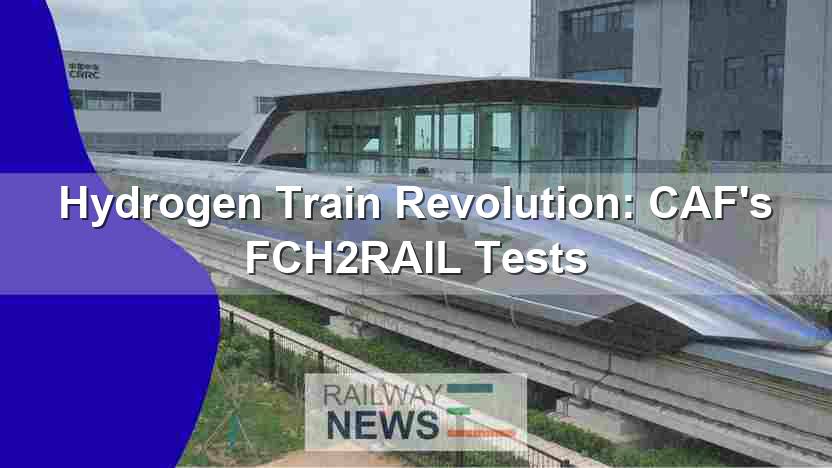
The railway industry stands at a crucial juncture, facing the imperative to decarbonize its operations while maintaining efficient and reliable service. This article explores the significant advancements achieved by Construcciones y Auxiliar de Ferrocarriles (CAF) – a leading rolling stock manufacturer – in the development and testing of a hydrogen-fuelled train. The focus is on the dynamic track trials of the FCH2RAIL (Fuel Cell Hybrid Power Pack for Rail Applications) demonstrator train, a pivotal step toward a sustainable future for rail transport. This project represents a substantial investment and collaboration between industry leaders, research institutions, and railway operators, aiming to replace aging diesel fleets with cleaner, more environmentally friendly alternatives. The successful implementation of this technology promises a significant reduction in greenhouse gas emissions, improving air quality in urban and suburban areas served by rail networks. The implications extend beyond environmental benefits, encompassing economic considerations related to energy independence and the creation of new employment opportunities within the hydrogen economy.
Hybrid Power System Integration
The core innovation lies in the integration of a hybrid power system combining hydrogen fuel cells and batteries. This approach addresses the limitations of both technologies individually. Hydrogen fuel cells provide a sustainable source of electricity through the electrochemical reaction of hydrogen and oxygen, producing only water as a byproduct. However, fuel cell output can fluctuate, and batteries act as energy storage, ensuring consistent power delivery and compensating for instantaneous power demands during acceleration or climbing inclines. This hybrid configuration, adapted to an existing Renfe commuter train platform, minimizes the need for extensive platform modifications, accelerating the deployment of the technology. The intelligent control systems managing the energy flow between the fuel cells and batteries are paramount to optimization and efficiency.
Dynamic Track Testing and Data Acquisition
Following successful static testing, the FCH2RAIL demonstrator has entered dynamic testing on external tracks. This phase is critical for validating the performance of the hybrid propulsion system under real-world operating conditions. Specifically chosen routes, representative of commercial rail services, allow for detailed data acquisition on energy consumption, acceleration, braking, and overall system reliability. The data gathered will be rigorously analyzed to determine the system’s efficiency and suitability for various operational profiles. The selection of test routes considers factors like gradients, curves, and typical passenger loads to simulate a range of real-world scenarios.
Comparative Performance Analysis
A key objective of the dynamic testing is to compare the performance of the hydrogen-powered train against existing diesel locomotives on equivalent routes. This comparative analysis will directly assess the competitiveness of the new technology in terms of operational costs, energy efficiency, and environmental impact. The results will be crucial in demonstrating the economic viability and environmental benefits of transitioning to hydrogen-powered rail transport. Factors such as maintenance requirements, refueling infrastructure needs, and lifecycle costs will also be considered in the overall assessment.
Collaboration and Funding
The FCH2RAIL project exemplifies the importance of collaborative innovation. The consortium comprising DLR (German Aerospace Center), Toyota, Renfe (Spanish National Railway Company), ADIF (Spanish Railway Infrastructure Manager), CNH2, IP, Stemmann-Technik, and CAF brings together expertise in hydrogen technology, railway engineering, and infrastructure management. This synergistic approach leverages the strengths of each partner to accelerate the development and deployment of this ground-breaking technology. The significant funding received – €14 million, including €10 million from the Clean Hydrogen Partnership (a European Commission agency) – underscores the strategic importance of this initiative in achieving the European Union’s climate goals.
Conclusions
The dynamic testing of CAF’s hydrogen-fuelled FCH2RAIL demonstrator marks a significant milestone in the decarbonization of the railway sector. The successful integration of a hybrid power system, combining hydrogen fuel cells and batteries, addresses the challenges of providing consistent and reliable power for demanding rail operations. The detailed dynamic testing program, using representative commercial routes, will provide valuable data on the system’s performance, cost-effectiveness, and environmental impact. By comparing the hydrogen train’s performance against existing diesel locomotives, the project will directly quantify the benefits of this innovative technology. Additionally, the collaborative nature of the FCH2RAIL project and the substantial funding secured highlight the importance of strategic partnerships and public-private investment in achieving a sustainable transportation future. The successful outcome of this project will pave the way for the widespread adoption of hydrogen-powered trains, significantly reducing greenhouse gas emissions and promoting a cleaner, more sustainable rail transport system across Europe and beyond. This pioneering work showcases the potential for a future where rail transport is not only efficient and reliable, but also environmentally responsible.

Railway infrastructure, rolling stock and transport technologies specialist focused on global rail industry developments, high-speed rail systems, signaling technologies and freight transportation. Covering railway investments, public transport modernization, rail operations and international mobility projects across Europe, Asia and North America.
RELATED POSTS

October 8, 2026 1:15 pm
Alstom secured a €1bn contract to build 13 automated trains,...

October 1, 2026 7:09 am
United States regulators confirmed a September 30 deadline for the...

October 8, 2026 12:18 pm
Siemens Mobility signed an agreement with VinSpeed to supply 350...

October 4, 2026 5:14 pm
Alstom secured a CA$4.7 billion order from VIA Rail Canada...

October 5, 2026 6:12 pm
AECOM and Jacobs secured a contract in September 2026 to...

October 4, 2026 11:08 pm
Sound Transit confirmed the September 30 opening of Seattle Pinehurst...