
Hudson Tunnel Project Resumes $16 Billion Construction
Gateway Development Commission resumed $16 billion Hudson Tunnel Project construction on February 20 after a federal funding dispute.
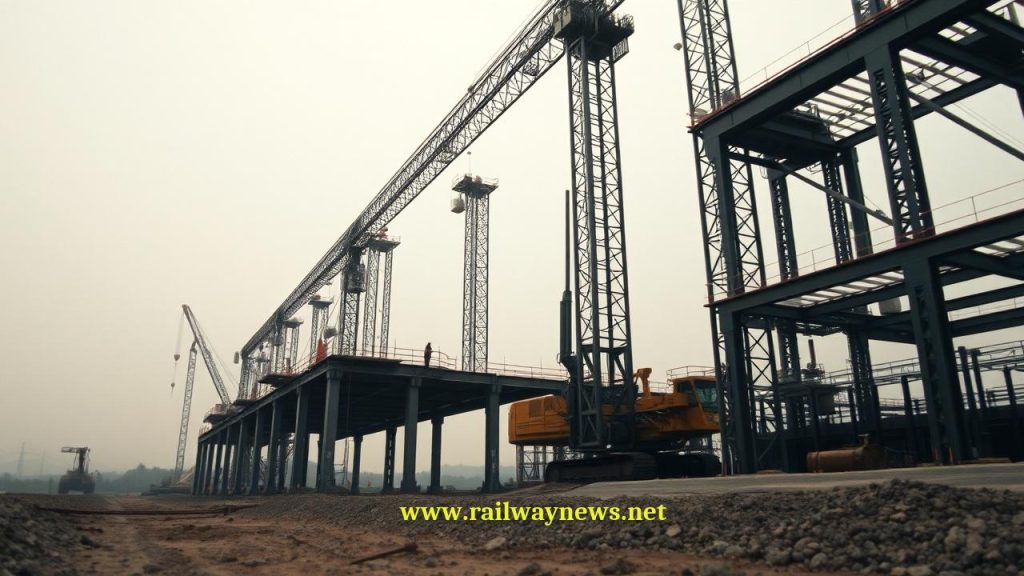
⚡ In Brief: The Gateway Development Commission has resumed construction on the $16 billion Hudson River rail tunnel project connecting New York and New Jersey, following a two-week work stoppage that resulted from a politically-driven federal funding dispute.
NEW YORK, USA – Construction on the $16 billion Hudson River rail tunnel project has resumed after a court ruling reinstated federal funding following a two-week shutdown. The Gateway Development Commission (GDC) confirmed that crews restarted activities on February 20 after a halt on February 6 led to the layoff of approximately 1,000 workers. The stoppage was triggered by a federal freeze on previously awarded funds, which has since been reversed.
What Is the Full Scope of This Project?
The Hudson Tunnel Project is a core component of the broader Gateway Program designed to increase rail capacity between New Jersey and New York City. Current activities confirmed by the GDC include riverbed stabilization and initial tunnel preparation on both sides of the Hudson River. The project is intended to build a new two-track rail tunnel under the river and rehabilitate the existing 113-year-old North River Tunnel, which sustained damage during Hurricane Sandy in 2012.
Key Project Data
| Parameter | Value |
|---|---|
| Project / Contract Name | Hudson Tunnel Project (Gateway Program) |
| Total Value | $16 billion |
| Parties Involved | Gateway Development Commission, States of New York & New Jersey, U.S. Federal Government |
| Timeline / Completion | Not disclosed |
| Country / Corridor | USA / Northeast Corridor (New Jersey-New York) |
How Does This Compare to Similar Projects?
The project’s $16 billion valuation positions it as one of the largest single infrastructure investments in the United States. For comparison, a recent major European rail contract saw Alstom secure a €1.03 billion (approx. $1.1B) deal to supply 153 new trains and build a new manufacturing facility for Comboios de Portugal, creating 300 direct jobs (Source: Alstom, 2025). The temporary layoff of 1,000 workers during the brief Hudson Tunnel stoppage highlights the significantly larger direct labor impact of major civil works compared to rolling stock procurement. The project’s scale aligns with a broader trend of large-scale public infrastructure investment, such as the UK’s updated Infrastructure Pipeline strategy, which forecasts £718 billion in public and private investment (Source: UK Government, 2025).
Editor’s Analysis
The recent work stoppage on the Hudson Tunnel project underscores the significant execution risk that political disputes pose to critical infrastructure, even after funding has been awarded. While market conditions show a strong appetite for long-term projects, as evidenced by record order books for major contractors like Costain (Source: Construction News, 2026), this incident demonstrates that political opposition can halt progress and disrupt the workforce instantly. For the North American rail sector, this event serves as a reminder that securing durable, cross-party political consensus is as vital as securing the initial capital investment for multi-decade mega-projects.
FAQ
Q: Why is the Hudson River rail tunnel project necessary?
A: The project is critical for replacing and supplementing the existing 113-year-old North River Tunnel, which is a key chokepoint on the Northeast Corridor and suffers from reliability issues and damage from a previous hurricane. The GDC and transportation officials have warned that a failure of the current tunnel would severely disrupt rail travel throughout the region.
Q: What was the specific reason for the federal funding dispute?
A: The GDC, New York, and New Jersey sued the federal government after the Trump administration froze previously awarded funds for the project. Although a court ordered the funding to be restored, the administration has publicly reiterated its opposition to the project.
Q: What is the impact of the two-week work stoppage on the project’s final timeline?
A: The GDC has not officially confirmed what impact the two-week delay will have on the overall project schedule or its final completion date. CEO Tom Prendergast has emphasized the importance of continued funding to avoid any future stoppages.

Railway infrastructure, rolling stock and transport technologies specialist focused on global rail industry developments, high-speed rail systems, signaling technologies and freight transportation. Covering railway investments, public transport modernization, rail operations and international mobility projects across Europe, Asia and North America.
RELATED POSTS

October 1, 2026 7:09 am
United States regulators confirmed a September 30 deadline for the...

October 8, 2026 1:15 pm
Alstom secured a €1bn contract to build 13 automated trains,...

October 4, 2026 5:14 pm
Alstom secured a CA$4.7 billion order from VIA Rail Canada...

October 1, 2026 12:13 am
Illinois approved $1.5 billion annually for the Northern Illinois Transit...

October 6, 2026 2:14 am
Union Pacific launched export rail shipments with Ferromex to deliver...

October 1, 2026 6:10 am
Amtrak approved a System Expansion Committee on July 30 to...