
Hudson Tunnel Project Confirms $235M Construction Restart
Gateway Development Commission restarted the Hudson Tunnel Project’s $16 billion construction in New York with $235 million in federal funds.
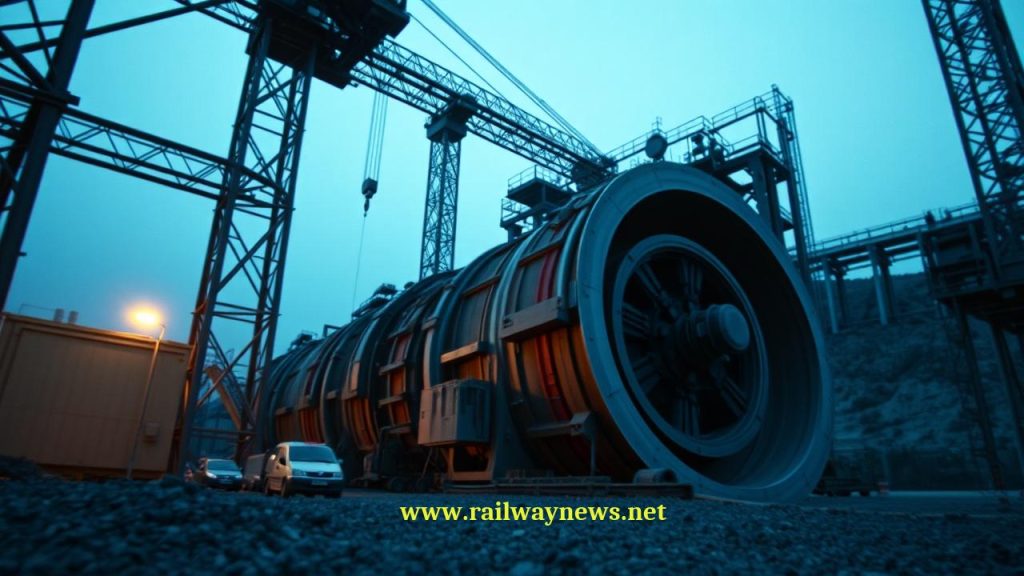
⚡ In Brief: The Gateway Development Commission has resumed construction on the $16 billion Hudson Tunnel project in New York and New Jersey, following the release of $235 million in previously frozen federal funds, though officials warn of another potential halt.
NEW YORK, USA – The Gateway Development Commission (GDC) has restarted all construction activities this week on the $16 billion Hudson Tunnel project after a federal funding dispute caused a halt in February. The resumption, funded by a $235 million federal disbursement, includes riverbed stabilization and preparation for tunnel boring. However, GDC CEO Tom Prendergast warned the restart could be short-lived, with a potential for another pause within two to three months if further committed funding is not released.
What Is the Full Scope of This Project?
The project involves boring a new two-track passenger rail tunnel under the Hudson River and fully rehabilitating the existing 113-year-old North River Tunnel, which sustained significant saltwater damage during Hurricane Sandy. This tunnel is a critical component of the broader Gateway Program, which also includes the recently opened Portal North Bridge, aimed at increasing capacity and reliability on the Northeast Corridor. The full scope of work is intended to double rail capacity between New Jersey and New York Penn Station.
Key Project Data
| Parameter | Value |
|---|---|
| Project / Contract Name | Hudson Tunnel Project (Part of the Gateway Program) |
| Total Value | $16 billion (USD) |
| Parties Involved | Gateway Development Commission, New York, New Jersey, US Federal Government |
| Timeline / Completion | Revised schedule following work stoppage not disclosed |
| Country / Corridor | USA / Northeast Corridor |
How Does This Compare to Similar Projects?
The Hudson Tunnel’s $16 billion budget is comparable in scale to other major international rail infrastructure undertakings facing similar long-term funding challenges. For example, the UK’s Northern Powerhouse Rail (NPR) project, connecting major northern cities, faces ongoing scrutiny over its multi-billion-pound budget and delivery schedule (Source: Construction News, 2026). The project’s stop-start nature contrasts with stated government goals, such as the UK’s updated National Infrastructure Pipeline, which aims to provide clearer long-term investment signals by outlining £718 billion in planned public and private projects to secure contractor confidence and workforce development (Source: Railway Pro, 2025).
Editor’s Analysis
The tenuous restart of the Hudson Tunnel project highlights the significant political and financial risks associated with US mega-projects that depend on annual federal appropriations. This funding uncertainty complicates long-term planning for contractors and can inflate final costs, a challenge that other nations attempt to mitigate through more stable, long-term infrastructure strategies. The success of the entire Gateway Program, and by extension the Northeast Corridor, now hinges on establishing a reliable federal funding stream to avoid further costly delays and maintain project momentum.
FAQ
Q: Why is the Hudson Tunnel project necessary?
A: The project is required to repair the existing 113-year-old North River Tunnel, which was severely damaged by Hurricane Sandy in 2012, and to add capacity. The current tunnel is a critical chokepoint for Amtrak and NJ Transit, and an unplanned shutdown would severely impact the regional economy.
Q: What is the risk of another work stoppage?
A: Project CEO Tom Prendergast stated that the current $235 million in funding would only last for two to three months. Without the release of further scheduled federal funds, another complete halt to construction activities would be forced.
Q: How will this project impact rail passengers on the Northeast Corridor?
A: Once complete, the new tunnel and the rehabilitated old one will double track capacity, which is expected to improve service reliability and reduce delays for hundreds of thousands of daily commuters. The timeline for achieving these benefits has not been officially updated following the recent pause.

Railway infrastructure, rolling stock and transport technologies specialist focused on global rail industry developments, high-speed rail systems, signaling technologies and freight transportation. Covering railway investments, public transport modernization, rail operations and international mobility projects across Europe, Asia and North America.
RELATED POSTS

September 6, 2026 5:19 am
Hitachi delivered Taiwan's first N700ST high-speed train from Japan in...

September 5, 2026 4:19 pm
CPK launched formal tender talks with four consortia to design...

September 6, 2026 4:12 am
Alstom delivered the first of 100 new G Class trams...

September 5, 2026 7:14 pm
HS2 Ltd signed renegotiated civils contracts with EKFB and Align...

September 6, 2026 6:17 am
Hungary ordered a national ban on most freight trains from...

September 6, 2026 1:17 am
Hitachi Toshiba Supreme Consortium confirmed the first of 12 N700ST...