
Hitachi Rail’s Ethical Train Lifecycle: SPD & Sustainability
Hitachi Rail’s pioneering Social Product Declaration (SPD) system tracks the ethical life cycle of its trains comprehensively, from design to end-of-life management and recycling, setting new benchmarks for transparency and accountability in sustainability and ethics within the rail industry.
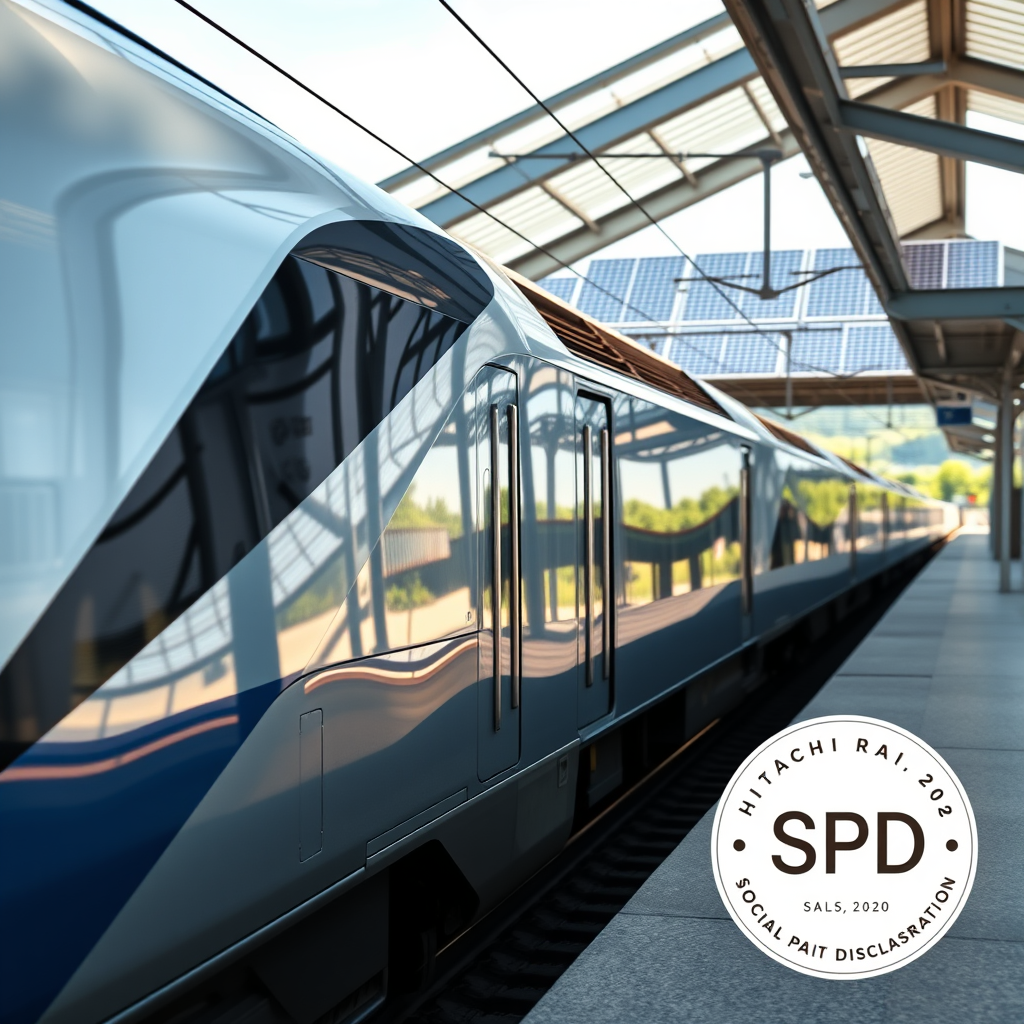
Introduction
The railway industry is undergoing a significant transformation, driven by increasing demands for sustainability and ethical practices throughout the entire lifecycle of rolling stock. This article explores the pioneering work of Hitachi Rail in establishing a detailed system for tracking the ethical life cycle of its trains, a groundbreaking initiative that sets a new benchmark for social and environmental responsibility within the rail sector. Hitachi Rail’s innovative Social Product Declaration (SPD) allows for the monitoring of both the social and environmental impacts of their products, from initial design and manufacturing to end-of-life management and recycling. This represents a critical step toward greater transparency and accountability, enabling customers and stakeholders to make informed decisions based on a holistic understanding of the product’s total impact. This approach transcends traditional assessments, encompassing factors such as supply chain ethics, employee well-being, and environmental performance across the train’s projected 30- to 40-year lifespan. The implications of this system are far-reaching, potentially influencing the entire rail industry to adopt similar measures and promote greater sustainability and ethical considerations within their operations.
Hitachi Rail’s Social Product Declaration (SPD)
Hitachi Rail’s introduction of the SPD marks a paradigm shift in the railway industry. This declaration goes beyond merely measuring a train’s carbon footprint; it provides a detailed assessment of the social and environmental impacts across the entire product lifecycle. This includes rigorous evaluation of the manufacturing process, assessing adherence to ethical labor practices within its supply chain, ensuring fair wages, prioritizing employee safety, and promoting gender equality. The SPD also incorporates end-of-life considerations, encompassing the responsible dismantling, recycling, and disposal of train components to minimize environmental impact. This holistic approach demonstrates Hitachi Rail’s commitment to environmental sustainability and social responsibility, extending beyond its own operations to encompass the broader network of suppliers and stakeholders involved in the production and deployment of its rolling stock.
The Masaccio Battery Hybrid Train Project
The Masaccio battery hybrid train project serves as a pivotal case study for Hitachi Rail’s SPD. This innovative fleet, currently deployed in Italy, showcases the company’s commitment to reducing carbon emissions. By leveraging a multi-power system – capable of running on diesel, electric, and battery power – the Masaccio trains have achieved a 50% reduction in carbon emissions compared to other trains operating on similar routes. The successful implementation of the SPD on the Masaccio project demonstrates the feasibility and effectiveness of this detailed ethical life cycle assessment. This project highlights the tangible benefits of integrating environmental and social considerations into the design and operation of railway systems.
Supply Chain Transparency and Ethical Sourcing
A crucial element of Hitachi Rail’s SPD is the emphasis on transparency and ethical sourcing throughout its supply chain. The company’s commitment to tracking and evaluating the social performance of its suppliers ensures that ethical labor standards are maintained at every stage of production. This includes rigorous checks for fair wages, safe working conditions, and adherence to human rights principles. By demanding ethical practices from its suppliers, Hitachi Rail not only minimizes its own environmental and social footprint but also contributes to a more sustainable and responsible global supply chain. This proactive approach establishes a model for other companies in the rail industry to follow, fostering a culture of ethical sourcing and accountability.
Future Implications and Industry-Wide Adoption
Hitachi Rail’s pioneering initiative with the SPD has far-reaching implications for the future of the railway industry. By setting a new standard for transparency and accountability, the company is encouraging other manufacturers to adopt similar practices. The successful implementation of the SPD on the Masaccio project and its planned application to the upgraded EuroMasaccio model demonstrate the scalability and applicability of this approach. The widespread adoption of ethical life cycle assessments could significantly enhance the sustainability and social responsibility of the entire railway sector. This not only benefits the environment and society, but also strengthens the industry’s reputation and builds trust with customers and stakeholders. The focus on transparency and traceability across the supply chain fosters greater confidence in the industry and drives innovation towards more sustainable and ethically produced rolling stock. This moves beyond simple compliance towards a commitment to continuous improvement, ensuring the long-term viability and positive impact of the railway sector.

Railway infrastructure, rolling stock and transport technologies specialist focused on global rail industry developments, high-speed rail systems, signaling technologies and freight transportation. Covering railway investments, public transport modernization, rail operations and international mobility projects across Europe, Asia and North America.
RELATED POSTS

October 8, 2026 1:15 pm
Alstom secured a €1bn contract to build 13 automated trains,...

October 1, 2026 7:09 am
United States regulators confirmed a September 30 deadline for the...

October 4, 2026 5:14 pm
Alstom secured a CA$4.7 billion order from VIA Rail Canada...

October 8, 2026 12:18 pm
Siemens Mobility signed an agreement with VinSpeed to supply 350...

October 5, 2026 6:12 pm
AECOM and Jacobs secured a contract in September 2026 to...

October 4, 2026 11:08 pm
Sound Transit confirmed the September 30 opening of Seattle Pinehurst...