
Hitachi Rail secures second Specific Transmission Module contract in
Hitachi Rail secured a second Specific Transmission Module contract for Portugal’s CONVEL system, awarded post-April 2026.
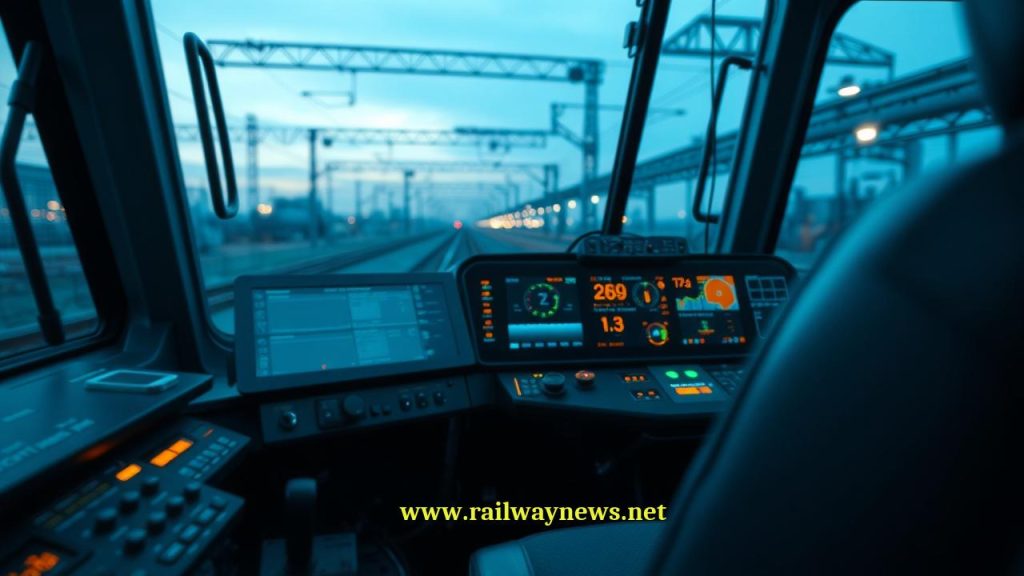
⚡ In Brief: Hitachi Rail will develop a new Specific Transmission Module (STM) for Portugal’s CONVEL system, following an international tender completed in April 2026, to facilitate the national rail network’s transition to ETCS Level 2 and diversify the technology supply chain.
LISBON – Hitachi Rail has secured a contract from Infraestruturas de Portugal to develop and certify a second Specific Transmission Module (STM) for the national network. The contract, awarded following an international public tender concluded in April 2026, aims to bridge Portugal’s legacy CONVEL train protection system with the European ETCS standard. The project is a key component of Portugal’s national European Rail Traffic Management System (ERTMS) implementation strategy.
What Are the Technical Specifications?
The solution will be an external module designed to interface with a train’s core ETCS Onboard Unit (OBU). Its function is to interpret data from the track-side balises of the Portuguese CONVEL ‘Class B’ system and translate it into a standard format that the ETCS system can process. This allows a single onboard system to operate on lines equipped with the new ETCS Level 2 as well as legacy lines still using CONVEL. The development will be a multi-national effort, combining Hitachi Rail’s teams in Portugal, Sweden, and Italy to deliver and certify the system.
Key Technical Data
| Parameter | Value |
|---|---|
| Technology / System Name | Specific Transmission Module (STM) for CONVEL |
| Total Value | Not disclosed |
| Parties Involved | Hitachi Rail (supplier), Infraestruturas de Portugal (client) |
| Timeline / Completion | Development and certification phase initiated post-April 2026 |
| Country / Corridor | Portugal / National Network |
Where Does This Technology Stand in the Market?
The development of a second STM supplier for Portugal positions Hitachi Rail directly against the incumbent technology provider for the CONVEL system. In the wider European market for ETCS and STM solutions, the primary competitors are Siemens Mobility and Alstom. Siemens’ Trainguard ETCS solution and Alstom’s Atlas platform are widely deployed and have STMs for dozens of national ‘Class B’ systems. Hitachi’s offering competes by providing an open-market alternative, which is a strategic priority for infrastructure managers seeking to avoid vendor lock-in. While STMs are bespoke by nature, Hitachi’s use of an external module architecture offers potential flexibility for integration with various ETCS OBU suppliers, a contrast to more deeply integrated solutions from competitors.
Editor’s Analysis
This contract award is more significant for its strategic market implications than for the technology itself. By commissioning a second STM provider, Infraestruturas de Portugal is actively mitigating long-term supply chain risks and creating price competition for future onboard system procurements. This move reflects a broader European trend where infrastructure managers cultivate multiple suppliers for critical ERTMS components to enhance market resilience, a strategy also seen in Germany and the UK. Ensuring this new module is available under Fair, Reasonable, and Non-Discriminatory (FRAND) terms is crucial for creating a truly level playing field for all operators and rolling stock providers in the Portuguese market. (Source: European Union Agency for Railways, 2023).
FAQ
Q: What is a Specific Transmission Module (STM)?
A: An STM is a hardware and software interface that allows a modern ETCS-equipped train to read and understand signals from an older, national train protection system, like Portugal’s CONVEL. It acts as a translator, enabling operation across lines with different signalling technologies during a long migration period.
Q: Why does Portugal need a second STM for the same system?
A: Developing a second STM with Hitachi Rail is intended to break the dependency on a single technology supplier. This increases market competition, which can lower future costs for operators, and improves the resilience of the supply chain for critical signalling equipment.
Q: What impact will this have on rail services in Portugal?
A: During the transition, this technology will allow new and upgraded trains to run on all major lines without interruption. In the long term, creating a more competitive supplier market is expected to lower the costs of modernising the fleet, ultimately supporting a more efficient and interoperable national railway system.

Railway infrastructure, rolling stock and transport technologies specialist focused on global rail industry developments, high-speed rail systems, signaling technologies and freight transportation. Covering railway investments, public transport modernization, rail operations and international mobility projects across Europe, Asia and North America.
RELATED POSTS

October 8, 2026 1:15 pm
Alstom secured a €1bn contract to build 13 automated trains,...

October 1, 2026 7:09 am
United States regulators confirmed a September 30 deadline for the...

October 8, 2026 12:18 pm
Siemens Mobility signed an agreement with VinSpeed to supply 350...

October 4, 2026 5:14 pm
Alstom secured a CA$4.7 billion order from VIA Rail Canada...

October 5, 2026 6:12 pm
AECOM and Jacobs secured a contract in September 2026 to...

October 1, 2026 12:13 am
Illinois approved $1.5 billion annually for the Northern Illinois Transit...