
Hitachi Rail Expands ETCS Level 2 on Gold Coast Line
Hitachi Rail expands ETCS Level 2 digital signalling on Queensland’s Gold Coast line as part of a 200+ km corridor modernisation for the Brisbane 2032 Olympics.
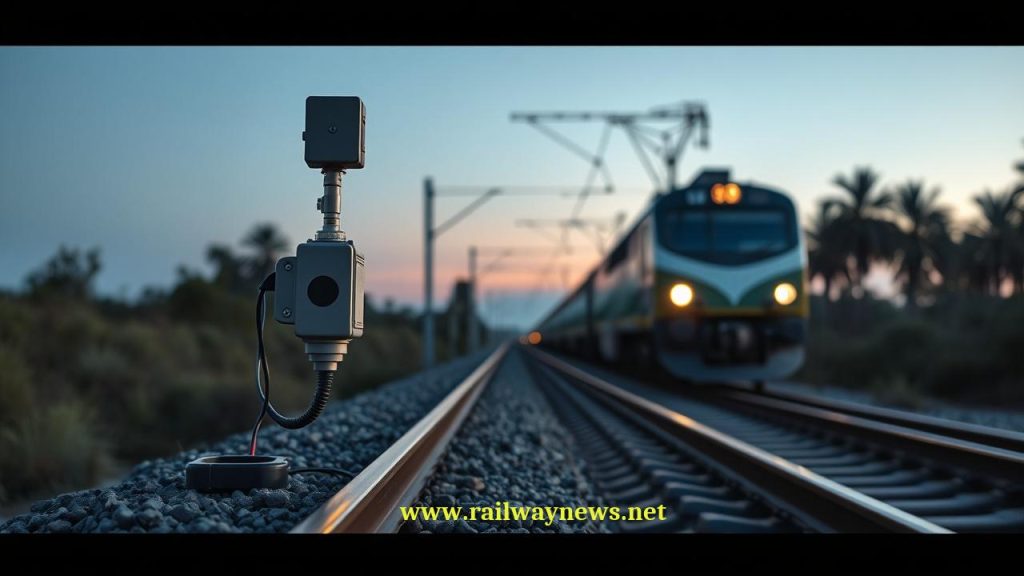
⚡ In Brief: Hitachi Rail is expanding ETCS Level 2 digital signalling on Queensland’s Gold Coast line between Kuraby and Beenleigh stations, part of a 200+ km corridor modernization ahead of the Brisbane 2032 Olympic and Paralympic Games.
BRISBANE, AUSTRALIA – Hitachi Rail will install the European Train Control System Level 2 (ETCS L2) between Kuraby and Beenleigh stations on the Gold Coast line, expanding a digital signalling overhaul of more than 200 km of passenger rail corridors in South East Queensland. The company confirmed the deployment in partnership with the Queensland Transport Authority and Queensland Rail, with the Shorncliffe line already equipped for testing and staff training. No contract value or passenger-service launch date for the Kuraby–Beenleigh section was disclosed.
What Are the Technical Specifications?
ETCS Level 2 is a digital train control and protection system that replaces trackside signals with in-cab signalling transmitted via GSM-R radio, enabling continuous bidirectional data exchange between the train and the radio block centre. Unlike ETCS Level 1, which superimposes data onto existing signal infrastructure via balises, Level 2 eliminates the dependency on line-side signals entirely, using axle counters and track circuits for train detection. In the Queensland deployment, the system is complemented by a new traffic management system for the entire South East Queensland network and a track closure management system for construction work, which Hitachi Rail’s ANZ Managing Director Sarfaraz Samnakay described as the “backbone” of the region’s future digital railway. Hitachi Rail holds over 20 years of ETCS delivery experience across the UK, continental Europe, China, India, and Australia. The total route length under modernization exceeds 200 km, though the specific kilometre count for the Kuraby–Beenleigh segment was not separately disclosed.
Key Technical Data
| Parameter | Value |
|---|---|
| Technology / System Name | ETCS Level 2 (European Train Control System) |
| Total Value | Not disclosed |
| Parties Involved | Hitachi Rail, Queensland Transport Authority, Queensland Rail |
| Timeline / Completion | Not disclosed; Shorncliffe line in final pre-service testing phase |
| Country / Corridor | Australia / Brisbane–Gold Coast corridor, South East Queensland |
Where Does This Technology Stand in the Market?
ETCS Level 2 competes directly with Communications-Based Train Control (CBTC), the dominant digital signalling standard for metro and high-density urban networks. CBTC, deployed by suppliers including Thales (SelTrac) and Siemens (Trainguard MT), uses continuous Wi-Fi or LTE-based train-to-wayside communication and achieves headways as low as 90 seconds, compared to ETCS L2’s typical 2–3 minute headway on mixed-traffic mainline corridors. In the North American freight and passenger market, Positive Train Control (PTC) remains the regulatory mandate, a GPS-based overlay system that enforces speed limits and movement authorities but lacks the moving-block capacity gains of ETCS L2 or CBTC. The Australia railway signalling market overall is projected to grow steadily through 2035, driven by network expansion and smart technology integration, according to market analysis from IndexBox. Parallel to the Hitachi Rail deployment, the City of Moreton Bay in Queensland will trial AI-powered traffic signal control using LiDAR and object detection at a Petrie intersection — an Australian first that mirrors smart corridor management approaches used in Singapore, New Zealand, and Qatar. Globally, the 2032 timeline aligns with Poland’s first high-speed rail section between Warsaw and Łódź, also targeting a 2032 opening, where 19 firms are bidding for contracts with an emphasis on local suppliers. (Sources: IndexBox, 2024; iTnews, 2025; Global Construction Review, 2025; UNISIG ETCS specifications)
Note: Comparable per-kilometre ETCS L2 deployment costs for the Queensland project were not available at time of publication. Benchmark figures from European installations range between €200,000 and €600,000 per track-kilometre depending on interlocking complexity and GSM-R coverage requirements, but Hitachi Rail has not confirmed whether these benchmarks apply to the Australian context.
Editor’s Analysis
The Queensland ETCS L2 rollout signals a deliberate shift toward interoperability with European-style mainline digital signalling rather than the metro-centric CBTC path adopted in Sydney’s rapid transit network. This choice aligns the Brisbane–Gold Coast corridor with long-haul passenger and future high-speed rail compatibility — a calculated bet given the 2032 Olympic deadline. The parallel Moreton Bay AI traffic trial, though road-focused, suggests Queensland is assembling a multi-modal intelligent transport ecosystem where rail signalling, traffic management, and incident response systems may eventually share data infrastructure. The awkward reality is that no published integration roadmap connects these projects yet. (Source: IndexBox Australia Railway Signalling Market Report, 2024)
FAQ
Q: What is the difference between ETCS Level 2 and the existing signalling on the Gold Coast line?
A: The existing system uses line-side colour-light signals that drivers must visually observe. ETCS Level 2 replaces these with a digital in-cab display showing permitted speed and movement authority, transmitted wirelessly via GSM-R, eliminating the risk of a driver missing a trackside signal.
Q: When will ETCS Level 2 enter passenger service on the Gold Coast line?
A: Hitachi Rail has not announced a revenue-service date for the Kuraby–Beenleigh section. The Shorncliffe line north of Brisbane is the first segment undergoing final testing and staff training before passenger introduction; its operational launch date will likely serve as the lead indicator for subsequent sections.
Q: How does ETCS Level 2 increase network capacity for the 2032 Olympics?
A: By providing continuous digital monitoring of train positions and speeds, ETCS L2 can reduce the safe separation distance between trains compared to fixed-block signalling, enabling higher frequencies on the same infrastructure. The accompanying traffic management system adds real-time scheduling optimization across the entire South East Queensland network.

Railway infrastructure, rolling stock and transport technologies specialist focused on global rail industry developments, high-speed rail systems, signaling technologies and freight transportation. Covering railway investments, public transport modernization, rail operations and international mobility projects across Europe, Asia and North America.
RELATED POSTS

October 8, 2026 1:15 pm
Alstom secured a €1bn contract to build 13 automated trains,...

October 1, 2026 7:09 am
United States regulators confirmed a September 30 deadline for the...

October 8, 2026 12:18 pm
Siemens Mobility signed an agreement with VinSpeed to supply 350...

October 4, 2026 5:14 pm
Alstom secured a CA$4.7 billion order from VIA Rail Canada...

October 5, 2026 6:12 pm
AECOM and Jacobs secured a contract in September 2026 to...

October 1, 2026 12:13 am
Illinois approved $1.5 billion annually for the Northern Illinois Transit...