
Heartland Flyer Secured: US Passenger Rail Funding & Challenges
Amtrak Heartland Flyer saved by regional funds, avoiding service halt. $3.5M in tolls secures another year.
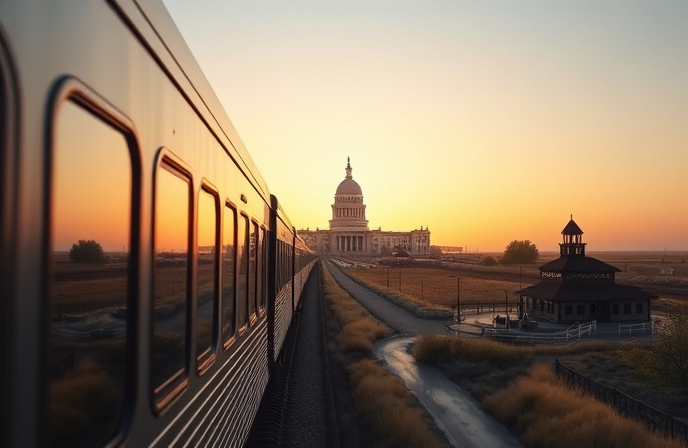
Heartland Flyer Receives a Lifeline as Regional Funds Secure Another Year of Service
In a critical move for intercity passenger rail service in the South Central United States, the North Central Texas Council of Governments Regional Transportation Council (NCTCOG RTC) has approved $3.5 million in regional toll revenue to maintain the Amtrak Heartland Flyer for another year. This decision, made last week, averts the potential cessation of service that was slated for October 1st. The NCTCOG RTC, representing a key metropolitan planning organization (MPO), stepped in following the Texas State Legislature’s failure to allocate funds for the intercity service. The Heartland Flyer, jointly operated by Amtrak and funded by the Oklahoma and Texas Departments of Transportation (ODOT and TxDOT), connects Oklahoma City and Fort Worth. The NCTCOG staff will now seek reimbursement from the State of Texas for this funding. This article will explore the implications of this decision and delve into the challenges facing passenger rail in the region.
Securing Passenger Rail Operations
The immediate impact of the NCTCOG RTC’s decision is the preservation of the Heartland Flyer’s operational continuity. The lack of Texas State support had placed the service’s future in serious jeopardy. The $3.5 million commitment from regional toll revenues provides the necessary financial bridge to keep the train running for another year. This funding allows Amtrak to continue its operations, which include providing the rolling stock, crew, and other essential services. The service is a critical link for communities along its route, offering a vital transportation alternative to automobiles, especially for those lacking access to personal vehicles.
Financial Challenges and State Support
The situation highlights the ongoing challenges passenger rail faces in securing consistent funding. The Heartland Flyer’s operational model, based on joint funding from two states, makes it vulnerable to political and budgetary pressures. The absence of state-level commitment in Texas underlines the need for long-term financial planning and sustainable funding models. The fact that NCTCOG is seeking reimbursement underscores the reliance on the state and highlights a need for dedicated state-level financial backing for intercity rail services. The Texas Rail Advocates, in a press release dated July 9th, emphasized the importance of Texas’s commitment to the success of the service.
The Role of Regional Transportation Councils
The intervention of the NCTCOG RTC demonstrates the critical role that MPOs can play in supporting regional transportation initiatives. As planning and funding bodies, these councils can act as a bridge to ensure continuity, particularly when state-level funding is uncertain. The NCTCOG RTC’s commitment reflects its dedication to providing multi-modal transportation options and its recognition of the value that the Heartland Flyer offers to its constituents. The ability of regional entities to deploy funds that originated from toll revenues provides a glimpse into innovative transportation funding schemes.
Conclusion
The decision to allocate regional toll revenue to support the Heartland Flyer is a crucial development, securing another year of service and highlighting the critical role of regional agencies in protecting intercity rail transportation. While providing a temporary solution, it underscores the necessity for a permanent funding plan, ideally with dedicated state resources. The dependence on regional funding underscores the ongoing challenge of securing sustainable financial support for passenger rail. The ability of the NCTCOG to step in represents a win for the local stakeholders and provides a glimpse of innovative strategies for maintaining such important transportation resources.
Looking forward, the long-term viability of the Heartland Flyer hinges on securing a committed and consistent funding base. This could involve advocating for state-level appropriations, exploring alternative revenue streams, or developing public-private partnerships. The future of intercity passenger rail in Texas, and the region, will depend on successful implementation of innovative funding strategies.

Railway infrastructure, rolling stock and transport technologies specialist focused on global rail industry developments, high-speed rail systems, signaling technologies and freight transportation. Covering railway investments, public transport modernization, rail operations and international mobility projects across Europe, Asia and North America.
RELATED POSTS

October 1, 2026 7:09 am
United States regulators confirmed a September 30 deadline for the...

October 8, 2026 1:15 pm
Alstom secured a €1bn contract to build 13 automated trains,...

October 4, 2026 5:14 pm
Alstom secured a CA$4.7 billion order from VIA Rail Canada...

October 1, 2026 12:13 am
Illinois approved $1.5 billion annually for the Northern Illinois Transit...

October 6, 2026 2:14 am
Union Pacific launched export rail shipments with Ferromex to deliver...

October 1, 2026 6:10 am
Amtrak approved a System Expansion Committee on July 30 to...