
Haryana Rail Revolution: $793M Investment, 3 Mega Projects
India’s substantial investment of $793.5 million (Rs 65.2 billion) in Haryana is aimed at modernizing its infrastructure, with a focus on three key projects: the construction of the longest elevated railway track in Rohtak and the refurbishment factory for Sonipat to enhance rail coach efficiency, all contributing to improved regional connectivity and economic growth.
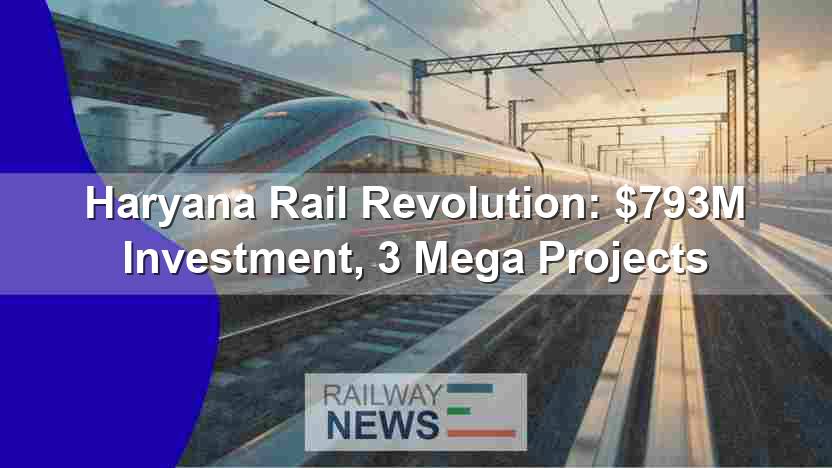
India’s Ambitious Rail Infrastructure Development in Haryana: A Detailed Overview
India’s commitment to modernizing its railway infrastructure is evident in a recent announcement of a significant investment in Haryana. This $793.5 million (Rs 65.2 billion) injection will fund three crucial projects: the Haryana Orbital Rail Corridor, a rail coach refurbishment factory in Sonipat, and the construction of the longest elevated railway track in Rohtak. This article explores the specifics of each project, analyzing their individual significance and collective contribution to Haryana’s and India’s broader economic development and transportation efficiency. The strategic importance of these projects within the larger context of India’s national railway modernization plans will be examined, highlighting the government’s focus on improving connectivity, boosting industrial growth, and enhancing passenger experience. We will also briefly discuss the broader implications of these investments on India’s overall railway modernization strategy and its alignment with sustainable development goals.
The Haryana Orbital Rail Corridor: A Game Changer for Regional Connectivity
The lion’s share of the investment, approximately $683.5 million (Rs 56.18 billion), is earmarked for the construction of the Haryana Orbital Rail Corridor. This ambitious project aims to create a ring-shaped railway line encircling the state, dramatically improving freight and passenger transportation. By bypassing congested urban areas, the Orbital Corridor will significantly reduce transit times, improve the efficiency of goods movement, and alleviate pressure on existing rail lines. The project’s positive impact will ripple through the economy, fostering industrial growth and attracting further investment in the region. This strategic investment reflects the Indian government’s dedication to optimizing logistics and enhancing regional connectivity.
Modernization and Efficiency: The Sonipat Rail Coach Refurbishment Factory
An allocation of $71.7 million (Rs 5.9 billion) is dedicated to establishing a state-of-the-art rail coach refurbishment factory in Sonipat. This facility will play a vital role in extending the lifespan of existing rolling stock, reducing the need for new acquisitions and consequently minimizing environmental impact and financial strain. The factory will contribute significantly to the efficiency of railway operations by ensuring that coaches are maintained to the highest standards, thereby enhancing passenger comfort and safety. The establishment of such a facility showcases India’s commitment to sustainable practices within the railway sector.
Elevated Railway Track in Rohtak: Enhancing Urban Mobility
The construction of the longest elevated railway track in Rohtak, costing $38.3 million (Rs 3.15 billion), addresses the growing need for efficient urban transportation. By elevating the tracks, the project minimizes disruption to surface-level traffic, reduces commute times, and enhances the overall efficiency of the urban rail network. This initiative showcases a strategic investment in reducing congestion and improving the quality of life for residents in Rohtak while demonstrating a commitment to modernizing urban railway systems.
Conclusion: A Multifaceted Approach to Railway Modernization
The Indian government’s substantial investment in Haryana’s rail infrastructure represents a significant step towards modernizing the nation’s railway system. The three projects – the Haryana Orbital Rail Corridor, the Sonipat rail coach refurbishment factory, and the elevated railway track in Rohtak – are interconnected and collectively address key challenges facing India’s transportation sector. The Orbital Corridor tackles regional connectivity, enhancing freight and passenger movement. The refurbishment factory improves operational efficiency and promotes sustainability by extending the life of existing rolling stock (Railway Vehicles). The elevated track in Rohtak exemplifies the commitment to modernizing urban rail systems, reducing congestion, and improving the overall commuting experience. These initiatives collectively demonstrate a strategic approach towards improving logistical efficiency, supporting economic growth, and enhancing the quality of life for Indian citizens. The success of these projects will not only benefit Haryana but will also serve as a model for future railway development across India, showcasing a commitment to efficient, sustainable, and modern rail infrastructure. The long-term benefits extend beyond immediate economic gains, fostering sustainable development and improving the overall well-being of the communities served by these enhanced railway networks. These investments signal a significant leap towards establishing a robust and future-ready railway network for India.

Railway infrastructure, rolling stock and transport technologies specialist focused on global rail industry developments, high-speed rail systems, signaling technologies and freight transportation. Covering railway investments, public transport modernization, rail operations and international mobility projects across Europe, Asia and North America.
RELATED POSTS

October 8, 2026 1:15 pm
Alstom secured a €1bn contract to build 13 automated trains,...

October 1, 2026 7:09 am
United States regulators confirmed a September 30 deadline for the...

October 8, 2026 12:18 pm
Siemens Mobility signed an agreement with VinSpeed to supply 350...

October 4, 2026 5:14 pm
Alstom secured a CA$4.7 billion order from VIA Rail Canada...

October 5, 2026 6:12 pm
AECOM and Jacobs secured a contract in September 2026 to...

October 4, 2026 11:08 pm
Sound Transit confirmed the September 30 opening of Seattle Pinehurst...