
Port of Long Beach Reports Record 997,177 TEU Throughput
Port of Long Beach expanded monthly throughput to 997,177 TEUs in September 2026, rising 25% as shippers shifted inbound intermodal cargo to US rail corridors.
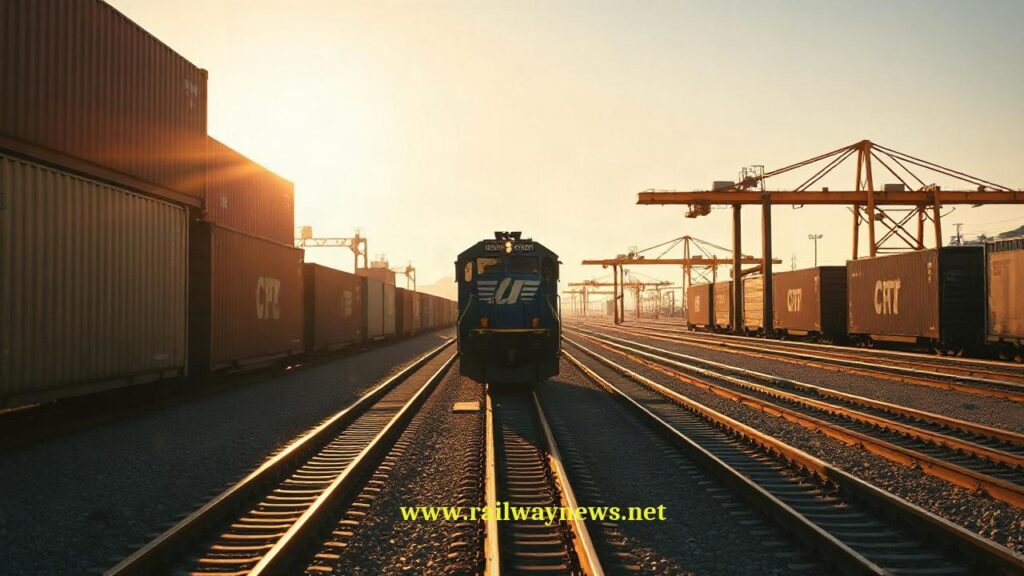
⚡ In Brief: The Port of Long Beach handled a record-breaking 997,177 TEUs in September 2026, marking a 25% year-over-year surge driven by West Coast cargo diversion and intermodal freight shifts.
LONG BEACH, UNITED STATES – The Port of Long Beach moved an all-time monthly record of 997,177 twenty-foot equivalent units (TEUs) in September 2026, registering a 25% increase compared to September 2025. Inbound cargo drove the expansion as imports climbed 31.3% year-over-year to 509,390 TEUs, while export volumes rose 7.8% to 91,747 TEUs and empty container handlings increased 22.1% to 396,040 TEUs. Through the first nine months of 2026, cumulative throughput reached 7,675,255 TEUs, up 3.9% relative to the corresponding period in 2025.
What Is the Full Scope of This Project?
The Port of the Future™ development framework establishes an infrastructure pathway to double annual container capacity at the Port of Long Beach to 20 million TEUs by 2050. Inbound container traffic acceleration reflects operational rerouting by maritime shippers mitigating high road transport diesel prices and ongoing Panama Canal transit constraints. Inbound intermodal transfers form the operational foundation of this throughput growth, as cargo destined for inland hubs bypasses canal bottlenecks to connect directly with Class I rail corridors. Total capital expenditure figures for the multi-decade terminal and on-dock rail expansions were not disclosed by the port authority.
Key Project Data
| Parameter | Value |
|---|---|
| Project / Contract Name | Port of the Future™ Long-Term Capacity Program |
| Total Value | Not disclosed |
| Parties Involved | Port of Long Beach, ocean carriers, Class I rail freight operators |
| Timeline / Completion | Target completion by 2050 |
| Country / Corridor | United States / Transpacific-US West Coast Intermodal Corridor |
How Does This Compare to Similar Projects?
Surging container volumes on Pacific maritime corridors contrast sharply with international rail freight contractions on trans-Eurasian trade routes. While Long Beach achieved an all-time monthly peak approaching 1 million TEUs, containerized rail volumes between China and Europe dropped 25% to 25,418 TEUs during 2025 due to shifting trade and geopolitical dynamics (Source: Upply, 2025). Conversely, cross-border rail flows between China and Central Asia expanded by 27.7% to 1.13 million TEUs over the same timeframe, underscoring that freight growth remains localized across regional landbridges (Source: Upply, 2025). Across domestic operations, China’s national rail system moved 3.7 billion tonnes of cargo in the first 11 months of 2025, recording a 2.7% year-on-year increase driven primarily by bulk mineral flows (Source: Grand View Research, 2025). North American supply chain corridors, however, absorbed friction during 2025 when Canadian railway workers were placed under an imposed contract settlement via binding government arbitration, illustrating broader cross-border labor challenges (Source: World Socialist Web Site, 2025).
Editor’s Analysis
The sustained cargo pivot toward West Coast ports demonstrates that shippers prioritize intermodal rail reliability over waterborne transit through capacity-constrained maritime chokepoints. As terminal throughput accelerates toward the port’s 20-million-TEU objective, terminal rail interchange velocity will dictate whether inland Class I rail networks can absorb import peaks without yard congestion. Growing containerized and bulk rail traffic worldwide highlights the mounting pressure on intermodal transfer hubs to upgrade on-dock capacity (Source: Future Market Insights, 2025).
FAQ
Q: What triggered the cargo volume record at the Port of Long Beach in September 2026?
A: Inbound cargo rose 31.3% to 509,390 TEUs as ocean carriers diverted freight to West Coast ports to circumvent Panama Canal draft restrictions and high diesel costs. This shift generated an all-time monthly high of 997,177 TEUs for the gateway.
Q: What is the target timeline and capacity goal for the Port of the Future program?
A: The Port of Long Beach plans to scale its annual cargo capacity to 20 million TEUs by 2050. Specific project phasing budgets and individual terminal construction milestones have not been officially confirmed.
Q: How does the September 2026 volume surge affect transcontinental intermodal rail operations?
A: The 25% annual volume increase concentrates import container staging onto BNSF and Union Pacific lines connecting to midwestern distribution hubs. Greater on-dock rail utilization helps process import volumes directly at maritime terminals, reducing reliance on long-distance highway trucking.

Railway infrastructure, rolling stock and transport technologies specialist focused on global rail industry developments, high-speed rail systems, signaling technologies and freight transportation. Covering railway investments, public transport modernization, rail operations and international mobility projects across Europe, Asia and North America.
RELATED POSTS

October 8, 2026 1:15 pm
Alstom secured a €1bn contract to build 13 automated trains,...

October 1, 2026 7:09 am
United States regulators confirmed a September 30 deadline for the...

October 8, 2026 12:18 pm
Siemens Mobility signed an agreement with VinSpeed to supply 350...

October 4, 2026 5:14 pm
Alstom secured a CA$4.7 billion order from VIA Rail Canada...

October 1, 2026 12:13 am
Illinois approved $1.5 billion annually for the Northern Illinois Transit...

October 5, 2026 6:12 pm
AECOM and Jacobs secured a contract in September 2026 to...