
STV Completes ADA Upgrades at MTA 149th Street Station
STV expanded transit access at New York MTA’s 149th Street station in late 2026, adding elevators and structural upgrades to a 120-year-old Bronx subway hub.
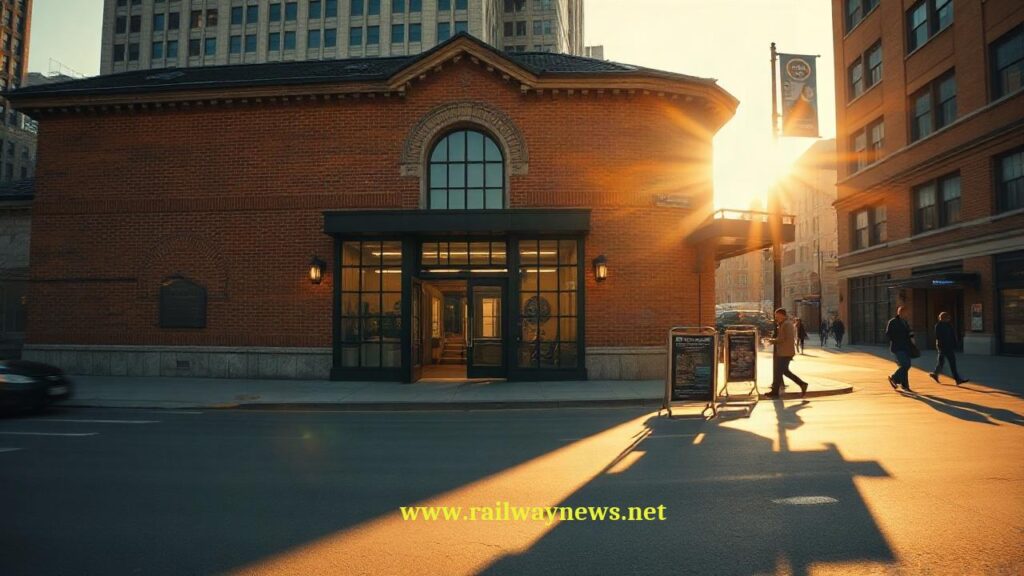
⚡ In Brief: STV Inc. has completed critical ADA-accessibility and structural upgrades at the historic 149th Street-Hostos subway station in the Bronx, New York, serving MTA New York City Transit routes 2, 4, and 5.
NEW YORK, UNITED STATES – STV Inc. has finished comprehensive accessibility renovations at the Metropolitan Transportation Authority’s 149th Street-Hostos subway complex in the Bronx as of late 2026. The modernization delivers Americans with Disabilities Act compliance across the hub, which serves three core subway lines and features a restored 120-year-old historic headhouse. Project delivery occurred alongside broader North American transit modernizations, which represent 11% of global rail modernization demand (Source: Future Market Insights, 2025).
What Is the Full Scope of This Project?
STV delivered multidisciplinary engineering and architectural rehabilitation to establish full vertical accessibility throughout the multi-level transfer complex. The scope encompassed station, civil, and site design for newly integrated elevators, structural reconfigurations of existing stairwells, and major overhauls of communications, security, and fire safety systems. Crews also carried out historic preservation work to restore the station’s original 120-year-old street-level headhouse while bringing passenger circulation corridors up to modern MTA accessibility standards.
Key Project Data
| Parameter | Value |
|---|---|
| Project / Contract Name | 149th Street-Hostos Station Accessibility Improvement Project |
| Total Value | Not disclosed |
| Parties Involved | STV Inc., Metropolitan Transportation Authority (MTA New York City Transit) |
| Timeline / Completion | Completed Q3/Q4 2026 |
| Country / Corridor | United States / MTA IRT White Plains Road & Jerome Avenue Lines (The Bronx, NY) |
How Does This Compare to Similar Projects?
Urban transit operators worldwide are allocating record capital expenditure toward retrofitting legacy urban stations, though procurement costs vary sharply by geography. In North America, where aging infrastructure accounts for 11% of global rail renewal demand, retrofitting century-old subway nodes requires high civil expenditure per station compared to European counterparts (Source: Future Market Insights, 2025). For example, Alstom secured a €1.4 billion contract in Canada to supply 70 modern metro trainsets alongside transit system modernizations, highlighting how fleet renewals are paired with station access upgrades in North America (Source: Railway Supply, 2026). Furthermore, global transit investment shifted heavily toward urban density solutions in 2025, with smart signaling integration growing 19% globally to complement physical civil accessibility overhauls (Source: Business Research Insights, 2025). Independent verification of the final construction cost for the 149th Street-Hostos project was not available at time of publication.
Editor’s Analysis
Complex civil retrofits inside century-old subway networks remain one of the most operationally challenging capital programs for North American transit authorities. STV’s execution at 149th Street-Hostos highlights a balancing act between historic preservation mandates and federal accessibility requirements that transit agencies face nationwide. With cross-border and regional logistics expanding alongside passenger rail renewals—evidenced by global cross-border rail investments rising 13%—agencies must accelerate legacy station modernizations to keep pace with urban passenger density (Source: Future Market Insights, 2025).
FAQ
Q: Which subway lines are accessible at the upgraded 149th Street-Hostos station?
A: The station complex provides direct transfer access to MTA New York City Transit’s 2, 4, and 5 subway lines. Passengers can now navigate between street level and platforms via newly installed elevator banks.
Q: What was the capital expenditure budget for STV’s Bronx project?
A: The specific contract value for the STV design package was not disclosed by the MTA or the contractor. Financial details were omitted from official completion statements released in late 2026.
Q: Did the station renovation alter the historic exterior architecture?
A: The project team preserved the exterior by structurally restoring the station’s 120-year-old historic headhouse. Interior circulation paths were reconfigured to install ADA elevators without compromising the integrity of the original structure.

Railway infrastructure, rolling stock and transport technologies specialist focused on global rail industry developments, high-speed rail systems, signaling technologies and freight transportation. Covering railway investments, public transport modernization, rail operations and international mobility projects across Europe, Asia and North America.
RELATED POSTS

October 8, 2026 1:15 pm
Alstom secured a €1bn contract to build 13 automated trains,...

October 1, 2026 7:09 am
United States regulators confirmed a September 30 deadline for the...

October 4, 2026 5:14 pm
Alstom secured a CA$4.7 billion order from VIA Rail Canada...
October 5, 2026 6:12 pm
AECOM and Jacobs secured a contract in September 2026 to...
October 1, 2026 12:13 am
Illinois approved $1.5 billion annually for the Northern Illinois Transit...
October 4, 2026 11:08 pm
Sound Transit confirmed the September 30 opening of Seattle Pinehurst...