
Hanoi Metro Project: Vietnam Rail Technology
Hanoi’s metro system is expanding, improving transport and boosting Vietnam’s railway sector. Modern technology and international collaboration are key to its success.
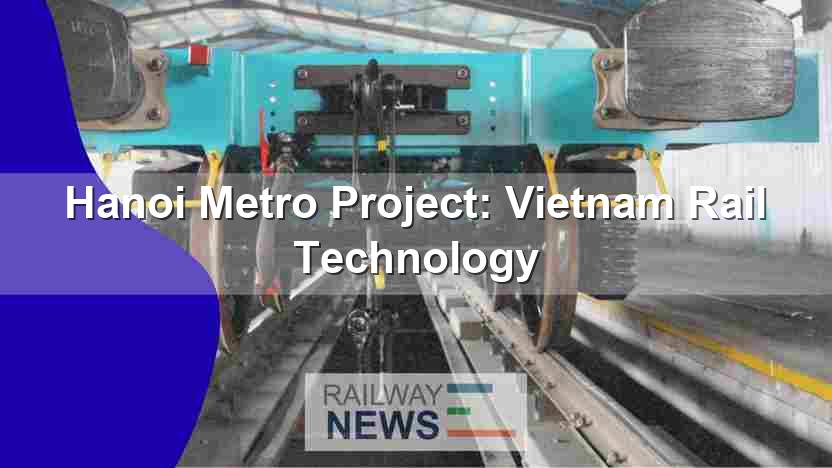
This article explores the development and implementation of the Hanoi Metro, a crucial infrastructure project aimed at modernizing Vietnam’s capital city’s transportation network. The project’s significance extends beyond simply adding a metro system; it represents a concerted effort to alleviate traffic congestion, improve air quality, and enhance the overall urban environment. The Hanoi Metro aims to provide a sustainable, efficient, and reliable public transportation alternative to the current reliance on private vehicles. This analysis explores the various phases of the project, from initial feasibility studies to the selection of technology, construction challenges, and financial arrangements. Additionally, it examines the project’s impact on urban planning and its contribution to the broader economic development of Hanoi. The ultimate goal is to assess the success of the Hanoi Metro project as a model for other developing cities facing similar transportation challenges.
Project Overview and Planning
The Hanoi Metro project, spearheaded by the Hanoi Metropolitan Rail Transport Project Board (HRB), formerly the Hanoi Authority for Tram and Public Transport Development Management (HATD), is a multi-phased undertaking. The initial phase focused on a pilot line (Line 3), a crucial step in demonstrating the feasibility and efficiency of a metro system in the city. Extensive technical studies (completed in 2009) and feasibility studies (completed in October 2005) preceded the project’s commencement. The pilot line, running east-west between Nhon depot and Hanoi station, served as a proving ground for technologies and operational strategies. Subsequent lines were planned to expand the network’s reach and coverage across the city, addressing various transportation needs in different districts. The selection of technology, including rolling stock (trains), signaling systems (CBTC – Communication-Based Train Control), and infrastructure design, was carefully considered to optimize efficiency and passenger experience. The project also factored in environmental concerns and aimed for a system that minimizes its ecological footprint.
Construction and Technology
The construction of Line 3 involved a combination of elevated and underground sections, showcasing a mixed-use approach tailored to the specific geographic and urban context. The 12.5km line includes 9.6km of elevated viaduct and 2.9km of underground tunnels, necessitating different construction techniques and specialized expertise. The use of 20m long metro trains, each capable of carrying 900 passengers, reflects a commitment to high capacity and efficient passenger movement. The trains are designed for a maximum speed of 80km/h, enabling a 20-minute transit time across the entire route. Alstom, a leading provider of railway systems, played a significant role in supplying an integrated system including Metropolis train-sets, CBTC, power supply systems, and depot equipment. SYSTRA, a renowned international consulting engineering firm, was involved in various aspects of the project, from design studies and bid assessment to supervision of construction and commissioning. The collaboration of international firms and local expertise was essential to ensure a technically advanced and robust metro system.
Financial Aspects and International Collaboration
The Hanoi Metro project is a large-scale undertaking requiring substantial financial resources. Funding sources included a mix of international loans and bilateral overseas development assistance. The European Investment Bank (EIB) provided a €173m loan specifically for Line 3, highlighting the international community’s support for the project’s development goals. The Agence Française de Développement (AFD) also contributed to the construction of the pilot line’s infrastructure. A significant portion of the financing (€280m) came from bilateral overseas development assistance loans, some tied (€200m) and some untied (€80m). The World Bank and the Asian Development Bank also participated in the project’s financing, demonstrating the project’s importance for regional development and its alignment with global development priorities. This multi-faceted funding structure reflects the collaborative nature of the project and the shared commitment to its success.
Network Expansion and Future Plans
The Hanoi Metro project is not limited to the pilot Line 3. The master plan encompasses five lines, with subsequent lines under construction or planned to expand the network’s coverage. These lines, including routes connecting Nam Thang Long to Tran Hung Dao, Nhon to Hanoi station, Cat Linh to Ha Dong, and Yen Vien to Ngoc Hoi, aim to create a detailed and interconnected metro system across Hanoi. Each line’s length, number of stations, and construction specifics were designed to cater to the unique transportation demands of each area. Continuous planning and development are crucial to ensure the Hanoi Metro system’s long-term success and adaptation to the city’s evolving needs. Future expansion will also likely involve technological advancements and optimization of operations to enhance efficiency and passenger experience.
Project Summary
| Line | Route | Length (km) | Stations | Underground (km) | Estimated Cost (€m) |
|---|---|---|---|---|---|
| Line 3 (Pilot) | Nhon Depot – Hanoi Station | 12.5 | 12 | 2.9 | 500 |
| Line 2 | Nam Thang Long – Tran Hung Dao | 11.54 | 10 | 8.55 | – |
| Line 1 | Cat Linh – Ha Dong | 13 | – | – | – |
Conclusions
The Hanoi Metro project represents a significant investment in Vietnam’s infrastructure and a commitment to sustainable urban development. The successful implementation of Line 3, the pilot line, serves as a testament to the project’s feasibility and effectiveness. The project’s reliance on a combination of international expertise and local knowledge, as demonstrated by the collaboration between companies like SYSTRA and Alstom with the HRB, exemplifies a successful model for large-scale infrastructure projects in developing countries. The diverse funding structure, involving international financial institutions and bilateral loans, underscores the global significance and collaborative nature of the endeavor. The careful consideration of factors such as passenger capacity, train technology (including CBTC), and the blend of elevated and underground sections reflects a thoughtful approach to urban rail planning. However, the long-term success of the Hanoi Metro hinges on several factors, including efficient operation and maintenance, expansion plans according to projected growth, and integration with other modes of transportation. The project’s impact extends beyond mere transportation; its success contributes to improving the quality of life for Hanoi’s residents, mitigating traffic congestion, reducing air pollution, and stimulating economic development.
While the table above provides a snapshot of the key parameters for some lines, future research should delve deeper into the specific financial details for each line, operational performance data post-completion, and environmental impact assessments. Additionally, a detailed evaluation of the project’s socio-economic impact, including job creation and improvements in commuting times and accessibility, is necessary. The Hanoi Metro project’s success will serve as a valuable case study for other cities worldwide grappling with similar challenges. Its experience provides valuable lessons in planning, financing, implementation, and long-term operation of large-scale public transport initiatives. The detailed documentation and analysis of the project will contribute significantly to the global understanding and advancement of urban rail system development.
Company Information:
Hanoi Metropolitan Rail Transport Project Board (HRB): The project management body for the Hanoi Metro.
SYSTRA: An international consulting engineering firm specializing in transport infrastructure.
Alstom: A global leader in the design, manufacture and maintenance of rolling stock and railway systems.
European Investment Bank (EIB): A European Union institution that provides financing for infrastructure projects.
Agence Française de Développement (AFD): The French development agency providing financial assistance for development projects.
World Bank and Asian Development Bank: International financial institutions that provide loans and technical assistance to developing countries.

Railway infrastructure, rolling stock and transport technologies specialist focused on global rail industry developments, high-speed rail systems, signaling technologies and freight transportation. Covering railway investments, public transport modernization, rail operations and international mobility projects across Europe, Asia and North America.