
Guangzhou-Shenzhen-Hong Kong: High-Speed Rail, China
Guangzhou-Shenzhen-Hong Kong Express Rail Link opens, boosting regional connectivity and economic growth via advanced railway technology. A major railway sector news story!
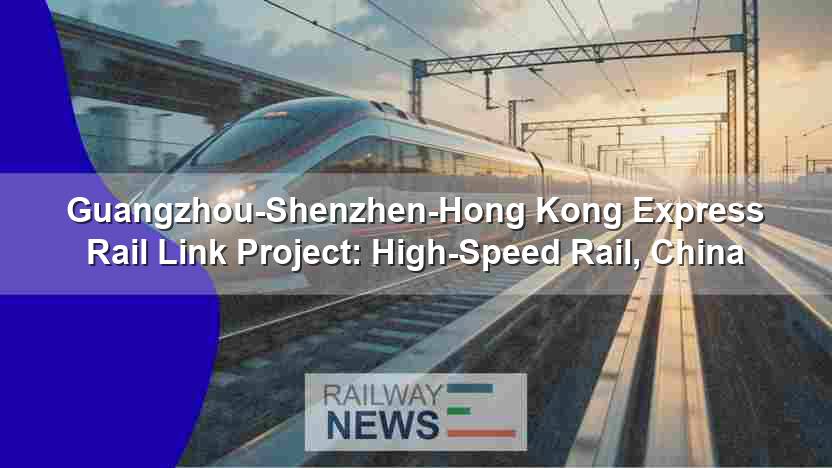
This article explores the engineering marvel that is the Guangzhou-Shenzhen-Hong Kong Express Rail Link (XRL), a high-speed rail corridor connecting three major metropolitan areas in Southern China. The project, a testament to modern railway technology and international collaboration, presents a fascinating case study in large-scale infrastructure development. We will examine the project’s aims, its technological innovations, the logistical challenges overcome during construction, and its significant impact on regional connectivity and economic development. The analysis will also consider the long-term sustainability and operational efficiency of the XRL, highlighting key lessons learned for future high-speed rail projects worldwide. The primary aim of this exploration is to provide a detailed understanding of the XRL’s design, construction, and operational aspects, offering valuable insights for railway professionals and policymakers involved in similar mega-projects.
Project Overview and Planning
The Guangzhou-Shenzhen-Hong Kong Express Rail Link (XRL) is a high-speed railway connecting Guangzhou, Shenzhen, and Hong Kong. The Hong Kong section of the project, proposed in 2000 by the Hong Kong Special Administrative Region (HKSAR) Government, underwent extensive legislative discussions before the dedicated corridor option was adopted in 2007. MTR Corporation (MTR Corp), a major transport operator in Hong Kong, was tasked with planning and design in 2008, followed by funding approval in 2010 and construction commencing in January 2011. The line features advanced technologies to minimize environmental impact and enhance passenger comfort, running from West Kowloon (Hong Kong) to Huanggang (China) and connecting to the extensive 16,000km national high-speed railway network of China.
Technological Innovations and Construction Challenges
The XRL incorporated various advanced technologies throughout its construction. Tunnel Boring Machines (TBMs) were extensively utilized for efficient tunnel construction, while the drill and blast and cut and cover methods were employed where geographically appropriate. The project’s design prioritized minimizing community disruption. However, the undertaking presented substantial logistical challenges. The construction involved excavating 26km of dedicated underground track, building emergency rescue sidings and stabling sidings at Shek Kong, and installing ventilation facilities at multiple locations. The project necessitated careful management of numerous contractors, coordinating their work across the vast scope of the project. A temporary magazine site near Tai Shue Ha in Yuen Long was even established to facilitate the blasting operations during tunnel construction.
Major Contractors and Financial Aspects
The XRL’s construction involved a large number of contractors, each responsible for specific sections or aspects of the project. These included major players such as Bachy Soletanche Group, Hsin Chong Construction, Tysan Foundation, VIBRO-Chun Wo, Paul Y. Construction, Laing O’Rourke, Gammon, Leighton, Dragages, Bouygues, Maeda, China State, ATAL Engineering, and Penta-Ocean Construction. The contracts awarded ranged significantly in value, reflecting the complexity and scale of different construction phases. A summary of the key contracts is provided below.
| Contractor | Project | Contract Value (HK$) | Contract Value (USD$) |
|---|---|---|---|
| Bachy Soletanche Group | West Kowloon terminus and diaphragm walls | 461,000,000 | 59,300,000 |
| Hsin Chong Construction | Nam Cheong property foundation removal and reprovisioning | 333,800,000 | 42,920,000 |
| Tysan Foundation & VIBRO-Chun Wo JV | West Kowloon terminus piles (North & South) | 818,200,000 | 105,240,000 |
| Paul Y. Construction | Sham Mong Road obstruction removal | 159,000,000 | 20,550,000 |
Conclusions
The Guangzhou-Shenzhen-Hong Kong Express Rail Link stands as a significant achievement in high-speed rail infrastructure. Its successful completion demonstrates the feasibility of constructing complex, cross-border rail projects, integrating advanced technologies while managing considerable logistical and financial challenges. The project’s impact extends beyond efficient passenger transport; it facilitates regional economic integration, boosts tourism, and enhances cross-border connectivity. The project’s meticulous planning and execution, including the effective management of numerous contractors and the seamless integration of different construction methods, serve as a valuable model for future large-scale infrastructure endeavors. The XRL’s successful operation hinges on continued investment in maintenance, technological upgrades, and efficient operational strategies to ensure its long-term viability and sustainability. The lessons learned from the XRL’s construction and operation offer valuable insights for policymakers and railway professionals globally, particularly in the context of expanding high-speed rail networks and fostering sustainable regional development. The project’s success underscores the importance of international collaboration, effective project management, and innovative engineering solutions in delivering complex infrastructure projects that benefit both local communities and the wider global economy.
Company Information:
- MTR Corporation: Major transport operator in Hong Kong.
- Bachy Soletanche Group: International geotechnical and foundation engineering specialist.
- Hsin Chong Construction: Leading construction company in Hong Kong.
- Tysan Foundation: Hong Kong-based foundation engineering specialist.
- VIBRO-Chun Wo: Joint venture of prominent Hong Kong construction companies.
- Paul Y. Construction: Major construction company in Hong Kong.
- Laing O’Rourke: International construction and engineering group.
- Gammon Construction: Major construction company in Hong Kong.
- Leighton Contractors (Asia): Part of CIMIC Group, operating in Asia.
- Dragages and Bouygues: International construction and engineering companies.
- Maeda Corporation: Japanese construction company.
- China State Construction Engineering Corporation: Large Chinese state-owned construction company.
- ATAL Engineering: Hong Kong-based engineering services provider.
- Penta-Ocean Construction: Japanese construction company.
- CRCC: China Railway Construction Corporation, a large Chinese state-owned construction company.

Railway infrastructure, rolling stock and transport technologies specialist focused on global rail industry developments, high-speed rail systems, signaling technologies and freight transportation. Covering railway investments, public transport modernization, rail operations and international mobility projects across Europe, Asia and North America.