
Abuja Light Rail: Nigeria’s Rail Innovation
The Abuja Light Rail: a $823 million success story! Learn how this massive project overcame challenges and transformed urban transport, offering valuable lessons for rail professionals worldwide.
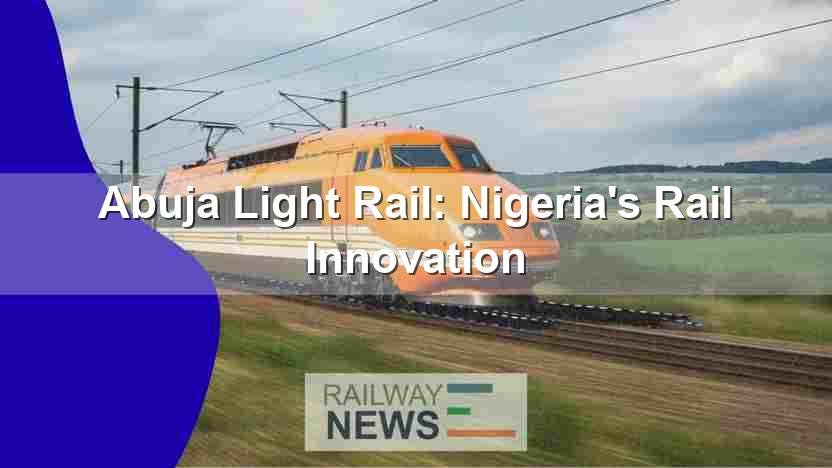
This article examines the inauguration of the first phase of Abuja’s light rail system, a significant infrastructure project in Nigeria. The project, completed by China Civil Engineering Construction Corporation (CCECC) at a cost of $823 million, represents a substantial investment in modernizing the nation’s transportation infrastructure. This analysis will delve into the project’s development, its impact on Abuja’s urban landscape, the technological aspects of its implementation, and finally, discuss the broader implications for future rail development in Nigeria and similar emerging economies. The successful completion and launch of this project provides a valuable case study for understanding the challenges and rewards associated with large-scale urban rail projects in developing nations, highlighting lessons learned that can be applied to future endeavors. Additionally, we will explore the long-term economic and social benefits anticipated from this investment, evaluating its overall contribution to Abuja’s growth and its potential to serve as a model for sustainable urban transportation.
Project Development and Implementation
The Abuja light rail project, spanning eleven years, showcases the complexities involved in large-scale infrastructure development. The first phase, encompassing 45.25 km of track across two lines, connects Abuja’s international airport to various city districts. This initial phase involved the construction of twelve stations, twenty-one operational offices, thirteen bridges, fifty culverts, and nine pedestrian overpasses. The selection of CCECC, a prominent Chinese construction company, highlights the increasing role of international collaboration in infrastructure projects in Africa. The successful execution of this phase demonstrates the capability of effectively managing a project of this magnitude, while also highlighting the challenges inherent in coordinating resources, expertise, and logistics across international borders.
Technological Aspects and Operational Capacity
The newly operational rail line utilizes three-coach trains with a capacity exceeding 300 passengers per train. With an anticipated daily ridership of at least 1000 passengers, the system aims to significantly improve public transportation in Abuja. The choice of rolling stock, signaling systems, and other technological components reflects the project’s intention to introduce modern, efficient, and reliable urban rail service. This represents a significant upgrade from existing transportation options, potentially alleviating traffic congestion and promoting a more sustainable mode of transport within the city. The system’s design and technology must also account for the specific environmental conditions and operational challenges that are prevalent in Abuja’s climate.
Economic and Social Impacts
President Muhammadu Buhari’s emphasis on the project’s alignment with the “Change Agenda” and its contribution to prudent resource management underscores its significance for Nigeria’s economic development. The light rail system is expected to stimulate economic growth within the Federal Capital Territory (FCT) by improving connectivity, facilitating commerce, and enhancing overall quality of life. Beyond the economic benefits, the project contributes to improved social infrastructure. Reduced commuting times, improved accessibility to key areas like the airport, and increased personal mobility all contribute to a better quality of life for Abuja’s residents. The creation of jobs during construction and ongoing operation also contributes to employment opportunities.
Future Expansion and National Rail Network
The ongoing second phase of the Abuja light rail project, planned to add 292 km of track across six lines, signifies a commitment to expanding the system’s reach and capacity. Additionally, the Nigerian government’s ambitious plan to modernize nearly 3,500 km of existing narrow-gauge lines connecting major cities (Lagos-Kano and Port Harcourt-Maiduguri) showcases a broader national vision for rail infrastructure development. This long-term vision will require continued investment, effective project management, and careful consideration of technological advancements to create a truly integrated and efficient national rail network. The success of the Abuja light rail project serves as a strong foundation for these future expansion plans.
Conclusions
The inauguration of the first phase of the Abuja light rail line marks a significant milestone in Nigeria’s infrastructure development. The $823 million investment, spearheaded by CCECC, has yielded a modern, efficient, and vital component of Abuja’s transportation system. The project’s success is not solely measured by its completion but also by its contribution to Abuja’s economic growth, improved social infrastructure, and the potential for creating a more sustainable urban environment. The operational capacity of the light rail, with its ability to carry over 1000 passengers daily, promises to significantly alleviate traffic congestion and improve connectivity within the city. The project’s successful implementation also serves as a testament to international collaboration and the potential for large-scale infrastructure projects in developing nations. The ongoing second phase and the government’s broader plans for national rail modernization highlight a sustained commitment to improve transportation and economic development across Nigeria. The lessons learned from this project, particularly in terms of project management, technological integration, and resource allocation, will be invaluable in shaping future rail development initiatives both within Nigeria and in similar contexts globally. The long-term success of this endeavor will depend on continued investment, effective maintenance, and a commitment to integrating the light rail into a broader, sustainable urban transportation strategy for Abuja and beyond.

Railway infrastructure, rolling stock and transport technologies specialist focused on global rail industry developments, high-speed rail systems, signaling technologies and freight transportation. Covering railway investments, public transport modernization, rail operations and international mobility projects across Europe, Asia and North America.
RELATED POSTS

October 8, 2026 1:15 pm
Alstom secured a €1bn contract to build 13 automated trains,...

October 4, 2026 5:14 pm
Alstom secured a CA$4.7 billion order from VIA Rail Canada...

October 5, 2026 6:12 pm
AECOM and Jacobs secured a contract in September 2026 to...

October 1, 2026 12:13 am
Illinois approved $1.5 billion annually for the Northern Illinois Transit...

October 4, 2026 11:08 pm
Sound Transit confirmed the September 30 opening of Seattle Pinehurst...
October 5, 2026 1:13 pm
New York MTA confirmed a late 2026 DEIS release for...