
Greater Manchester’s Rail Integration Plan
Greater Manchester unveils transport plan, focusing on integrated railway network & inclusive growth. Bee Network expansion, new lines planned by 2028.
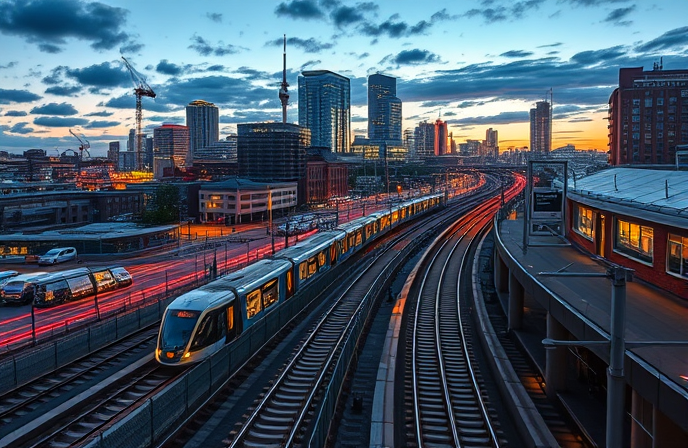
Greater Manchester Unveils Ambitious Transport and Regeneration Plans, Focusing on Integrated Network and Inclusive Growth
Greater Manchester is embarking on a transformative journey, unveiling a detailed strategy designed to reshape its transport infrastructure and foster inclusive economic growth. Mayor Andy Burnham, alongside city region leaders and partners, announced the “Greater Manchester Strategy 2025-2035” at Manchester’s Campfield on Wednesday. The strategy, centered around a Growth Plan and a People Plan, aims to ensure that every resident and community benefits from the city region’s development. This initiative prioritizes housing, public transport integration, and skills development, coupled with significant investment in transport and regeneration, signaling a bold vision for the future of Greater Manchester. This article will explore the key initiatives, including significant plans for railway and tram network expansion and regeneration schemes.
Expanding the Integrated Transport Network: Tramlines, Trains, and Bus Routes
Central to the Greater Manchester strategy is a commitment to expanding and integrating its public transport network. The plan includes new bus routes, tramlines, and railway stations to connect thriving communities across the city region, fostering easier access to opportunities. Significant rail improvements are coming to the Bee Network. By December 2024, two commuter rail lines are scheduled to join the network, with an additional six joining by 2028. Moreover, the construction of a Metrolink tram stop, serving new homes at Victoria North, is set to commence by 2028, with the Metrolink extension to Stockport slated to begin by 2030. These improvements are intended to create a lower-cost, integrated transport system, encouraging wider public usage and mobility.
Housing and Skills: Foundations for Growth
The Growth Plan prioritizes housing, pledging to unlock land for thousands of new homes. By 2027, Greater Manchester aims to construct more social housing than it loses through Right to Buy schemes. Alongside housing, the strategy underscores the importance of skills development, including the transformation of the technical education system. A key initiative is the Greater Manchester Baccalaureate, providing every young person with access to a guaranteed 45-day work placement. Additionally, to connect young people with study and work opportunities, half-price bus travel for 18-21-year-olds will be introduced from September 2025. In addition, a pilot program for free 24-hour bus travel for older and disabled people will be launched in August.
Mayoral Development Corporations (MDCs) and Regeneration Schemes: A New Model for Growth
The Greater Manchester Strategy will leverage Mayoral Development Corporations (MDCs) and Mayoral Development Zones (MDZs) as innovative tools to expedite development, attract investment, and drive economic growth. MDCs, statutory bodies established by the Mayor, will have broad powers to facilitate land acquisition, planning, and infrastructure projects. MDZs will unite stakeholders to overcome barriers to growth. The plan includes key regeneration schemes. Sebastian Coe will chair the Old Trafford Regeneration scheme. Steve Coogan will co-chair the proposed Middleton MDC. Bolton will also get an MDC. An advanced manufacturing and materials cluster will be created at Atom Valley, which will benefit from an MDC. Ashton and Stalybridge will receive an MDC to create a national template for transport-led regeneration, and Leigh and the surrounding area will establish a new University Campus for Health and Social Care.
Piccadilly’s Transformation and Long-Term Vision
The strategy extends to a long-term vision for Manchester Piccadilly, with plans for an underground tram and train station with a high-speed rail link to Liverpool by 2050, alongside the regeneration of the surrounding area. This ambitious project aims to transform Piccadilly into “the Kings Cross of the North,” driving economic growth and connectivity across the region and beyond. The approach of integrating public transport, promoting housing developments, and establishing Mayoral Development Corporations, the Greater Manchester Strategy 2025-2035 signals a multifaceted approach to growth and urban regeneration.
Conclusion
The Greater Manchester Strategy 2025-2035 represents a significant investment in the region’s future, focusing on integrated transport, housing, skills development, and regeneration. By prioritizing a low-fare public transport system, connecting people to opportunities, and making a clear commitment to inclusive growth, the city aims to foster economic prosperity and social equity. The planned expansion of the Bee Network, investment in new Metrolink lines, and the detailed regeneration initiatives, including the transformation of Manchester Piccadilly, underscore the region’s commitment to providing integrated and effective transport infrastructure. The project, however, hinges on effective collaboration between the public and private sectors. This collaborative approach highlights the need for efficient project management and the timely allocation of resources to ensure that the city’s ambitious goals are realized, with long-term benefits extending to the wider railway and transportation industries and providing long-term opportunities for businesses and developers in the area.

Railway infrastructure, rolling stock and transport technologies specialist focused on global rail industry developments, high-speed rail systems, signaling technologies and freight transportation. Covering railway investments, public transport modernization, rail operations and international mobility projects across Europe, Asia and North America.
RELATED POSTS

October 1, 2026 7:09 am
United States regulators confirmed a September 30 deadline for the...

October 1, 2026 12:13 am
Illinois approved $1.5 billion annually for the Northern Illinois Transit...

October 1, 2026 6:10 am
Amtrak approved a System Expansion Committee on July 30 to...

October 1, 2026 4:10 am
DART launched two public ridership dashboards in March 2026 to...
October 1, 2026 3:12 am
Greenbrier confirmed Brian Comstock as new president and CEO effective...
October 1, 2026 5:14 am
Siemens confirmed delivery of the first new S200 train to...