
Metrolinx Launches Oakville GO Expansion June 2026
Metrolinx launched the Oakville GO station expansion in June 2026, part of its CA$15 billion program to upgrade Ontario’s busiest regional rail corridor.
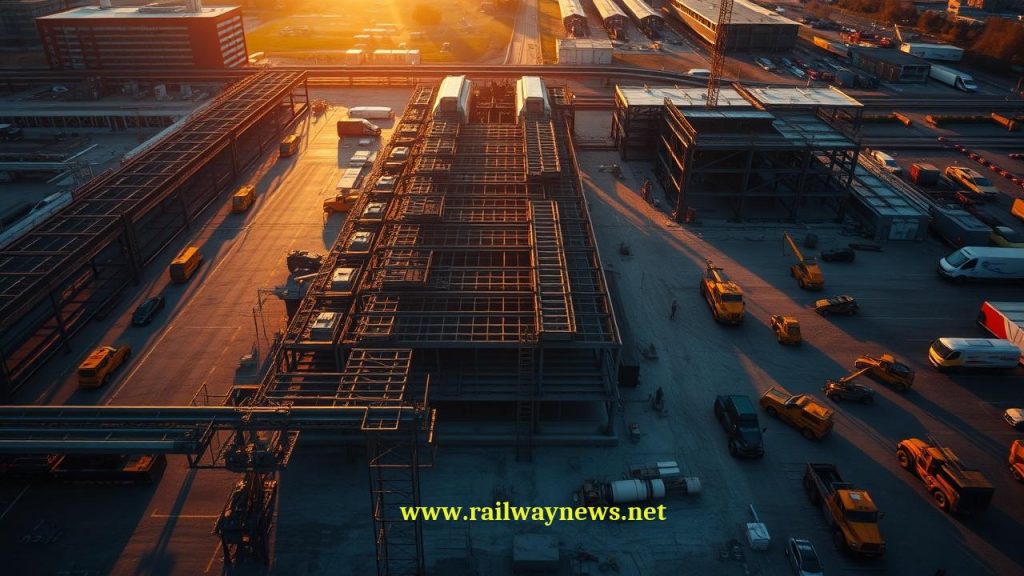
⚡ In Brief: Metrolinx has commenced construction on the Oakville GO station expansion in Ontario, Canada, as part of its overarching CA$15 billion GO Expansion program to accommodate regional growth.
OAKVILLE, CANADA – Metrolinx officially commenced early construction work on the Oakville GO transit station expansion in June 2026 to support the agency’s broader CA$15 billion regional rail upgrade. The project targets the busiest station on the Lakeshore West line, which serves a regional population projected to reach 15 million people by 2051. The upgrades will enable peak train frequencies of 15 minutes or better on core routes.
What Is the Full Scope of This Project?
The Oakville GO station expansion focuses on comprehensive structural, accessibility, and architectural upgrades to handle increased passenger volumes on the Lakeshore West corridor. Planned works include the full rehabilitation of existing passenger platforms and the construction of a new pedestrian bridge. To meet modern accessibility standards, Metrolinx will install new elevators, upgraded staircases connecting to platforms and parking facilities, and modernized mechanical, electrical, and architectural services.
Key Project Data
| Parameter | Value |
|---|---|
| Project / Contract Name | Oakville GO Station Expansion |
| Total Value | Not disclosed (Part of the CA$15 billion GO Expansion program) |
| Parties Involved | Metrolinx, GO Transit |
| Timeline / Completion | Not disclosed |
| Country / Corridor | Canada / Lakeshore West Route |
How Does This Compare to Similar Projects?
The CA$15 billion scale of Metrolinx’s GO Expansion program represents one of North America’s largest active transit commitments, contrasting with funding deficits seen in peer jurisdictions. For example, Seattle’s Sound Transit is advancing a 25-year light rail expansion plan targeting 600,000 daily riders by 2050 but faces a major $34.5 billion funding gap that threatens project timelines (Source: The Urbanist, 2025). On a station-specific level, the Oakville upgrades parallel the modernization of Washington Union Station, which secured a $466 million federal grant to triple its passenger capacity and update aging infrastructure (Source: Axios, 2026). While Oakville’s individual station contract value was not publicly disclosed at the time of construction launch, both projects reflect a broader global trend of upgrading high-density transit hubs rather than building entirely new corridors.
Editor’s Analysis
Metrolinx’s targeted investment at Oakville highlights a strategic shift toward high-frequency, clock-face scheduling over traditional peak-only commuter models. By focusing on accessibility and platform capacity, the operator is addressing critical physical bottlenecks before introducing the planned 15-minute service frequencies. This aligns with global transit strategies to be highlighted at the InnoTrans 2026 convention, where industry leaders will emphasize upgrading existing urban rail networks to build long-term operational resilience (Source: Global Railway Review, 2026).
FAQ
Q: Why is the Oakville GO station being expanded?
A: Metrolinx is expanding the station because Oakville is the busiest station on the Lakeshore West route and the second busiest in the entire GO Transit network. The upgrades are necessary to handle a regional population expected to grow to 15 million by 2051.
Q: What is the total cost of the Oakville GO station expansion?
A: The specific cost of the Oakville station project has not been officially disclosed. However, the work is funded under Metrolinx’s larger CA$15 billion GO Expansion program.
Q: How will the expansion affect daily train service during construction?
A: Metrolinx has not officially confirmed whether construction will cause temporary platform closures or service delays for Lakeshore West passengers. The agency plans to maintain regular operations by phasing the rehabilitation of platforms and pedestrian access points.

Railway infrastructure, rolling stock and transport technologies specialist focused on global rail industry developments, high-speed rail systems, signaling technologies and freight transportation. Covering railway investments, public transport modernization, rail operations and international mobility projects across Europe, Asia and North America.
RELATED POSTS

October 8, 2026 1:15 pm
Alstom secured a €1bn contract to build 13 automated trains,...

October 1, 2026 7:09 am
United States regulators confirmed a September 30 deadline for the...

October 4, 2026 5:14 pm
Alstom secured a CA$4.7 billion order from VIA Rail Canada...

October 5, 2026 6:12 pm
AECOM and Jacobs secured a contract in September 2026 to...

October 1, 2026 12:13 am
Illinois approved $1.5 billion annually for the Northern Illinois Transit...

October 4, 2026 11:08 pm
Sound Transit confirmed the September 30 opening of Seattle Pinehurst...