
Europe’s New Standard: EN 16729-1 Boosts Rail Safety & Inspection
EN 16729-1 defines ultrasonic rail inspection, a critical standard for detecting flaws. It ensures railway safety, optimizes maintenance, and strengthens infrastructure reliability.
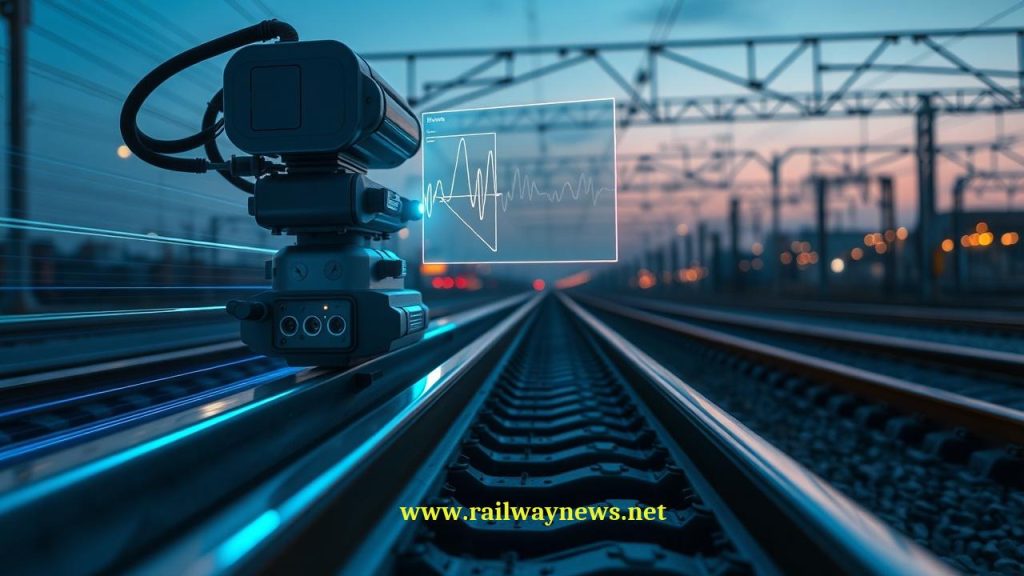
What is EN 16729-1?
EN 16729-1 is a European Standard that provides the requirements and principles for the non-destructive testing (NDT) of rails in track using ultrasonic methods. The standard’s primary objective is to establish a consistent and reliable framework for detecting internal and surface-breaking flaws that could compromise the structural integrity of railway lines, thereby ensuring operational safety and reliability.
The Core Principles and Scope of EN 16729-1
This standard forms the first part of the EN 16729 series, focusing specifically on the fundamental requirements for ultrasonic inspection. It applies to plain rails and switches and crossings within the 46 kg/m and heavier rail profiles. Its scope is critical for railway infrastructure managers who rely on it for condition monitoring and preventative maintenance strategies.
Objectives of the Standard
- To define the principles for ultrasonic inspection applied to rails in-situ.
- To specify the essential requirements for the testing equipment, including the ultrasonic probes and data acquisition systems.
- To establish a clear methodology for the evaluation of indications and the classification of defects.
- To ensure the competence of the personnel performing the inspections.
Fundamentals of Ultrasonic Testing (UT) in Rail Inspection
Ultrasonic testing, as mandated by EN 16729-1, is a non-destructive method that uses high-frequency sound waves to detect internal discontinuities. The process involves transmitting ultrasonic pulses into the rail head and web from specially angled transducers (probes). When these sound waves encounter a flaw, such as a crack or inclusion, they are reflected back to the transducer. The time taken for the echo to return and its amplitude provide precise information about the location, size, and orientation of the defect.
The standard typically requires a multi-probe configuration to ensure detailed coverage of the rail head, a critical area for fatigue crack initiation. This includes:
- 0° (Normal) Probes: For detecting horizontal defects like delaminations.
- Forward and Backward-Looking Angle Probes (e.g., 70°): Essential for detecting transverse defects, which are among the most dangerous types of rail flaws.
- Side-Looking (e.g., 35° or 45°) Probes: Used to inspect the gauge and field corners of the rail head for cracks.
Key Technical Requirements and Evaluation Principles
EN 16729-1 is highly technical, detailing specific parameters that inspection systems and procedures must adhere to. This ensures that test results are repeatable, reliable, and comparable across different service providers and railway networks.
Equipment and Calibration
The standard places significant emphasis on the proper calibration and characterization of the inspection system. Before any testing, the system must be calibrated using a reference rail containing artificial reflectors of known size and location. This process verifies the system’s sensitivity, resolution, and the accuracy of its distance (time-of-flight) measurements. All critical parameters, including probe angles, pulse-echo sensitivity, and acoustic coupling, must be within specified tolerances.
Defect Detection and Evaluation
Once an indication is detected, it must be evaluated according to the principles outlined in the standard. The evaluation process typically involves analyzing the signal amplitude from the flaw in comparison to a reference level, often defined by a reference reflector (e.g., a flat-bottom hole). This is commonly known as the Distance Amplitude Correction (DAC) or Time Corrected Gain (TCG) method.
The standard provides guidance on categorizing indications based on their characteristics. The final decision on whether an indication corresponds to an actionable defect is based on:
- Signal amplitude relative to the recording threshold.
- The location of the indication within the rail cross-section.
- The length and orientation of the suspected flaw.
This structured evaluation helps infrastructure managers prioritize repairs and implement appropriate actions, such as imposing a speed restriction or scheduling an immediate rail replacement.
Comparison of Key Parameters in EN 16729-1
The following table summarizes some of the crucial technical aspects regulated by the standard and their significance for effective rail inspection.
| Parameter / Requirement | Technical Description | Significance in Rail Inspection |
|---|---|---|
| Probe Configuration | Specifies the number, type, and angles of ultrasonic probes required to scan the rail head and web. Typically includes 0°, +/- 70°, and side-looking probes. | Ensures detailed volumetric inspection of the rail, covering all critical orientations for crack initiation, especially dangerous transverse defects. |
| Calibration Standard | Mandates the use of a reference rail with artificial reflectors (e.g., flat-bottom holes, side-drilled holes) of specific sizes and locations. | Guarantees that the inspection system has the required sensitivity to detect minimum critical flaw sizes and provides a basis for repeatable measurements. |
| Sensitivity Setting | The system’s gain (amplification) must be set to ensure that signals from the reference reflectors are displayed at a predefined screen height (e.g., 80% Full Screen Height). | Establishes a consistent baseline for detecting and evaluating flaws, ensuring that small but potentially critical defects are not missed. |
| Data Recording | Requires continuous recording of ultrasonic data (A-scan and B-scan) along with positional information (e.g., from a distance encoder). | Creates a permanent record of the inspection for auditing, post-analysis, and monitoring of flaw growth over time. |
| Personnel Qualification | Stipulates that operators performing the inspection and data evaluation must be suitably trained, qualified, and certified (e.g., according to EN ISO 9712). | Recognizes that the reliability of the inspection depends heavily on the skill and expertise of the operator to correctly interpret complex ultrasonic signals. |
Impact on Railway Safety and Maintenance
The implementation of EN 16729-1 is a cornerstone of modern railway asset management. By standardizing the process of ultrasonic rail inspection, it provides infrastructure managers with reliable data on the health of their track. This data-driven approach allows for a shift from reactive to predictive maintenance.
Benefits for the Railway Sector
- Enhanced Safety: The primary benefit is the early detection of critical internal defects before they can lead to catastrophic rail failure and potential derailments.
- Optimized Maintenance: By accurately identifying and sizing flaws, maintenance activities can be planned more efficiently, reducing unnecessary rail replacements and minimizing track possession times.
- Extended Asset Life: Understanding the condition of the rail allows for targeted maintenance actions like grinding, which can mitigate the growth of surface-initiated cracks and extend the useful life of the rail.
- Interoperability: As a European standard, it facilitates cross-border operations and procurement of inspection services, as all parties adhere to the same quality and technical benchmarks.
Conclusion
EN 16729-1 is more than just a technical document; it is a critical safety framework for the European railway industry. By providing detailed, unambiguous requirements for ultrasonic rail inspection, it ensures that hidden dangers within the track are found and managed effectively. Its principles govern the technology, the process, and the people involved, creating a robust system for safeguarding the integrity of railway infrastructure and ensuring the safe passage of trains.

Railway infrastructure, rolling stock and transport technologies specialist focused on global rail industry developments, high-speed rail systems, signaling technologies and freight transportation. Covering railway investments, public transport modernization, rail operations and international mobility projects across Europe, Asia and North America.