
European High-Speed Rail: Infrastructure Trends & Future Growth
Here are a few voiceover-friendly excerpts for railway professionals, incorporating the criteria:
**Option 1 (Focus on Impact):**
> High-speed rail is transforming European connectivity, delivering economic growth and a greener future. Discover the advancements reshaping our infrastructure.
**Option 2 (Focus on Technology):**
> From advanced signaling to dedicated tracks, high-speed rail advancements are revolutionizing the industry. Learn how technology powers this European transformation.
**Option 3 (Short & Sweet):**
> Explore the future of transport! High-speed rail is driving economic growth and connectivity across Europe.
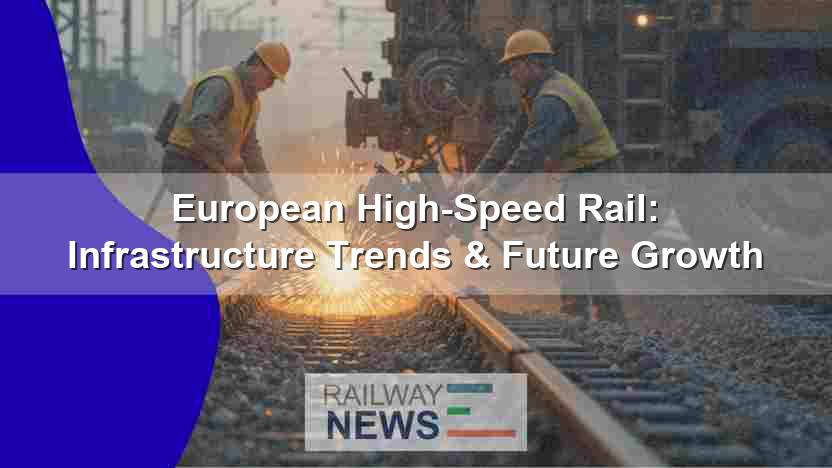
Transforming European Connectivity: An Examination of High-Speed Rail Infrastructure
The evolution of high-speed rail (HSR) networks across Europe represents a significant shift in transportation infrastructure. This article explores the multifaceted aspects of HSR development, exploring the technological advancements, economic impacts, and societal benefits associated with these projects. From the initial planning phases to the operational intricacies of high-speed lines, we will examine the challenges and opportunities that define this transformative mode of transport. We will analyze how HSR integrates with existing rail systems, the environmental considerations that shape its construction, and the role it plays in fostering regional and international connectivity. Additionally, we will examine how various European nations are approaching HSR projects, highlighting best practices and lessons learned. This will provide a detailed overview of the past, present, and future of high-speed rail in Europe. The focus will be on technical and financial aspects and the real impact on the continent’s development.
Infrastructure and Technological Advancements
The implementation of high-speed rail relies on cutting-edge infrastructure and sophisticated technologies. Key elements include:
* _Dedicated Tracks_: HSR systems typically utilize dedicated tracks, designed to minimize curves and gradients, allowing trains to achieve and maintain high speeds.
* _Signaling Systems_: Advanced signaling systems, such as European Train Control System (ETCS), are crucial for ensuring safe and efficient operations. ETCS (European Train Control System) continuously monitors train speeds and locations, preventing collisions and optimizing traffic flow.
* _Rolling Stock_: High-speed trains are engineered for aerodynamics, powerful traction, and passenger comfort. They are equipped with advanced braking systems and designed to withstand the stresses of high-speed travel.
* _Electrification_: Electrification of the lines is essential for sustainable operation, with overhead lines or, in some cases, third-rail systems providing power to the trains.
These technological advancements not only facilitate high speeds but also enhance the reliability and efficiency of the rail network.
Economic and Social Impacts
High-speed rail projects generate considerable economic and social benefits.
* _Economic Growth_: HSR stimulates economic activity by creating jobs in construction, manufacturing, and operation. It enhances regional accessibility, fostering tourism and investment.
* _Reduced Travel Times_: HSR significantly reduces travel times between cities, making them more accessible and promoting business and leisure travel.
* _Environmental Benefits_: Compared to air travel and private vehicles, HSR offers a more sustainable mode of transportation, reducing carbon emissions and contributing to a greener environment.
* _Regional Development_: HSR lines can stimulate regional development by connecting smaller towns and cities to major urban centers, promoting economic growth and social cohesion.
You might be interested in:
Last November 2018, we published an article about Network Rail’s £35bn railway improvement plan. Click here to read – UK Rail CP6: £35bn Network Rail Upgrade
Integration and Future Prospects
Integrating HSR into existing rail networks and planning for future expansion requires careful consideration. The design of stations, track layouts, and signaling systems must facilitate seamless transfers between high-speed and conventional services. The development of international corridors, such as the proposed *Rail Baltica feasibility study*, is crucial for enhancing cross-border connectivity. Future prospects include:
* _Technological Innovations_: Continued advancements in train technology, such as further improvements in energy efficiency, will be critical.
* _Network Expansion_: The expansion of HSR networks across Europe is likely to continue, connecting more cities and regions and increasing the overall network’s accessibility.
* _Sustainability_: Focusing on sustainability will be a top priority, which involves using renewable energy sources, reducing noise pollution, and minimizing the environmental impact of construction and operation.
* _Digitalization_: The increased use of digital technologies for operations and passenger information systems will improve the efficiency and the passenger experience.
Challenges and Considerations
Despite the numerous benefits, the development of HSR faces significant challenges.
* _High Costs_: HSR projects require substantial capital investment, which can be a barrier to implementation.
* _Land Acquisition_: Acquiring land for the construction of new tracks can be complex and time-consuming.
* _Environmental Impact_: While HSR offers environmental benefits, its construction can also have negative impacts. Careful planning and mitigation measures are essential.
* _Political and Regulatory Hurdles_: Securing political support and navigating regulatory processes can be challenging, especially for cross-border projects.
* _Financing_: Securing funding from various sources can be a complex process.
Conclusion
To summarize, high-speed rail is fundamentally changing the transportation landscape across Europe. The intricate interplay of technological advancement, economic advantages, and societal benefits makes HSR a pivotal element of modern infrastructure. Through the implementation of dedicated tracks, cutting-edge signaling systems, and state-of-the-art rolling stock, HSR significantly reduces travel times, stimulates economic growth, and offers a sustainable transport alternative. However, the realization of such large-scale projects is not without its challenges; it requires substantial financial investment, careful planning, and consideration of environmental impacts, as the *Rail Baltica feasibility study* demonstrated. As the European continent continues its trajectory toward improved connectivity, HSR expansion will be fundamental. By addressing the complexities related to the financial aspects, land acquisition, environmental concerns, and regulatory hurdles, European nations can further refine their infrastructure and continue to reap the multiple advantages of a well-developed HSR network. Therefore, high-speed rail is crucial for fostering a more integrated, interconnected, and sustainable future for Europe, contributing to its economic dynamism and social cohesion.

Railway infrastructure, rolling stock and transport technologies specialist focused on global rail industry developments, high-speed rail systems, signaling technologies and freight transportation. Covering railway investments, public transport modernization, rail operations and international mobility projects across Europe, Asia and North America.
RELATED POSTS

October 8, 2026 12:18 pm
Siemens Mobility signed an agreement with VinSpeed to supply 350...

October 5, 2026 6:12 pm
AECOM and Jacobs secured a contract in September 2026 to...

October 4, 2026 11:08 pm
Sound Transit confirmed the September 30 opening of Seattle Pinehurst...
October 5, 2026 1:13 pm
New York MTA confirmed a late 2026 DEIS release for...
October 6, 2026 9:17 am
Illinois approved $1.1M in state funds to upgrade two McHenry...
October 6, 2026 5:12 pm
Cleveland RTA confirmed the deferral of planned bus and rail...