
Eurofima Expands Urban Rail Financing Beyond 2056
Eurofima expanded financing for trams, metros, and infrastructure vehicles across Europe, extending terms beyond 2056.
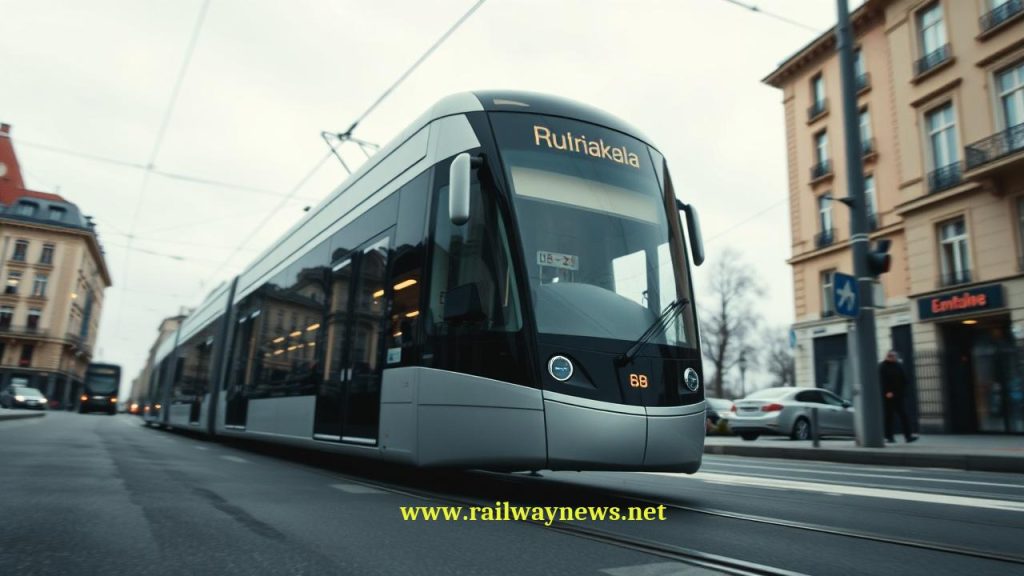
⚡ In Brief: European rolling stock financing body Eurofima has expanded its strategy to fund trams and metros for cities and regions, extending repayment terms beyond 2056 to accelerate the decarbonisation of urban public transport.
BASEL, SWITZERLAND – Eurofima has officially adopted a revised long-term strategy, expanding its financing scope beyond mainline trains to include trams, metros, and infrastructure service vehicles. The new framework allows direct engagement with sub-national entities and extends repayment periods beyond 2056. This strategic shift aims to increase access to affordable, long-term capital for urban and regional transport authorities across Europe.
How Is the Funding Structured?
The revised framework introduces several key structural changes to make financing more accessible for a wider range of public transport operators. The scope of eligible assets now covers urban systems such as trams and metros, and the rules permit direct financing agreements with regional and sub-national bodies. A significant change is the extension of repayment periods beyond 2056 to better align with the long operational life of rail assets. Additionally, the new policy allows for the waiver of state guarantee requirements in certain cases, based on a risk assessment for which specific criteria were not disclosed.
Key Funding Data
| Parameter | Value |
|---|---|
| Fund / Programme Name | Eurofima Revised Long-Term Strategy |
| Total Value | Not applicable / Programme-based |
| Parties Involved | Eurofima, European national, regional, and urban transport authorities |
| Timeline / Completion | Effective immediately; repayment periods extend beyond 2056 |
| Country / Corridor | Europe |
How Does This Compare to Similar Funding Programs?
Eurofima’s strategic expansion directly addresses the massive capital investment challenges facing urban transit authorities globally, which often struggle to secure long-term, affordable financing. The scale of these needs is evident in North America, where New York’s Metropolitan Transportation Authority (MTA) recently advanced a $68 billion five-year capital plan for 2025-2029, including an order to replace over 2,000 subway cars (Source: MTA, 2024). In contrast, other agencies face funding shortfalls; Seattle’s Sound Transit is exploring options to curtail future light rail expansion due to projected long-term affordability challenges (Source: KOMO News, 2024). Eurofima’s ability to offer financing with repayment terms beyond 2056 directly to sub-national bodies provides a stability that is often lacking in municipal bond markets or national funding cycles, potentially preventing the kind of project curtailments seen in Seattle.
Editor’s Analysis
By opening its financing to trams and metros, Eurofima is shifting its focus from traditional national railways to the high-growth urban mobility sector. This move positions it as a key enabler for cities striving to meet EU decarbonisation targets, which require massive investment in electric-powered public transport. The extension of financing terms past 2056 acknowledges the multi-generational lifespan of rail assets, a stark contrast to the shorter-term debt cycles that often constrain public infrastructure spending, as seen in the recent administrative extension for Acheson Construction’s creditors to 2027 (Source: Construction News, 2024).
FAQ
Q: What specific types of vehicles can be financed now?
A: Under the revised strategy, Eurofima can now finance not only mainline trains but also urban rolling stock like trams and metros, as well as specialised infrastructure service vehicles. This significantly broadens the scope from its previous focus on national rail networks.
Q: Can a city transport authority apply for financing directly?
A: Yes, the revised statutes explicitly allow Eurofima to interact directly with regions and sub-national entities. This removes a potential barrier where financing previously had to be routed through national-level railway companies or government bodies.
Q: What are the interest rates or specific costs for this financing?
A: The specific interest rates and financing costs were not disclosed in the announcement. However, Eurofima’s mission is to provide “affordable” and “lower cost” financing by leveraging its strong credit rating to raise funds on capital markets.

Railway infrastructure, rolling stock and transport technologies specialist focused on global rail industry developments, high-speed rail systems, signaling technologies and freight transportation. Covering railway investments, public transport modernization, rail operations and international mobility projects across Europe, Asia and North America.
RELATED POSTS

October 8, 2026 1:15 pm
Alstom secured a €1bn contract to build 13 automated trains,...

October 1, 2026 7:09 am
United States regulators confirmed a September 30 deadline for the...

October 8, 2026 12:18 pm
Siemens Mobility signed an agreement with VinSpeed to supply 350...

October 4, 2026 5:14 pm
Alstom secured a CA$4.7 billion order from VIA Rail Canada...

October 5, 2026 6:12 pm
AECOM and Jacobs secured a contract in September 2026 to...

October 1, 2026 12:13 am
Illinois approved $1.5 billion annually for the Northern Illinois Transit...