
EU Mandates EN 15595: Safer, Cheaper Rail
Understand EN 15595: the crucial standard for railway Wheel Slide Protection systems. It optimizes braking performance, prevents wheel damage, and boosts overall safety and reliability.
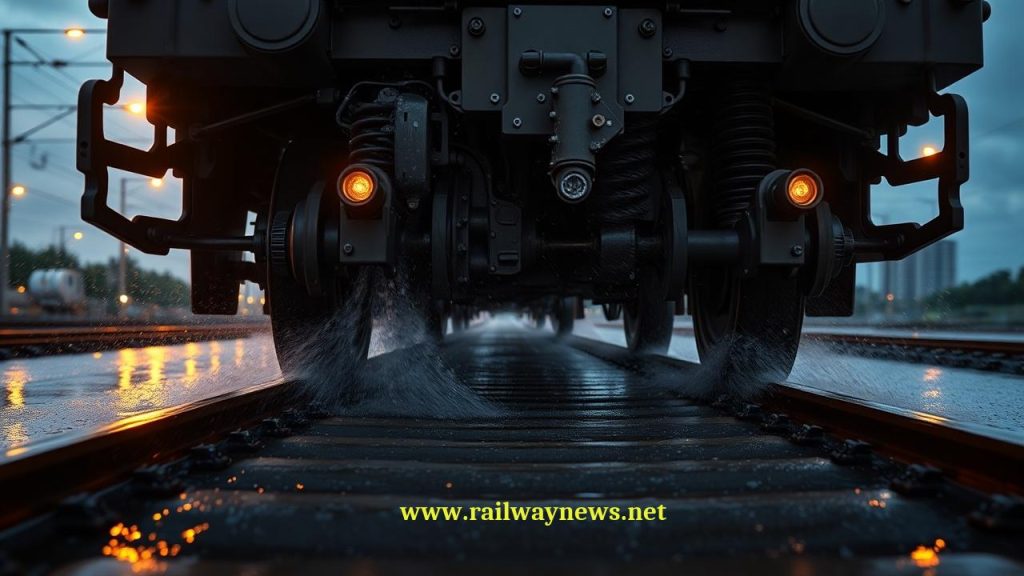
Understanding EN 15595: Wheel Slide Protection in Railway Braking Systems
EN 15595 is a crucial European Standard that specifies the functional and technical requirements for Wheel Slide Protection (WSP) systems used in railway rolling stock. The primary purpose of a WSP system is to optimize the braking performance, particularly in low adhesion conditions, by preventing wheelsets from locking and sliding along the rail. This standard ensures a high level of safety, reliability, and interoperability for braking systems across different types of trains, from high-speed units to freight locomotives.
The core function of a WSP system, as defined by EN 15595, is to maximize the adhesion between the wheel and the rail during braking. By controlling the wheel slip, the system prevents the formation of “wheel flats”—damaged, flattened spots on the wheel tread caused by sliding—which can lead to severe vibrations, damage to both the vehicle and the track, and significantly increased maintenance costs.
Core Principles of Wheel Slide Protection
The effectiveness of a WSP system is based on the physical relationship between friction (adhesion) and the relative motion (slip) between the wheel and the rail. This relationship is often represented by the μ-slip curve.
- Adhesion (μ): This is the coefficient of friction between the wheel and the rail. It is not a constant value and is highly dependent on conditions such as speed, axle load, and contaminants on the railhead (e.g., water, leaves, oil).
- Slip: During braking, the rotational speed of the wheel becomes slightly lower than the equivalent linear speed of the train. This difference is known as slip. A small amount of slip is necessary to generate braking force.
- Optimal Braking: The maximum braking force is achieved at a specific, optimal slip value (typically between 5-15%). Beyond this peak, if the slip increases further, the adhesion coefficient drops sharply, leading to the wheel rapidly decelerating and locking (100% slip).
An EN 15595 compliant WSP system continuously monitors the speed of each axle. When it detects a deceleration rate that indicates an impending wheel lock, it rapidly modulates the brake cylinder pressure on that axle—releasing it just enough to allow the wheel to regain speed and re-enter the stable, high-adhesion slip region, then re-applying the pressure to continue effective braking.
Key Requirements of EN 15595
The standard outlines detailed requirements covering the system’s entire lifecycle, from design and manufacturing to testing and operation. These are categorized into several key areas.
System Architecture and Components
A typical WSP system consists of three main parts, and EN 15595 provides guidelines for their function and integration:
- Speed Sensors: Usually mounted on each axlebox, these sensors (e.g., phonic wheels with Hall effect sensors) precisely measure the rotational speed of each axle. The accuracy and resolution of these sensors are critical for the WSP’s performance.
- Electronic Control Unit (ECU): The “brain” of the system. The ECU receives speed data from all sensors, processes it using sophisticated algorithms to calculate wheel speeds, accelerations, decelerations, and slip. Based on this analysis, it commands the brake valves.
- Pneumatic or Hydraulic Valves: These are fast-acting valves (often called dump valves or WSP valves) that can rapidly release and re-apply pressure to the brake cylinders or calipers of a specific axle or bogie, as commanded by the ECU.
Performance Criteria
This is the core of the standard, defining how a WSP system must perform under various operational conditions. The key performance indicators include:
- Adhesion Utilization: The system must be able to make the best possible use of the available adhesion, ensuring the shortest possible stopping distance without causing wheel damage.
- Stability: The control algorithm must be stable, avoiding excessive or sustained oscillations in brake pressure, which could lead to poor braking performance and passenger discomfort.
- Prevention of Wheel Damage: The system must effectively prevent the formation of wheel flats under all specified test conditions. The standard sets strict limits on the permissible size and number of any minor surface blemishes after testing.
- System Response Time: The WSP system must detect an incipient slide and react by commanding the valves within a very short timeframe to prevent a full wheel lock.
Testing and Validation
To ensure compliance, EN 15595 mandates a rigorous testing regime. These tests are designed to challenge the WSP system under worst-case scenarios and prove its effectiveness and reliability.
- Static Tests: Verification of components, wiring, and software logic in a laboratory or stationary vehicle.
- Dynamic Tests: These are the most important tests, conducted on a track with defined and often very low adhesion conditions. This is typically achieved by applying a soap-and-water solution to the rails.
- Stopping Distance Tests: The train’s stopping distance is measured from various speeds on dry and low-adhesion tracks. The performance is compared against theoretical calculations to ensure the WSP is not unduly extending the braking distance.
- Endurance Tests: The system is subjected to a large number of consecutive braking applications to test its durability and consistency.
WSP System Performance Comparison
The following table illustrates the critical differences in performance between a vehicle equipped with an EN 15595-compliant WSP system and one without.
| Performance Aspect | System with EN 15595 Compliant WSP | System without WSP |
|---|---|---|
| Braking in Low Adhesion | Controlled and stable. The system modulates brake force to maximize available friction and maintain directional stability. | Unpredictable and dangerous. High risk of wheel lock, leading to a significant loss of braking force and potential for derailment. |
| Stopping Distance | Optimized for the available adhesion conditions. While longer than on a dry rail, it is the shortest achievable distance without wheel lock. | Significantly extended. A locked wheel has much lower friction than a controlled, slipping wheel, drastically increasing stopping distance. |
| Wheel and Rail Condition | Wheel treads are protected from damage. Wheel flats are prevented, preserving the wheel’s roundness. | High probability of severe wheel flats. This damages the wheel and imparts high dynamic loads onto the rail, causing track damage. |
| Maintenance Costs | Lower lifecycle costs. Avoids the need for frequent wheel re-profiling or replacement due to flats. | Extremely high. A single wheel flat can take a vehicle out of service for costly and time-consuming wheel lathe repairs. |
| Safety and Reliability | High. The braking process is predictable and reliable, contributing to overall operational safety. | Low. The risk of overshooting signals or platforms is high, and the potential for derailment on switches and crossings is a major safety concern. |
Conclusion: The Importance of EN 15595 for Modern Railways
EN 15595 is more than just a regulatory document; it is a cornerstone of modern railway safety and efficiency. Compliance ensures that braking systems are robust, reliable, and capable of performing safely under the most adverse track conditions. By standardizing the requirements for Wheel Slide Protection, the standard facilitates interoperability between rolling stock from different manufacturers, enhances safety for passengers and cargo, and provides significant economic benefits to operators by minimizing wheel and track damage, thereby reducing maintenance costs and increasing vehicle availability.
Frequently Asked Questions about EN 15595

Railway infrastructure, rolling stock and transport technologies specialist focused on global rail industry developments, high-speed rail systems, signaling technologies and freight transportation. Covering railway investments, public transport modernization, rail operations and international mobility projects across Europe, Asia and North America.