
EU Delivers Over 50 Rail Repair Equipment Ukrzaliznytsia
European Union delivered over 50 rail repair equipment pieces, including 18 German vehicles valued at €600,000, to Ukrzaliznytsia.
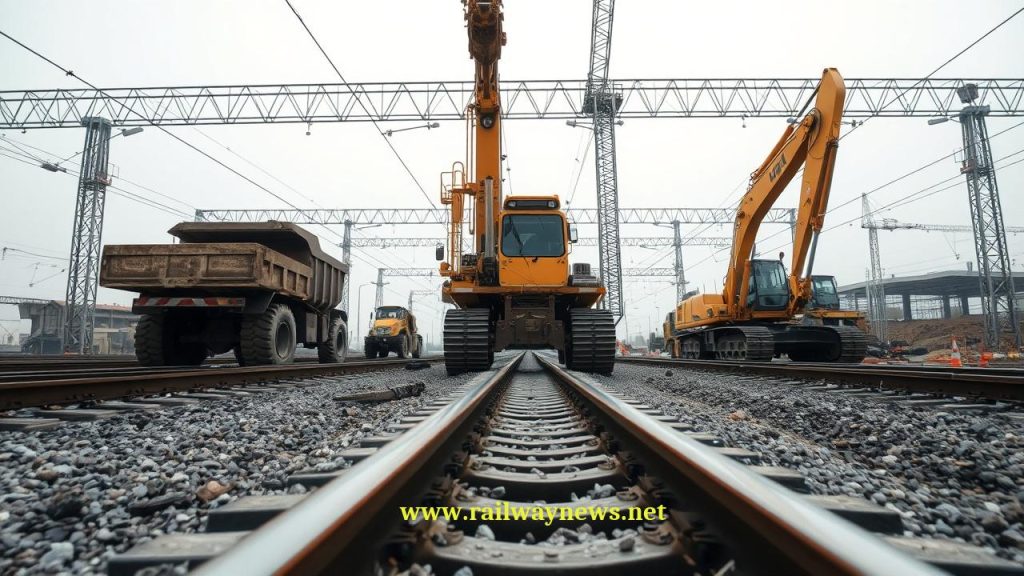
⚡ In Brief: The European Union is providing over 50 pieces of repair equipment to Ukrzaliznytsia to restore its war-damaged network, including a separate German contribution of 18 vehicles valued at €600,000, bolstering Ukrainian railway resilience.
KYIV, UKRAINE – The European Union has delivered a new support package to Ukrzaliznytsia, Ukraine’s national railway operator, to aid in the restoration and maintenance of its critical infrastructure. The initial tranche includes 23 pieces of equipment, including vehicles and generators. A further delivery of over 25 units, featuring dump trucks and excavators, has also been announced.
How Is the Funding Structured?
The support is structured as an in-kind contribution of physical assets rather than a direct financial grant, aimed at accelerating the repair of damaged railway sections. The package consists of a primary EU contribution of over 50 total pieces of equipment and a separate, additional commitment from Germany for 18 vehicles with a stated value of €600,000. The provided generators are intended to ensure power supply for signalling and other essential systems during outages, while heavy vehicles will be used for direct infrastructure repair.
Key Funding Data
| Parameter | Value |
|---|---|
| Fund / Programme Name | EU & German Support Package for Ukrzaliznytsia |
| Total Value | Not disclosed (German component valued at €600,000) |
| Parties Involved | European Union, Germany, Ukrzaliznytsia |
| Timeline / Completion | Deliveries ongoing |
| Country / Corridor | Ukraine (Nationwide network) |
How Does This Compare to Similar Funding Programs?
The EU’s focus on providing repair and maintenance equipment for existing infrastructure contrasts sharply with Russia’s strategy in occupied Ukrainian territories. While this aid aims to restore services, Russia is engaged in a large-scale new construction and expansion program to solidify its logistical control. Between 2022 and 2025, Russia has constructed, renovated, or upgraded over 2,500 kilometers of railways and roads in these regions, creating new transport links that bypass strategic chokepoints like the Crimean Bridge (Source: Institute for the Study of War). This highlights two divergent objectives: EU-backed resilience and restoration versus Russian-led integration and expansion of transport corridors.
Editor’s Analysis
This aid package is a tactical necessity to keep Ukraine’s vital rail network—essential for civilian mobility, freight, and military logistics—operational under sustained attack. However, it is part of a larger infrastructure conflict where Russia is pursuing a long-term strategic goal of permanently integrating occupied territories through extensive new construction. The scale of Russia’s investment in new rail lines signals a commitment to creating redundant and robust military supply chains, indicating no intention of relinquishing these regions and underscoring the railway’s central role in the war’s long-term territorial objectives.
FAQ
Q: What specific equipment is being provided to Ukraine?
A: The total package includes over 50 items, specifically mentioning vehicles, high-capacity generators, dump trucks, and excavators intended for infrastructure repair and ensuring power to critical rail systems.
Q: What is the total financial value of the EU aid package?
A: The overall value of the main EU package has not been publicly disclosed. Only the specific German contribution of 18 vehicles has a stated value of €600,000.
Q: How does this aid contrast with Russia’s railway activities in Ukraine?
A: This EU aid is for repairing Ukraine’s existing network in government-controlled areas. In contrast, Russia is actively building and upgrading over 2,500 kilometers of new transport infrastructure in occupied territories to support its military and integrate the regions.

Railway infrastructure, rolling stock and transport technologies specialist focused on global rail industry developments, high-speed rail systems, signaling technologies and freight transportation. Covering railway investments, public transport modernization, rail operations and international mobility projects across Europe, Asia and North America.
RELATED POSTS

October 8, 2026 1:15 pm
Alstom secured a €1bn contract to build 13 automated trains,...

October 1, 2026 7:09 am
United States regulators confirmed a September 30 deadline for the...

October 8, 2026 12:18 pm
Siemens Mobility signed an agreement with VinSpeed to supply 350...

October 4, 2026 5:14 pm
Alstom secured a CA$4.7 billion order from VIA Rail Canada...

October 1, 2026 12:13 am
Illinois approved $1.5 billion annually for the Northern Illinois Transit...

October 5, 2026 6:12 pm
AECOM and Jacobs secured a contract in September 2026 to...