
EU Approves €61M Rescue Loan For Lineas, Clears Aid
EU approves a €61 million rescue loan for Lineas, Europe’s largest rail freight operator, to address urgent liquidity needs amid economic challenges.
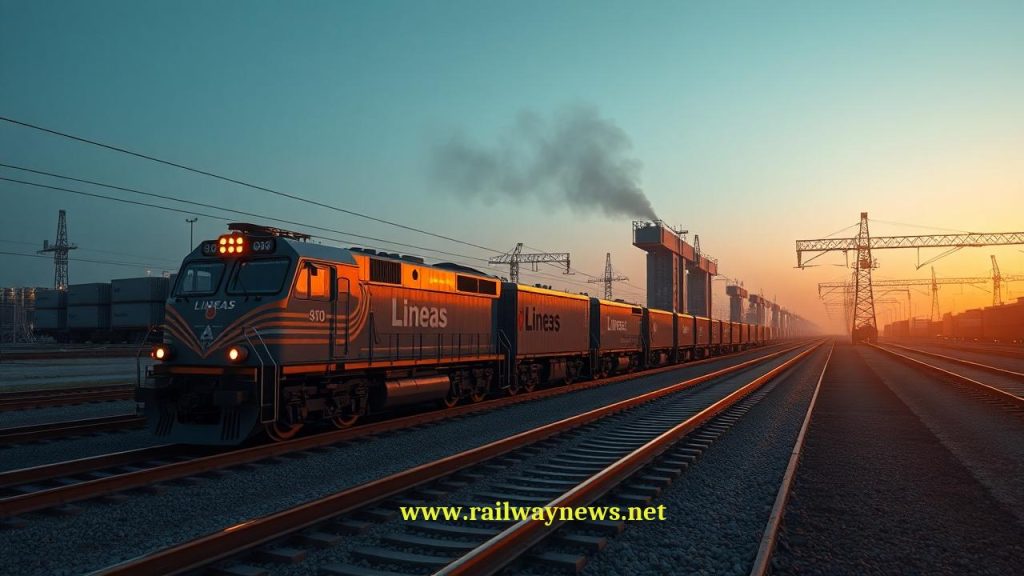
BRUSSELS – The European Commission has greenlit a EUR 61 million state-backed rescue loan for Lineas, Europe’s largest private rail freight operator, to address severe liquidity shortages amid a downturn in industrial demand. This crucial intervention, notified by Belgium in August 2025, aims to stabilize the strategically vital company while simultaneously clearing previous capital injections of being illegal state aid.
| Category | Details |
|---|---|
| Recipient Company | Lineas |
| Aid Amount | EUR 61 million |
| Aid Type | Short-term rescue loan |
| Approving Authority | European Commission |
| Legal Basis | Article 107(3)(c) TFEU (Rescue and Restructuring Aid Guidelines) |
| Key Justification | Urgent liquidity needs; strategic role in EU’s modal shift policy |
The European Commission has formally approved Belgium’s plan to grant a EUR 61 million rescue loan to Lineas, providing a critical financial lifeline to the embattled rail freight giant. The decision, made under European Union rules on rescue and restructuring aid, acknowledges the company’s urgent liquidity needs. Brussels emphasized that the measure is temporary and conditional; if Lineas fails to repay the loan within six months, the Belgian government is committed to submitting a detailed restructuring plan to ensure the operator’s long-term viability.
Lineas’s financial distress stems from a sharp and unexpected decline in demand across key European industrial sectors. The company, a pivotal logistics partner for the steel, automotive, and chemical industries, has been directly impacted by broader economic headwinds and reduced manufacturing output. This situation underscores the vulnerability of the capital-intensive rail freight sector to market volatility. The Commission’s approval explicitly referenced the strategic importance of rail freight as a low-emission alternative to road transport, aligning the state aid with the EU’s wider Green Deal objectives aimed at shifting more cargo onto the rails.
In a related decision, the Commission also concluded its investigation into two prior capital injections made in 2023 and 2024. Following a complaint from a third party, Brussels examined the investments made jointly by the Belgian sovereign fund SFPIM and private shareholder Argos Wityu. The investigation found that the state participated on terms that a private investor would have accepted (the market economy operator principle), and therefore the capital increases did not constitute state aid. This ruling provides crucial legal clarity, though the situation was complicated when Argos Wityu later announced it could no longer provide financial support, prompting the need for the current state-backed loan.
Key Takeaways
- Emergency Loan Approved: The European Commission has authorized a EUR 61 million rescue loan from Belgium to Lineas to prevent a short-term collapse.
- Restructuring on the Horizon: The loan is a temporary measure. A full restructuring plan is required if the funds are not repaid within six months, signaling a major overhaul for the operator.
- Past Investments Cleared: Previous capital injections in 2023 and 2024 by state and private shareholders were ruled not to be illegal state aid, as they were conducted on market terms.
Editor’s Analysis
This decision highlights a fundamental tension at the heart of European policy: the strict enforcement of state aid rules versus the strategic imperative to promote a modal shift to rail for climate reasons. Lineas is not just another company; it is Europe’s largest private rail freight operator and a lynchpin in the logistics chain for core industries, particularly around the vital Port of Antwerp. Its failure would have severe ripple effects on European supply chains and would represent a major setback for the EU’s Green Deal. The Commission’s dual ruling—approving the new rescue loan while clearing past investments—is a pragmatic balancing act. It provides a temporary shield for a key player while firing a clear warning shot that long-term viability must come from a sustainable business model, not a permanent state subsidy. The future of Lineas will be a litmus test for the resilience of private rail freight in a challenging economic climate.
Frequently Asked Questions
- Why did the European Commission approve state aid for Lineas?
- The Commission approved the EUR 61 million loan because it met the criteria for rescue aid under EU rules. It was deemed necessary to address the company’s urgent liquidity problems, limited in scope, and justified by Lineas’s strategic importance for the EU’s goal of shifting freight from road to rail.
- What happens if Lineas cannot repay the loan in six months?
- If the loan is not repaid within the six-month period, the Belgian government is obligated to submit a detailed restructuring plan for Lineas to the European Commission for approval. This plan would need to detail how the company will return to long-term financial health.
- Were earlier government investments in Lineas also state aid?
- No. The Commission investigated two capital injections from 2023 and 2024, in which the Belgian state fund SFPIM participated alongside a private investor. It concluded these were carried out on market terms and therefore did not constitute state aid.

Railway infrastructure, rolling stock and transport technologies specialist focused on global rail industry developments, high-speed rail systems, signaling technologies and freight transportation. Covering railway investments, public transport modernization, rail operations and international mobility projects across Europe, Asia and North America.
RELATED POSTS

October 8, 2026 1:15 pm
Alstom secured a €1bn contract to build 13 automated trains,...

October 1, 2026 7:09 am
United States regulators confirmed a September 30 deadline for the...

October 8, 2026 12:18 pm
Siemens Mobility signed an agreement with VinSpeed to supply 350...

October 4, 2026 5:14 pm
Alstom secured a CA$4.7 billion order from VIA Rail Canada...

October 5, 2026 6:12 pm
AECOM and Jacobs secured a contract in September 2026 to...

October 4, 2026 11:08 pm
Sound Transit confirmed the September 30 opening of Seattle Pinehurst...