
CSX Removes Chicago Bottleneck: Eases Freight Delays
CSX removed the Forest Hill rail diamond in Chicago, eliminating a 111-year-old bottleneck. This upgrade boosts efficiency, easing congestion in the vital freight hub.
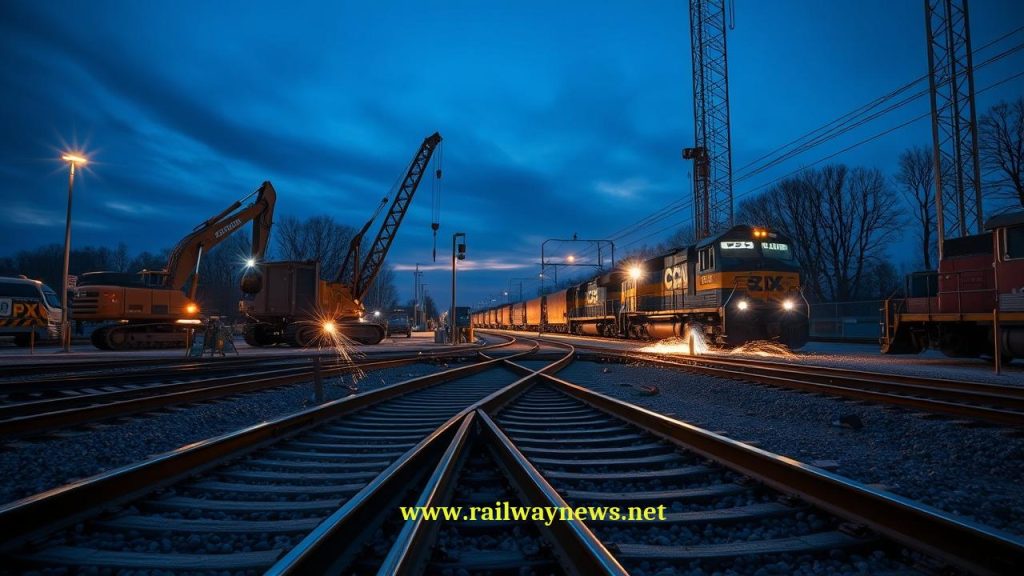
🛑 Key Takeaways:
- CSX has removed the Forest Hill rail diamond crossing in Chicago, a major bottleneck in the U.S. freight network.
- The project eliminates a grade crossing formalized in 1914 that caused chronic delays by forcing trains to slow or stop.
- This infrastructure upgrade is a tactical component of a broader strategy to decongest Chicago, complementing corporate-level initiatives like proposed rail mergers.
CHICAGO, IL – CSX has completed the removal of the historic Forest Hill rail diamond crossing, a project finished in mid-November 2025 designed to alleviate a major chokepoint in the nation’s busiest freight hub. The removal of the 111-year-old grade crossing is part of the Chicago Region Environmental and Transportation Efficiency (CREATE) Program’s 75th Street Corridor Improvement Project, a multi-stakeholder effort to modernize the city’s rail infrastructure.
| Category | Specification / Detail |
|---|---|
| Project Name | Forest Hill Rail Diamond Removal |
| Location | Forest Hill, Chicago, IL |
| Key Stakeholders | CSX, CREATE Program Partners |
| Completion Date | Mid-November 2025 |
| Historical Context | Agreements from 1891; crossing formalized in 1914 |
| Parent Initiative | 75th Street Corridor Improvement Project |
Operational & Technical Details
The Forest Hill diamond was a grade-level intersection of two rail lines. This configuration created an operational bottleneck. Trains were required to slow significantly or stop completely before proceeding through the crossing. This safety protocol generated chronic, cascading delays that propagated throughout the dense Chicago rail network.
By removing the at-grade diamond, the project eliminates the point of conflict between train movements. This allows for more fluid and efficient operations, reducing dwell times and improving overall network velocity in the critical 75th Street corridor.
Market Impact Analysis
The Forest Hill project represents a direct, physical investment to solve Chicago’s well-documented rail congestion. It complements larger, strategic efforts by Class I railroads to streamline national networks. For example, the proposed Union Pacific and Norfolk Southern merger partly aims to reduce strain on Chicago by rerouting cross-country trains to bypass the hub entirely.
Projections from that merger application suggest a potential reduction of 200 cars daily sent to the Belt Railway of Chicago. The industry is therefore pursuing a dual strategy: large-scale network optimization through mergers and targeted infrastructure upgrades like the Forest Hill diamond removal. Both approaches underscore the hub’s critical role and the high cost of its inherent bottlenecks.
FAQ: Quick Facts
What was the primary goal of this project?
To reduce chronic train delays and network congestion in the Chicago rail corridor by eliminating a historic grade-level crossing that forced trains to slow or stop.
When was the project completed?
The project was completed in mid-November 2025, according to the announcement.

Railway infrastructure, rolling stock and transport technologies specialist focused on global rail industry developments, high-speed rail systems, signaling technologies and freight transportation. Covering railway investments, public transport modernization, rail operations and international mobility projects across Europe, Asia and North America.
RELATED POSTS

October 1, 2026 7:09 am
United States regulators confirmed a September 30 deadline for the...

October 8, 2026 1:15 pm
Alstom secured a €1bn contract to build 13 automated trains,...

October 4, 2026 5:14 pm
Alstom secured a CA$4.7 billion order from VIA Rail Canada...

October 1, 2026 12:13 am
Illinois approved $1.5 billion annually for the Northern Illinois Transit...

October 6, 2026 2:14 am
Union Pacific launched export rail shipments with Ferromex to deliver...

October 1, 2026 6:10 am
Amtrak approved a System Expansion Committee on July 30 to...