
EN 16185-1: Unpacking Europe’s MU Train Braking Standard
Discover EN 16185-1, the vital standard ensuring safe, reliable, and interoperable braking systems for multiple unit trains across Europe. Learn about its core principles.
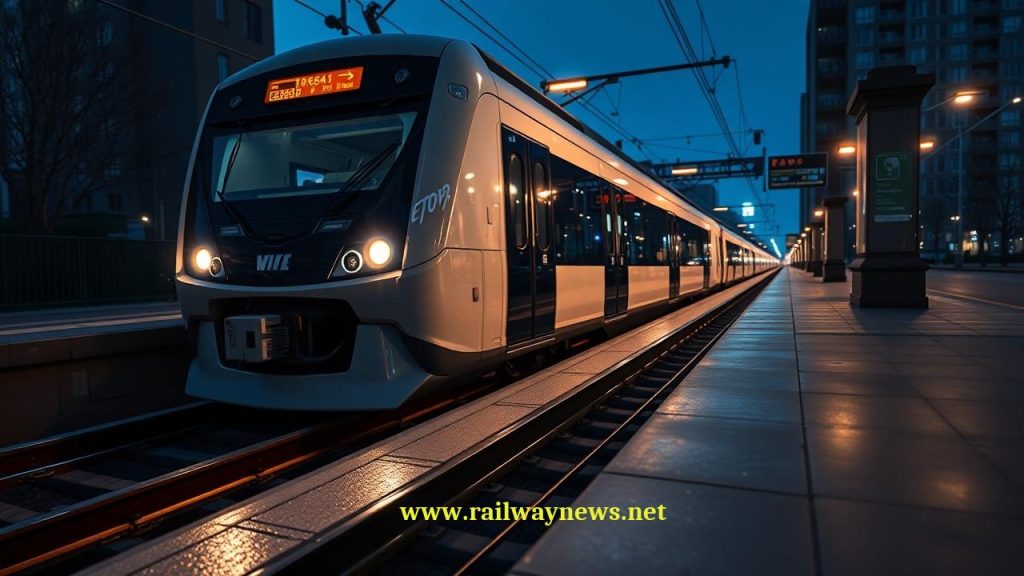
Understanding EN 16185-1: A Detailed Guide to Multiple Unit Train Braking Systems
EN 16185-1 is a crucial European standard that specifies the functional, performance, and technical requirements for the braking systems of multiple unit (MU) trains. It serves as a foundational document for ensuring the safety, reliability, and interoperability of these vehicles across the European railway network.
The primary objective of this standard is to establish a common framework for designing, manufacturing, and verifying the braking systems of Electric Multiple Units (EMUs) and Diesel Multiple Units (DMUs). By defining clear performance criteria and system architectures, EN 16185-1 ensures that braking systems function predictably and safely under all operating conditions.
Core Principles and Scope of EN 16185-1
The scope of EN 16185-1 is specifically tailored to multiple unit trains, which are self-propelled trainsets where traction and passenger accommodation are combined into one or more vehicles. This standard is fundamental for a wide range of railway applications, from high-speed trains to regional, commuter, and metro services. It does not apply to locomotive-hauled trains, wagons, or other special-purpose railway vehicles, which are covered by separate standards.
Key Objectives:
- Safety: To define fail-safe principles and performance levels that guarantee the train can be brought to a standstill safely, even in the event of a system failure.
- Performance: To specify minimum braking performance requirements, including deceleration rates and stopping distances for various types of braking (service, emergency).
- Interoperability: To ensure that MUs from different manufacturers can operate on shared infrastructure without compromising safety, by standardizing interfaces and performance characteristics.
- Functionality: To detail the required functions of the brake system, including control, monitoring, and diagnostics.
Key Technical Requirements of the Standard
EN 16185-1 delves deep into the technical aspects of brake system design. It is not merely a performance specification but a detailed guide to building a robust and reliable system. The core requirements can be broken down into several key areas.
1. Brake System Architecture and Control
The standard mandates a robust and redundant architecture. Key principles include:
- Fail-Safety: The system must be designed so that any single credible failure does not lead to a catastrophic loss of braking capability. The train must default to a safe state, which typically involves a brake application.
- Redundancy: Critical components and control lines (like the train brake pipe or electronic control networks) must have sufficient redundancy to maintain brake control in case of a fault.
- Brake Control Command: The standard defines how brake commands are initiated, transmitted, and executed. This includes the driver’s brake controller, automatic train protection (ATP) system commands, and passenger emergency brake activation. The command chain must be secure and reliable.
2. Types of Braking Systems
EN 16185-1 defines several distinct types of braking, each with specific requirements:
- Service Brake: The primary brake used during normal operation for speed regulation and planned stops. It must be continuously variable, allowing for smooth and precise control. The service brake often involves a blend of electro-dynamic and friction braking.
- Emergency Brake: The highest-performance brake, designed to stop the train in the shortest possible distance in a critical situation. It is non-variable (an all-or-nothing application) and must be available at all times, independent of the main power supply.
- Parking Brake: A system designed to hold the train stationary on a specified gradient for an indefinite period. It must be a mechanical, spring-applied, or otherwise non-powered system to ensure it remains active even when the train is powered down.
3. Braking Performance and Calculations
This is a central part of the standard. It requires manufacturers to calculate, simulate, and later verify the train’s stopping distances and deceleration rates. Performance is evaluated under various conditions:
- Load Conditions: Performance must be met under different passenger loads (e.g., empty, normal load, crush load).
- Adhesion Conditions: Calculations must account for both ideal (dry rail) and poor adhesion (wet or contaminated rail) conditions.
- Gradients: The effect of inclines and declines on stopping distance must be factored into the design.
- Response Time: The standard specifies maximum time delays from command initiation to the brake force being applied throughout the train.
4. Integration of Electro-Dynamic and Friction Brakes
Modern MUs heavily rely on electro-dynamic (regenerative and/or rheostatic) braking. EN 16185-1 provides specific requirements for this:
- Blended Braking: The system must seamlessly blend the effort from the dynamic brake (using traction motors as generators) and the friction brake (brake pads on discs or wheels).
- Priority of Dynamic Brake: To save energy and reduce wear on friction components, the dynamic brake should be prioritized. The friction brake supplements it when the dynamic brake is insufficient or unavailable (e.g., at low speeds or if the power line cannot accept regenerated energy).
- Compensation: If the dynamic brake effort fades or fails, the friction brake must automatically and smoothly compensate to maintain the required total braking effort.
5. Wheel Slide Protection (WSP) System
The WSP system is the railway equivalent of an Anti-lock Braking System (ABS) in a car. It is a mandatory safety system under EN 16185-1. Its function is to optimize the braking effort under poor adhesion conditions by preventing wheels from locking up (sliding). A sliding wheel has significantly less braking force than a rolling wheel and can cause damage to the wheel tread (wheel flats). The WSP system must:
- Individually monitor the speed of each axle.
- Detect the onset of wheel slide (rapid deceleration of an axle).
- Rapidly modulate the brake pressure on the affected axle to restore rolling.
- Maximize the stopping performance under the given adhesion conditions.
Braking Performance Levels Overview
While the standard itself details complex formulas, the requirements can be conceptualized into different performance expectations based on the train’s application. The table below provides a simplified comparison of typical performance characteristics for different types of MUs governed by the standard.
| Performance Category | Typical Application | Key Technical Characteristics & EN 16185-1 Focus |
|---|---|---|
| High-Speed / Intercity | High-speed lines (e.g., > 200 km/h) |
|
| Regional / Commuter | Suburban and inter-regional lines |
|
| Urban / Metro | Metro and light rail systems |
|
Verification and Testing
Compliance with EN 16185-1 is not just a matter of design; it must be proven through rigorous testing. The standard outlines the requirements for:
- Type Tests: A detailed set of tests performed on a new train type to validate the design and performance against all requirements of the standard. This includes full-speed emergency stopping tests.
- Routine Tests: Simplified tests performed on every train unit produced to ensure consistency and quality in manufacturing.
- Documentation: Manufacturers must provide extensive documentation, including brake calculations, system schematics, and test reports, to demonstrate compliance.
Conclusion: The Role of EN 16185-1 in Modern Railways
EN 16185-1 is more than just a technical document; it is a pillar of safety and interoperability for multiple unit trains in Europe. By setting a high bar for performance, reliability, and fail-safe design, it gives operators, manufacturers, and regulatory bodies a common language and a clear set of benchmarks. The standard ensures that whether a passenger is on a high-speed intercity service or a daily commuter train, the braking system has been designed and verified to the highest safety standards in the industry.
Frequently Asked Questions (FAQ) about EN 16185-1

Railway infrastructure, rolling stock and transport technologies specialist focused on global rail industry developments, high-speed rail systems, signaling technologies and freight transportation. Covering railway investments, public transport modernization, rail operations and international mobility projects across Europe, Asia and North America.