
EN 16019: Unlocking Europe’s Rail Interoperability
EN 16019 standardizes automatic railway couplers, ensuring European rail interoperability, safety, and efficiency. It defines mechanical, pneumatic, and electrical connections.
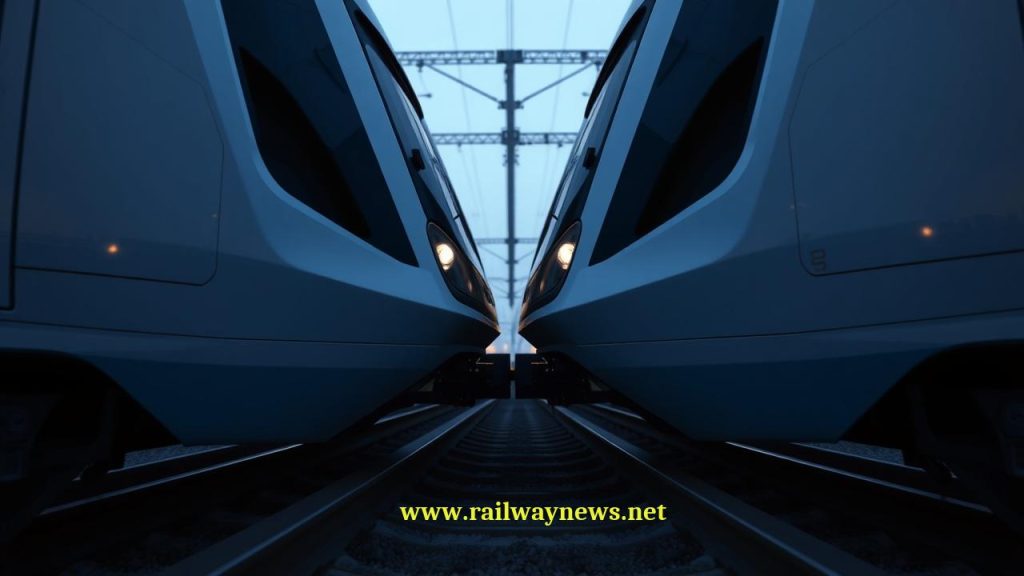
Understanding EN 16019: The Standard for Railway Automatic Couplers
EN 16019 is a critical European Standard that defines the performance requirements, specific interface geometry, and test methodologies for automatic couplers used in railway applications. Its primary purpose is to ensure interoperability, safety, and reliability between different types of railway vehicles, particularly in the European mainline and regional networks.
This standard facilitates the seamless connection of rolling stock from different manufacturers and operators by standardizing the physical and functional interface of the coupling system. It covers the mechanical, pneumatic, and electrical connections, allowing for the automatic coupling of not just the vehicle bodies but also their essential systems like brakes and data lines.
Core Objectives and Importance of EN 16019
The implementation of EN 16019 addresses several key challenges in the modern railway industry. Its objectives are central to creating a more efficient and unified European rail network.
- Interoperability: By defining a common interface geometry (often referred to as the ‘Type 10’ or ‘Scharfenberg-compatible’ interface), the standard ensures that any compliant trainset can couple with another, regardless of its origin. This is fundamental for cross-border operations.
- Enhanced Safety: The standard mandates stringent performance and strength requirements. The rigid connection provided by automatic couplers eliminates slack between vehicles, improving train dynamics and reducing the risk of derailment. It also ensures secure connections for safety-critical systems like brakes.
- Operational Efficiency: Automatic coupling significantly reduces the time and manual labor required for shunting and train formation. Operations that would take minutes with traditional screw couplers can be completed in seconds, increasing network capacity and vehicle availability.
- Standardized Performance: EN 16019 establishes a clear benchmark for manufacturers. It specifies the loads (buff and draw), fatigue life, and environmental conditions that a coupler must withstand, ensuring a consistent level of quality and reliability across the market.
Key Technical Specifications of EN 16019
The technical depth of EN 16019 is extensive, covering every aspect of the coupler’s lifecycle from design to testing. The main technical areas are detailed below.
1. Specific Interface Geometry
This is the cornerstone of the standard. It does not dictate the internal design of the coupler but strictly defines the mating face that allows for mechanical, pneumatic, and electrical coupling.
- Mechanical Head: The standard specifies the precise dimensions of the cone and funnel of the coupler head, the locking mechanism, and the gathering range (both horizontally and vertically) within which a secure coupling can be achieved. This ensures a rigid, slack-free connection.
- Pneumatic Connections: It defines the location and design of ports for the Main Air Pipe (MAP) and the Brake Pipe (BP). This allows for the automatic connection of the train’s pneumatic brake system upon mechanical coupling.
- Electrical Connectors: The standard specifies the arrangement for electrical contact heads. These connectors transmit power and data for systems such as Train Control and Management Systems (TCMS), passenger information, and door controls. The design ensures a reliable connection is made and protected from the elements.
2. Performance Requirements
EN 16019 sets demanding performance criteria that a coupler must meet to be certified as compliant. These requirements ensure the coupler can survive the harsh operating environment of a railway.
- Static and Dynamic Loads: The coupler must withstand specified static and dynamic compression (buff) and tension (draw) forces without permanent deformation or failure. These values are defined based on the intended application (e.g., passenger multiple units, locomotives).
- Fatigue Life: The standard requires the coupler to endure a high number of load cycles, simulating a full service life to ensure long-term structural integrity and prevent fatigue-related failures.
- Environmental Resilience: Couplers must operate reliably across a wide range of temperatures (e.g., -40°C to +70°C) and be resistant to corrosion, ice formation, and the ingress of dust and water.
- Operational Reliability: The standard defines the conditions under which coupling and uncoupling must be possible, including on curves and vertical gradients, and at specified relative speeds.
3. Test Methods
To verify compliance with the performance requirements, EN 16019 outlines a detailed suite of mandatory tests. These are typically performed on a test bench and in the field.
- Static Strength Test: Applying maximum design loads to verify the structural integrity of the coupler body and its components.
- Fatigue Test: Subjecting the coupler to millions of repeated load cycles to simulate its operational lifespan.
- Gathering and Coupling Tests: Verifying the coupler’s ability to connect successfully under various horizontal and vertical misalignments, on curves, and on gradients.
- Environmental Tests: Placing the coupler in a climatic chamber to test its functionality at extreme temperatures, humidity, and icing conditions.
- Pneumatic and Electrical Tests: Checking the integrity and leak rates of pneumatic connections and the continuity and insulation resistance of the electrical contacts after coupling.
Comparison of Coupling Systems
To understand the significance of EN 16019, it is useful to compare its specified coupler type with other major systems used globally.
| Feature | EN 16019 (Type 10) | AAR Coupler | SA3 Coupler |
|---|---|---|---|
| Coupling Method | Automatic, rigid, wedge-lock mechanism. No slack. | Semi-automatic, knuckle type. Allows slack action. | Semi-automatic, knuckle type. Allows slack action. |
| Automatic Connections | Yes (Mechanical, Pneumatic, Electrical). | No, mechanical only. Air and electrical lines are connected manually. | No, mechanical only. Air and electrical lines are connected manually. |
| Primary Region | Europe | North America, Australia, parts of South America and Africa. | CIS countries (former Soviet Union), Finland, Mongolia. |
| Typical Application | Passenger Multiple Units (EMU/DMU), high-speed trains, some locomotives. | Heavy freight wagons and locomotives. | Heavy freight wagons and locomotives. |
Conclusion: A Foundation for Modern European Railways
EN 16019 is more than just a technical document; it is a key enabler of the modern, interoperable European railway network. By providing a robust and reliable standard for automatic couplers, it enhances safety, improves operational efficiency, and removes technical barriers to cross-border traffic. As the rail industry continues to evolve towards greater automation and digitalization, the principles of standardized, integrated coupling systems defined in EN 16019 will become even more crucial.

Railway infrastructure, rolling stock and transport technologies specialist focused on global rail industry developments, high-speed rail systems, signaling technologies and freight transportation. Covering railway investments, public transport modernization, rail operations and international mobility projects across Europe, Asia and North America.