
Visualizing the Route: UIC Leaflet 428-2 and Wagon Labelling
UIC Leaflet 428-2 standardizes the physical routing labels attached to freight wagons, providing essential destination data to shunting staff for efficient international sorting.
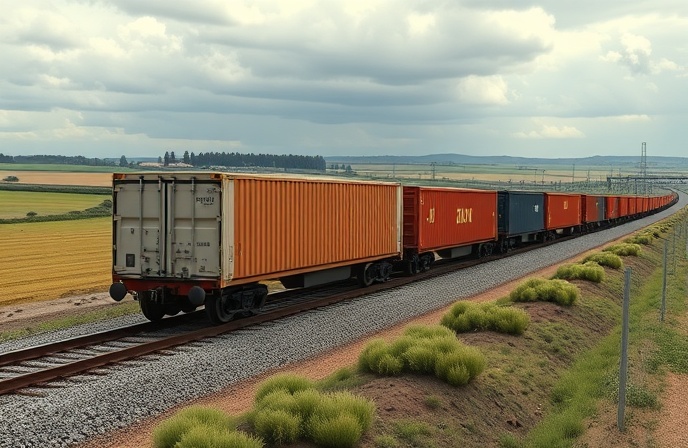
What is UIC Leaflet 428-2?
UIC Leaflet 428-2, titled “International labelling of wagons,” is an operational standard established by the International Union of Railways (UIC). While modern logistics relies heavily on digital data, the physical reality of a marshalling yard requires visual backups. This leaflet defines the format, content, and placement of the paper routing labels inserted into the label holders on the sides of freight wagons.
When a wagon travels from a factory in France to a warehouse in Poland, it may pass through several “hump yards” where it is sorted into different trains. UIC 428-2 ensures that the ground staff (shunters) can look at the wagon and immediately understand its destination and routing instructions, even without a handheld computer.
The Role of the Wagon Label
The label defined by UIC 428-2 acts as the “boarding pass” for the cargo. It is distinct from the permanent technical markings (like the 12-digit wagon number defined in UIC 438-2). The routing label is transient; it is applied at the start of the journey and removed or pasted over upon arrival.
Key Information Fields
To ensure language independence across borders, the leaflet mandates a standardized layout:
- Destination Station: Clearly printed in large letters, often accompanied by the station code.
- Consignee: The name of the customer receiving the goods.
- Route instructions: Vital for cross-border traffic, indicating which border crossings (frontier points) the wagon must use.
- Weight of Goods: Essential for the locomotive driver to calculate braking percentages.
Label Types and Standards
UIC 428-2 categorizes labels to prevent confusion between commercial routing information and safety warnings:
1. The Main Label (Etiquette principale): This contains the primary routing data. It must be of a specific size to fit standard UIC label holders (typically located on the chassis).
2. Subsidiary Labels: These include specific handling instructions, such as “Shunt with Care,” “Do not hump,” or “Fragile.” While Dangerous Goods placards are governed by RID, operational handling labels fall under the purview of UIC operating rules.
Comparison: Permanent ID vs. Routing Label
It is common to confuse the permanent painted numbers on a wagon with the labels defined in UIC 428-2. The table below clarifies the difference.
| Feature | UIC 438-2 (Permanent ID) | UIC 428-2 (Routing Label) |
|---|---|---|
| Type | Painted / Stenciled on the wagon body. | Paper / Cardboard inserted in a holder. |
| Lifespan | Permanent (Life of the wagon). | Temporary (One specific journey). |
| Purpose | Asset Identification (Who owns it? What type is it?). | Logistics (Where is it going right now?). |
| User | Asset Managers, Maintenance Staff. | Shunters, Yard Masters. |
Digital Transition and Future
With the implementation of TAF-TSI (Telematics Applications for Freight) and the widespread use of tablets by ground staff, the reliance on paper labels is decreasing. Digital “consists” allow shunters to see wagon destinations on a screen.
However, UIC 428-2 remains a critical fallback standard. In the event of IT failure, battery loss, or complex multi-modal transfers where data might not sync instantly, the physical label ensures the wagon is not “lost” in the network.

Railway infrastructure, rolling stock and transport technologies specialist focused on global rail industry developments, high-speed rail systems, signaling technologies and freight transportation. Covering railway investments, public transport modernization, rail operations and international mobility projects across Europe, Asia and North America.