
Leading the Way: EN 15153-1 Train Lighting Standards
Illuminate the track safely. A technical guide to EN 15153-1, defining the intensity, color, and geometric arrangement of railway headlights and tail lamps.
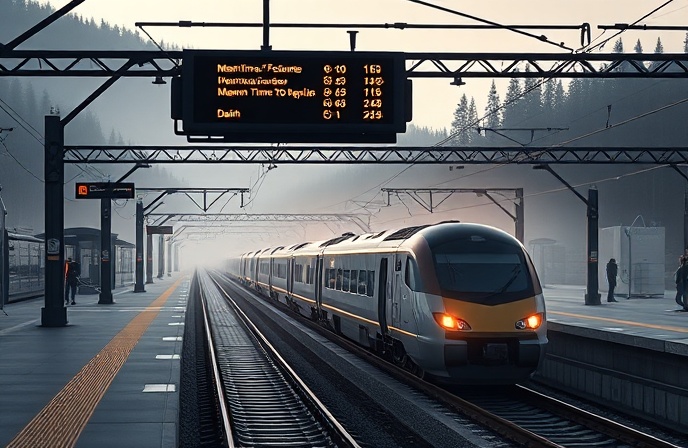
Introduction to EN 15153-1
For a train moving at night, seeing the track is important, but being seen is vital. EN 15153-1, titled “Railway applications – External visible and audible warning devices – Part 1: Head, marker and tail lamps,” is the definitive European standard governing the exterior lighting of rolling stock.
It replaces older national regulations and the classic UIC 534 leaflet, establishing harmonized rules for the “eyes” of the train. Whether it’s a high-speed ICE or a regional tram-train, this standard ensures that the lighting signature is consistent, allowing track workers and signalmen to instantly identify the front and rear of a train.
Snippet Definition: What is EN 15153-1?
EN 15153-1 is a European standard specifying the functional and technical requirements for the external lights of railway vehicles. It defines the number, arrangement (the “A-shape”), luminous intensity (measured in candelas), and color definitions for headlamps, marker lamps, and tail lamps to ensure visibility and interoperability.
The Three Classes of Lights
EN 15153-1 distinguishes between three specific lighting functions, each with a unique purpose and intensity requirement.
1. Headlamps (The Illuminators)
These are the powerful beams designed to light up the track ahead for the driver and warn people of the train’s approach.
- Full Beam: High intensity (typically 40,000 to 70,000 candelas) for open track.
- Dimmed Beam: Reduced intensity (typically 12,000 cd) used when passing other trains to avoid blinding the opposing driver.
2. Marker Lamps (The Identifiers)
Often integrated into the same housing as the headlamps, these white lights are much dimmer (300 to 700 cd). Their purpose is not to illuminate the track, but to indicate the presence of the train “front” to others without causing glare.
3. Tail Lamps (The Protectors)
Two red lights at the rear of the train. They confirm to signalmen and following trains that the train is complete (no wagons lost). The standard requires a specific red color spectrum and sufficient intensity (typically 15 to 100 cd) to be visible from hundreds of meters away.
The “A-Shape” Arrangement
One of the most distinct requirements of EN 15153-1 is the geometric layout. The front of the train must display three lights arranged in an isosceles triangle (an inverted “A” or pyramid shape).
- Lower Lights: Two lights positioned symmetrically above the buffers.
- Top Light: One central light positioned higher up.
This unique signature distinguishes a train from road vehicles (which typically have two horizontal lights) at level crossings.
Comparison: EN 15153-1 vs. UIC 534
The transition from the old UIC recommendation to the mandatory EN standard brought stricter optical definitions.
| Feature | EN 15153-1 | UIC Leaflet 534 |
|---|---|---|
| Status | Current European Standard (TSI Mandatory). | Legacy Reference (Superseded in EU). |
| Luminous Intensity | Precise ranges defined in Candelas (cd) for all modes. | General guidelines on visibility distance. |
| Color Definition | Strict CIE 1931 chromaticity coordinates (x, y). | Basic color definitions. |
| Test Method | Detailed photometric laboratory testing required. | Visual inspection and basic measurements. |
Testing and Compliance
To certify a light unit under EN 15153-1, it must undergo photometric testing in a dark room. The light is mounted on a goniometer (a rotating stand), and sensors measure the beam’s intensity at various horizontal and vertical angles. This ensures the beam is focused on the track and doesn’t spill light upwards (which would be wasted) or too far sideways.

Railway infrastructure, rolling stock and transport technologies specialist focused on global rail industry developments, high-speed rail systems, signaling technologies and freight transportation. Covering railway investments, public transport modernization, rail operations and international mobility projects across Europe, Asia and North America.