
EN 13674-3: Europe’s New Standard For Derailment Prevention
EN 13674-3 sets the standard for check rail safety. Understand its critical role in preventing derailments and ensuring quality in railway infrastructure.
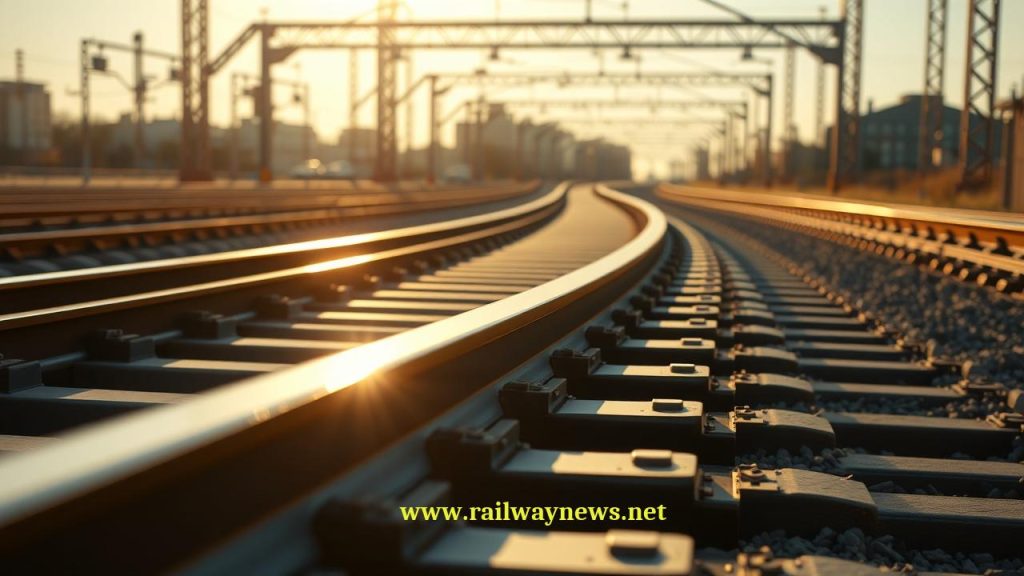
Understanding EN 13674-3: Technical Specifications for Check Rails
EN 13674-3 is a European Standard that specifies the technical requirements for check rails used in railway applications. As a crucial part of the EN 13674 series, which covers track rails, this standard focuses exclusively on the manufacturing, quality, and testing criteria for rails designed to guide wheelsets through switches and crossings, preventing derailments.
The Critical Role of Check Rails in Railway Infrastructure
Before diving into the technical specifics of the standard, it’s essential to understand the function of a check rail. In complex track sections like turnouts (switches) and crossings, there are gaps in the running rail to allow wheel flanges to pass through. A check rail is a shorter rail placed alongside the running rail to control the lateral movement of the wheelset. Its primary functions are:
- Guidance: It provides a guiding surface for the back of the wheel, ensuring the opposite wheel follows the correct path through the frog or common crossing.
- Derailment Prevention: By constraining the wheelset’s movement, it prevents the wheel flange from striking the nose of the frog or climbing the wrong rail, which is a common cause of derailment at low to medium speeds.
- Safety Assurance: It acts as a critical safety component, particularly in areas with intersecting tracks, ensuring the smooth and safe passage of trains.
Due to their safety-critical role and the high impact forces they endure, check rails must be manufactured to stringent quality standards, which is precisely what EN 13674-3 defines.
Key Technical Requirements of EN 13674-3
The standard outlines a detailed set of requirements covering everything from the chemical composition of the steel to the final inspection procedures.
H3: Steel Grades and Chemical Composition
EN 13674-3 specifies the use of steel grades that are also defined in EN 13674-1 for flat bottom Vignole rails. The chemical composition is tightly controlled to achieve the desired mechanical properties, weldability, and wear resistance. Key elements regulated include:
- Carbon (C): Determines the hardness and strength of the steel. Higher carbon content leads to greater wear resistance but can reduce ductility.
- Manganese (Mn): Increases hardness and strength. It is a vital element for achieving the desired mechanical properties in the finished rail.
- Silicon (Si): Acts as a deoxidizer during steel production and contributes to strength.
- Phosphorus (P) and Sulphur (S): These are considered impurities and their content is strictly limited. High levels of P and S can make the steel brittle and susceptible to cracking.
H3: Mechanical Properties
To withstand the demanding operational environment, check rails must exhibit specific mechanical properties. The standard mandates rigorous testing to verify these attributes:
- Tensile Strength: This measures the rail’s ability to resist being pulled apart. The standard specifies minimum tensile strength values for each steel grade, ensuring the rail can handle the stresses imposed by passing trains.
- Hardness: Hardness is a critical parameter for wear resistance. Check rails are subject to significant friction and impact from wheel flanges. The standard requires specific Brinell hardness (HBW) ranges for the rail head to guarantee a long service life and resistance to plastic deformation.
H3: Geometric Tolerances and Profile Dimensions
The precise shape and dimensions of the check rail are fundamental for its proper function. EN 13674-3 defines strict tolerances for:
- Profile: The cross-sectional shape of the rail must conform exactly to the specified drawings. Any deviation can lead to improper wheel-rail interaction.
- Straightness: Rails must be straight to ensure smooth train operation and avoid creating points of concentrated stress.
- Dimensional Accuracy: Height, width of the head and foot, and web thickness are all controlled within tight limits.
H3: Internal Quality and Surface Conditions
The integrity of the rail, both internally and on its surface, is paramount for safety.
- Internal Quality: The standard mandates that rails must be free from internal defects such as hydrogen flakes, cracks, and large non-metallic inclusions. Ultrasonic testing is a required procedure to detect such flaws, which could otherwise lead to catastrophic rail failure.
- Surface Condition: The surface of the check rail must be free from cracks, laps, seams, and other imperfections that could act as stress concentrators and initiate fatigue cracks under cyclic loading from train traffic.
Comparison of Typical Steel Grades for Rails
While check rails may use specific profiles, the steel grades often align with those used for running rails as per the EN 13674 series. The table below illustrates the typical differences in key mechanical properties for common rail steel grades.
| Property | R220 Grade | R260 Grade | R350HT Grade (Head Hardened) |
|---|---|---|---|
| Primary Application | Standard lines with lower axle loads and traffic density | Conventional and high-speed lines, mixed traffic | Heavy haul lines, sharp curves, high wear environments |
| Minimum Tensile Strength (MPa) | 770 | 880 | 1175 |
| Brinell Hardness Range (HBW) | 220 – 260 | 260 – 300 | 350 – 390 |
| Key Characteristic | Good ductility and weldability | Balanced strength and wear resistance | Excellent wear resistance and durability |
Significance and Application in the Railway Sector
Compliance with EN 13674-3 is non-negotiable for railway infrastructure projects across Europe and in many other regions that have adopted European Norms. The standard serves several vital purposes:
- Ensuring Interoperability: It provides a common technical language and quality benchmark, ensuring that check rails from different manufacturers are compatible and meet the safety requirements of various national railway networks.
- Enhancing Safety: By setting high standards for material quality, manufacturing processes, and testing, it directly contributes to the overall safety and reliability of the track system.
- Simplifying Procurement: It gives infrastructure managers and procurement officers a clear and unambiguous set of technical specifications to reference in tenders and contracts, guaranteeing a minimum level of quality.
Conclusion
EN 13674-3 is a highly specific and indispensable standard for the railway industry. It goes far beyond simple dimensions, delving deep into the metallurgical and mechanical properties that define a safe and durable check rail. By mandating strict controls on chemical composition, mechanical strength, internal purity, and dimensional accuracy, the standard ensures that these small but critical components can reliably perform their safety function, guiding trains safely through the most complex parts of the railway network.

Railway infrastructure, rolling stock and transport technologies specialist focused on global rail industry developments, high-speed rail systems, signaling technologies and freight transportation. Covering railway investments, public transport modernization, rail operations and international mobility projects across Europe, Asia and North America.