
EN 13481-7: Europe’s New Safety Benchmark for S&C
EN 13481-7 ensures railway safety. It sets stringent performance standards for fastening systems in switches and crossings, guaranteeing they withstand extreme forces and maintain track integrity.
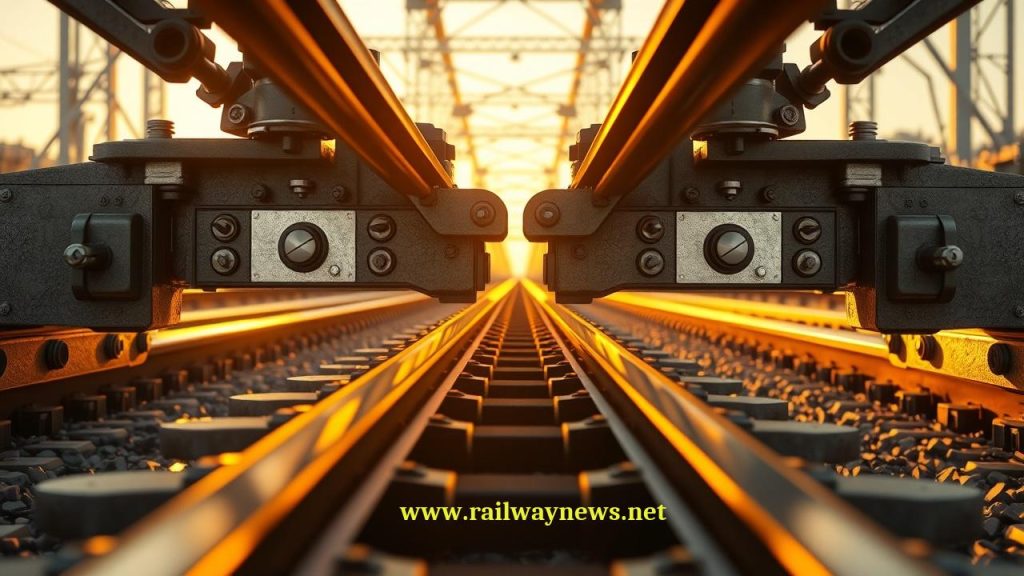
Understanding EN 13481-7: Fastening Systems for Switches and Crossings
EN 13481-7 is a European Standard that specifies the performance requirements for special fastening systems used in the most complex and critical areas of railway track: switches, crossings, and sections with check rails. As a key part of the EN 13481 series, this standard addresses the unique dynamic forces and geometric constraints found in turnouts, ensuring safety, reliability, and interoperability.
Unlike standard plain line track, which experiences relatively uniform loads, switches and crossings (S&C) are subjected to severe impact loads, lateral forces, and complex vibrations. EN 13481-7 establishes a framework for testing and qualifying fastening systems designed to withstand these demanding conditions, thereby guaranteeing the integrity of the track structure at these vital junctions.
Scope and Critical Importance of the Standard
The primary scope of EN 13481-7 covers fastening systems for securing rails, including stock rails, switch blades, crossing components (frogs), and check rails to bearers made of concrete, steel, or timber. These systems are fundamental for:
- Maintaining Track Geometry: Ensuring precise gauge and alignment through the complex geometry of a turnout is critical for safe train passage.
- Absorbing High Impact Loads: When a wheelset traverses the gap at a crossing nose (frog), it generates significant impact forces that the fastening system must attenuate to protect both the track components and the bearer.
- Providing Longitudinal Restraint: Preventing the longitudinal movement (creep) of rails due to thermal expansion/contraction and traction/braking forces is especially important in S&C, where multiple rails converge.
- Ensuring Electrical Insulation: In areas with track circuits for train detection and signaling, the fastening system must provide reliable electrical insulation between the rails and the bearers.
Key Technical Performance Requirements in EN 13481-7
EN 13481-7 is a performance-based standard, meaning it defines *what* a fastening system must achieve rather than prescribing *how* it should be designed. This allows for innovation in materials and design. The core performance requirements are verified through rigorous laboratory tests.
1. Longitudinal Rail Restraint
This test measures the ability of the fastening system to resist the longitudinal movement of the rail. A defined longitudinal force is applied to a section of rail, and the resulting displacement is measured. For S&C, a high degree of restraint is essential to prevent misalignment of critical components like the switch blade tip and the crossing nose, which could otherwise lead to derailment.
2. Attenuation of Impact Loads
This is arguably one of the most critical tests for S&C fastenings. The test simulates the high-impact event of a wheel passing over a crossing frog. An impact load is applied to a test assembly, and the force transmitted through the fastening system to the bearer is measured. The standard specifies a maximum permissible transmitted force, ensuring the system has sufficient elasticity (typically from a rail pad) to absorb energy and prevent damage to concrete bearers and other components.
3. Clamping Force
Clamping force is the vertical force exerted by the fastening clip or screw that holds the rail foot onto the bearer. This force is crucial for providing torsional resistance and contributing to longitudinal restraint. The standard defines procedures to measure the initial clamping force and to assess its potential loss over the service life due to component settling and wear.
4. Torsional Resistance
In a turnout, especially on the curved path, rails are subjected to torsional (twisting) forces. The fastening system must be stiff enough to prevent excessive rail rotation, which would alter the wheel-rail contact point and compromise safety. The test for torsional resistance measures the rail head’s rotation under a defined eccentric vertical load.
5. Fatigue Life
S&C components are subjected to millions of load cycles. The fatigue test subjects the complete fastening assembly to a repeated, dynamic load that simulates the passage of trains over many years. The components must endure millions of cycles without failure or significant loss of performance (e.g., clamping force), proving their durability for long-term service.
Comparison: S&C Fastenings (EN 13481-7) vs. Plain Line Fastenings (EN 13481-2)
To highlight the special nature of the requirements under Part 7, the following table compares them with the requirements for standard fastenings on concrete sleepers (as per EN 13481-2).
| Performance Parameter | EN 13481-7 (Switches & Crossings) | EN 13481-2 (Plain Line on Concrete Sleepers) |
|---|---|---|
| Primary Challenge | High impact loads, complex geometry, and varied components (switch blades, frogs). | Repetitive, relatively uniform dynamic loading from passing trains. |
| Impact Attenuation Test | Mandatory and a critical qualifying parameter to simulate wheels crossing a frog. High energy absorption is required. | Typically less severe requirements, focused on general vibration damping rather than high-impact events. |
| Geometric Adaptability | System must accommodate various rail sections, baseplates, and bearer configurations found within a single turnout. | System is generally uniform, designed for one type of rail on one type of sleeper. |
| Component Variety | Often requires a mix of special components like sliding baseplates (for switch blades) and rigid fastenings. | Highly standardized components (e.g., same clip and pad type used for kilometers of track). |
| Assembly Complexity | High. Precise positioning of multiple components is critical for correct turnout function. | Low. Simple and repetitive installation process designed for high-speed track laying. |
Conclusion: Ensuring Safety at Critical Junctions
EN 13481-7 plays a vital role in the safety and reliability of modern railway networks. By setting stringent, performance-based requirements for fastening systems in switches, crossings, and check rails, it ensures that these critical components can withstand the unique and severe operational stresses they face. Compliance with this standard provides railway infrastructure managers with the confidence that the fastening systems they procure are durable, reliable, and fit for purpose in the most demanding locations on the track, ultimately safeguarding the passage of trains and maintaining the integrity of the entire railway system.

Railway infrastructure, rolling stock and transport technologies specialist focused on global rail industry developments, high-speed rail systems, signaling technologies and freight transportation. Covering railway investments, public transport modernization, rail operations and international mobility projects across Europe, Asia and North America.