
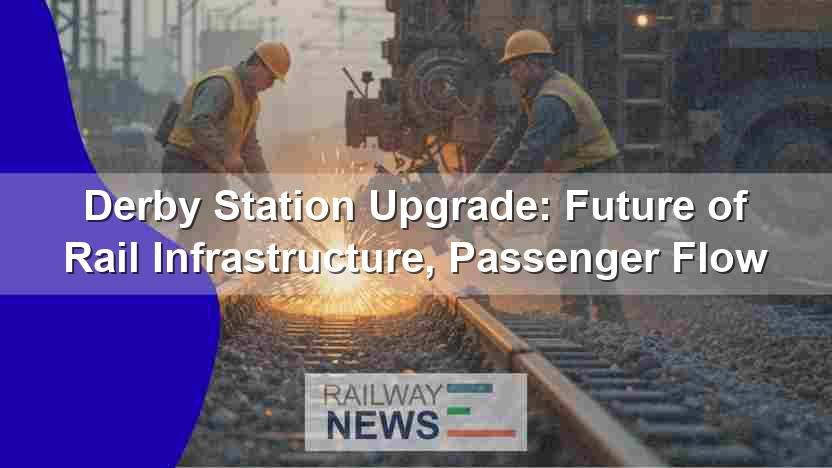
Derby Station Upgrade: Future of Rail Infrastructure, Passenger Flow
Here are a few voiceover-friendly excerpt options for railway professionals:
**Option 1 (Focus on modernization):**
> Modern railway infrastructure is evolving, transforming track, signaling, and stations. Learn how advancements are shaping the future of efficient and sustainable rail transport.
**Option 2 (Focus on key elements):**
> From advanced track systems to passenger-centric stations, discover the key elements of modern railway infrastructure, driving capacity and sustainability.
**Option 3 (Focus on future):**
> Digitalization, automation, and sustainability are reshaping railway infrastructure. Explore how these innovations are impacting the future of rail travel.
## The Evolution and Significance of Modern Railway Infrastructure: A Deep Dive
The railway industry, a cornerstone of global transportation, is in a constant state of evolution. From the rudimentary steam engines of the 19th century to the sophisticated, high-speed rail networks of today, the infrastructure underpinning these systems has undergone a dramatic transformation. This article explores the key elements that define modern railway infrastructure, exploring the technological advancements, engineering challenges, and strategic considerations shaping the future of rail travel. We will examine the impact of these developments on capacity, efficiency, safety, and sustainability, offering a detailed overview of this vital sector. This includes looking at the benefits of upgrading older stations, as well as the challenges of doing so.
## The Foundation: Track and Signaling Systems
The backbone of any railway network is its track infrastructure. Modern track systems go far beyond the simple iron rails of the past. Today, we see the widespread use of continuously welded rail (CWR), which minimizes the number of joints and results in a smoother, quieter ride, reducing maintenance costs. The foundations also often utilize concrete sleepers, which are more durable and provide better stability than their wooden predecessors. The ballast, the layer of crushed stone supporting the sleepers, is meticulously graded and maintained to ensure proper drainage and load distribution.
Signaling systems are equally critical for safe and efficient operations. These systems have evolved from manual signal boxes to computerized control centers, with technologies like Automatic Train Protection (ATP) and European Train Control System (ETCS) playing a pivotal role in preventing collisions and optimizing train movements. These technologies provide real-time monitoring of train positions, speed, and other critical parameters. ETCS, in particular, represents a significant leap forward, offering standardized signaling protocols across different national networks, improving cross-border operability and interoperability.
You might be interested in:
Last November 2018, we published an article about Rail Baltica’s 56km design challenge. Click here to read – Rail Baltica’s 56km Design Challenge: A Critical Analysis
## Rolling Stock and Electrification
The performance of a railway network is also determined by the rolling stock, the trains themselves. Modern trains are designed for high speed, energy efficiency, and passenger comfort. High-speed trains, with their streamlined designs and powerful electric motors, can travel at speeds exceeding 300 kilometers per hour. Materials like lightweight aluminum alloys are used extensively to reduce weight and improve acceleration and braking performance.
Electrification plays a crucial role in reducing the environmental impact of railways and improving operational efficiency. Overhead lines or third rails supply electric power to the trains, eliminating the need for diesel engines and reducing greenhouse gas emissions. Electrification also allows for regenerative braking, where the train’s motors act as generators, returning electricity to the grid and further enhancing energy efficiency. Innovations in electric traction technology, such as the development of more powerful and efficient electric motors, are constantly improving the performance and sustainability of electrified railways.
## Stations and Terminals: The Hubs of Rail Travel
Railway stations and terminals are more than just places for boarding and alighting; they are complex hubs that integrate multiple modes of transport, retail spaces, and passenger services. Modern station design prioritizes accessibility, convenience, and passenger experience. Features like step-free access, clear wayfinding signage, and real-time information displays are standard.
The capacity of stations is critical to accommodate the increasing passenger demand, particularly in urban areas. Expansion projects often involve the construction of new platforms, concourses, and supporting infrastructure, such as power substations and maintenance facilities. The design of these facilities must consider factors like passenger flow, security, and integration with other transport modes, such as buses, trams, and subways, to create seamless journeys. A good example of this is the *Derby station upgrade*.
## The Future of Railway Infrastructure
The future of railway infrastructure is shaped by several key trends, including digitalization, automation, and sustainability. The integration of digital technologies, such as the Internet of Things (IoT) and big data analytics, is enabling predictive maintenance, optimizing train operations, and improving the overall efficiency of railway networks. Automated train operation (ATO), where trains are controlled automatically with minimal human intervention, is becoming increasingly common on some lines, further enhancing efficiency and capacity.
Sustainability is a crucial focus, with efforts to reduce energy consumption, minimize emissions, and promote the use of renewable energy sources. The industry is also exploring new technologies, such as hydrogen-powered trains and advanced battery systems, to further decarbonize rail transport. Investment in high-speed rail networks is projected to continue to grow, as governments around the world recognize the economic and environmental benefits of this mode of transport.
## Conclusion
In summary, modern railway infrastructure is a multifaceted and evolving field, defined by technological advancements, engineering ingenuity, and strategic planning. From the sophisticated track and signaling systems to the high-speed trains and passenger-centric stations, every element plays a critical role in ensuring the safety, efficiency, and sustainability of rail travel. The ongoing evolution of railway infrastructure is driven by several key factors, including the need to increase capacity, improve operational efficiency, reduce environmental impact, and enhance the overall passenger experience.
The integration of digital technologies, such as data analytics and automation, is transforming how railway networks are managed and maintained. The *Derby station upgrade* is a good example of how older stations are being upgraded to handle more passengers and facilitate seamless passenger flow. As the demand for sustainable transport solutions grows, the railway industry is committed to reducing its environmental footprint through the use of electrification, renewable energy sources, and the development of innovative technologies like hydrogen-powered trains. By embracing these advancements and focusing on continuous improvement, the railway industry is poised to play a key role in shaping the future of transportation, offering a vital alternative to other transport methods such as planes and cars. Railway systems offer a vital alternative to other means of transport. The continued investment in research and development and collaboration between industry stakeholders, governments, and research institutions, is crucial for realizing the full potential of railway infrastructure and creating a more sustainable and efficient transportation network for generations to come.

Railway infrastructure, rolling stock and transport technologies specialist focused on global rail industry developments, high-speed rail systems, signaling technologies and freight transportation. Covering railway investments, public transport modernization, rail operations and international mobility projects across Europe, Asia and North America.
RELATED POSTS

October 1, 2026 7:09 am
United States regulators confirmed a September 30 deadline for the...

October 4, 2026 5:14 pm
Alstom secured a CA$4.7 billion order from VIA Rail Canada...

October 6, 2026 2:14 am
Union Pacific launched export rail shipments with Ferromex to deliver...

October 1, 2026 12:13 am
Illinois approved $1.5 billion annually for the Northern Illinois Transit...

October 8, 2026 1:15 pm
Alstom secured a €1bn contract to build 13 automated trains,...

October 1, 2026 6:10 am
Amtrak approved a System Expansion Committee on July 30 to...