
Denmark’s Royal Rail Launch: First Battery Trains Debut
Denmark’s King inaugurated its first battery-powered train fleet! Seven hybrid trains replace diesel, offering emission-free travel and a boost to decarbonization efforts.
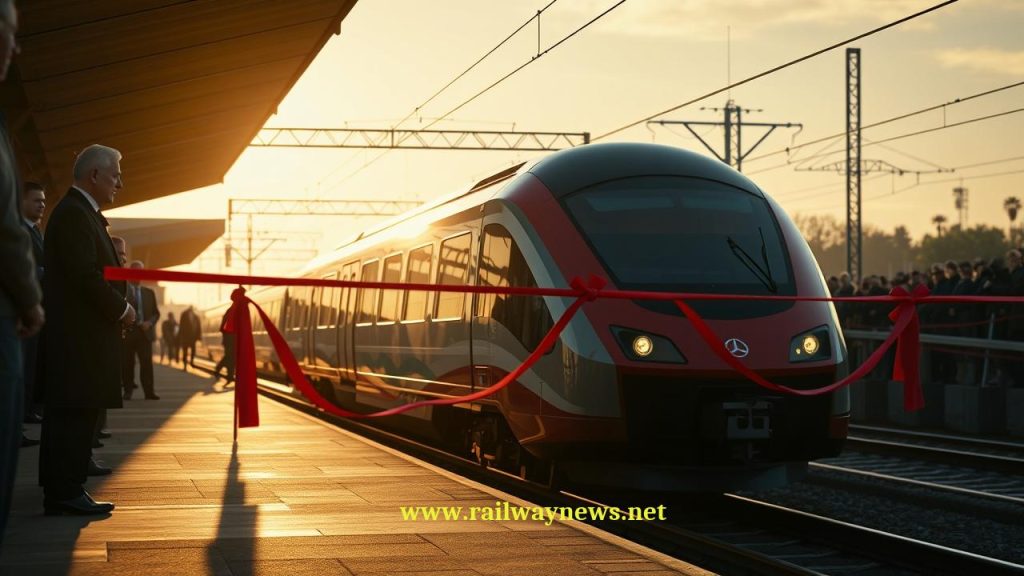
Denmark has officially entered the era of battery-electric rail with the inauguration of its first battery-powered train fleet by His Majesty King Frederik on 19 December 2025. The seven new trainsets, capable of an 80-kilometre range on battery power alone, will replace aging diesel units in West Jutland, marking a major milestone in the nation’s transport decarbonization strategy.
| Category | Details |
|---|---|
| Project Inauguration | 19 December 2025, by HM King Frederik of Denmark |
| Fleet Size | 7 two-car battery-electric trainsets |
| Technology | Hybrid Battery-Electric (charges via 25 kV overhead lines) |
| Key Performance | 140 km/h top speed; 80 km battery-only range |
| Routes Served | Holstebro–Skjern & Vemb–Lemvig–Thyborøn (West Jutland) |
In a ceremony marked by public celebration and royal participation, Denmark’s transition to cleaner rail transport took a significant step forward. His Majesty King Frederik officially inaugurated the country’s first battery-powered trains, taking part in an inaugural journey to Lemvig. The event, which included musical entertainment and speeches at various stations, saw locals gathering along the route to celebrate the milestone. The King officially commissioned the new fleet by passing through a large red ribbon at Lemvig Station, signaling the start of a new, quieter, and emission-free era for rail travel in the West Jutland region.
The seven new trainsets are engineered for versatility on Denmark’s partially electrified network. Each two-car unit has a capacity of 127 seated passengers and can reach a top speed of 140 km/h. Their core innovation is a hybrid battery drive system that allows them to be charged via standard 25 kV overhead lines on electrified sections of track. On non-electrified routes, the onboard batteries provide power for a range of approximately 80 kilometres, enabling completely CO₂-free and low-noise operation. This capability directly replaces the region’s legacy diesel trains, providing passengers with a vastly improved experience that includes modern amenities such as Wi-Fi, advanced passenger information systems, and enhanced comfort in a lightweight, energy-efficient design.
The launch is the culmination of a six-year strategic plan to adopt climate-friendly alternatives to diesel traction, a journey that began when battery-rail technology was still in its infancy. “When we made the decision six years ago… we knew very little about this technology,” stated CEO Martha Vrist. “Today, we are proud to launch Denmark’s first battery-powered train.” This deployment places Denmark within a growing global movement to decarbonize transport. While other sectors explore different solutions, such as the recent delivery of hydrogen-powered buses in France, and heavy-industry operators like Fortescue in Australia deploy massive 14.5 MWh battery-electric locomotives for freight, Denmark’s focus on passenger rail highlights a key application for this flexible technology.
Key Takeaways
- Royal Commissioning: HM King Frederik inaugurated the new fleet, underscoring the national importance of the project.
- Diesel Fleet Replacement: Seven battery trains will now enter service on two key regional lines in West Jutland, eliminating diesel emissions and noise pollution.
- Hybrid Technology: The trains charge from existing overhead lines and use battery power on non-electrified “gaps,” providing a cost-effective solution for decarbonizing rural routes.
Editor’s Analysis
Denmark’s deployment of battery-electric multiple units (BEMUs) is a strategically critical move for the global rail industry. While not the first country to adopt the technology, this successful launch on mainline regional routes serves as a powerful proof of concept for nations with partially electrified networks. It demonstrates a pragmatic and cost-effective alternative to the immense capital expenditure required for full-line electrification, particularly in rural or less-trafficked areas. The ability of BEMUs to “fill the gaps” between electrified corridors is their unique selling proposition. This project will be closely watched by transport authorities worldwide as a model for incremental, high-impact decarbonization without the need for an all-or-nothing infrastructure overhaul.
Frequently Asked Questions
- What routes will the new Danish battery trains serve?
- The seven new trains will operate on the Holstebro–Skjern and Vemb–Lemvig–Thyborøn lines, serving commuters and families in the West Jutland region of Denmark.
- How do the battery trains charge?
- The trains feature a hybrid battery drive. They recharge their batteries while running under 25 kV overhead power lines on electrified sections of the network. They then use the stored battery power to operate on non-electrified routes.
- What are the main benefits for passengers?
- Passengers will experience a significantly quieter and smoother journey. The trains offer a modern travel environment with amenities such as Wi-Fi, real-time passenger information systems, increased comfort, and higher capacity compared to the diesel trains they replace.

Transport and railway industry editor covering global rail infrastructure, sustainable mobility, urban transit systems and next-generation railway technologies with a focus on accessible and industry-focused reporting.
RELATED POSTS

October 8, 2026 1:15 pm
Alstom secured a €1bn contract to build 13 automated trains,...

October 1, 2026 7:09 am
United States regulators confirmed a September 30 deadline for the...

October 4, 2026 5:14 pm
Alstom secured a CA$4.7 billion order from VIA Rail Canada...

October 1, 2026 12:13 am
Illinois approved $1.5 billion annually for the Northern Illinois Transit...

October 1, 2026 6:10 am
Amtrak approved a System Expansion Committee on July 30 to...

October 5, 2026 1:13 pm
New York MTA confirmed a late 2026 DEIS release for...