
DB Cargo’s Automated Freight: Revolutionizing Rail Freight in Europe
DB Cargo unveils Europe’s first automated freight locomotive. The trial on the Betuweroute aims to boost rail freight efficiency and sustainability.
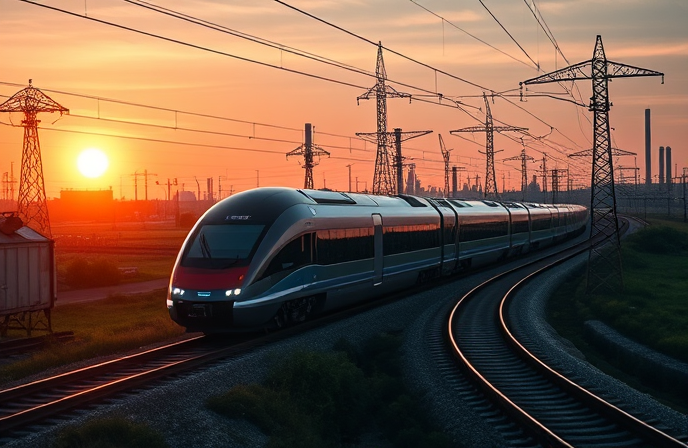
DB Cargo Unveils Europe’s First Automated Freight Locomotive, Ushering in a New Era for Rail Freight
In a landmark development poised to redefine the future of rail freight transport, DB Cargo, the freight division of Deutsche Bahn, has unveiled Europe’s first automated freight locomotive. This pioneering initiative, utilizing advanced Automatic Train Operation (ATO) and Remote Train Operation (RTO) technologies, is set to undergo a detailed year-long trial on the Betuweroute in the Netherlands, commencing in October 2025. The project, supported by €18.86 million in federal funding from the German Federal Ministry of Transport, represents a significant step toward the digitalisation of rail freight, promising increased capacity, enhanced efficiency, and improved reliability. The initiative’s core aim is to address the growing need for more sustainable and efficient freight transport solutions, contributing to the vital modal shift from road to rail. This article will delve into the project’s specifics, its technological underpinnings, the strategic objectives driving its development, and its broader implications for the European rail freight sector.
Technological Advancements: ATO and RTO in Action
The newly modified locomotive, fitted at DB Cargo’s Cologne-Gremberg facility, integrates cutting-edge ATO and RTO systems. ATO automates acceleration, running, braking, and stopping, while RTO allows for remote monitoring and control. A train driver will be onboard during the trial for safety, supported by a central remote monitoring and control team. This innovative combination of technologies, tested for the first time on open-access rail infrastructure, has the potential to revolutionise train operations. The trial will encompass various wagon types and loading conditions, including heavy bulk freight and partially filled tankers. This diversity is crucial in assessing the systems’ adaptability and effectiveness across different operational scenarios. The project is conducted in collaboration with the German Aerospace Centre (DLR), and technology partners Hitachi and Remoot, illustrating a collaborative approach to innovation. The combination of ATO and RTO is expected to demonstrate how automated systems can increase capacity, boost efficiency and improve reliability on freight corridors.
Strategic Goals: Efficiency, Capacity, and the Environmental Imperative
This project is not merely a technological demonstration; it is a key component of DB Cargo’s broader strategy to digitise and automate its freight operations. The primary goals are to improve operational efficiency, increase the capacity of existing rail infrastructure, and significantly contribute to environmental sustainability. By automating and optimising freight transport, DB Cargo aims to facilitate a substantial modal shift from road to rail. This shift is crucial for reducing CO₂ emissions, easing road congestion, and aligning with Germany’s climate and transport goals. Dr. Sigrid Nikutta, Member of the Management Board for Freight Transport at Deutsche Bahn, highlights the importance, stating that “Automated, self-driving locomotives make more efficient use of tracks – this creates more capacity and improves quality in rail freight transport.” Federal Transport Minister Patrick Schnieder emphasized the role of innovation and automation, stating that these “reduce workload for staff while creating future-proof jobs.”
The Betuweroute: A Testing Ground for Innovation
The choice of the Betuweroute, one of Europe’s most advanced freight corridors, as the testing ground is strategic. Its modern infrastructure and operational characteristics provide an ideal environment for evaluating the performance of ATO and RTO systems under realistic conditions. The corridor’s advanced signalling and control systems will allow for detailed analysis of the automated systems’ impact on operational performance and safety. The trial results will provide invaluable data for future development and refinement of these technologies, potentially paving the way for widespread adoption across the European rail network. This project will allow DB Cargo to gain valuable insights into the practical applications and benefits of automated freight transport, helping to address both current challenges and future growth demands. The focus is on evaluating performance in different scenarios, from various types of freight to loading conditions.
Impact on the Workforce and the Future of Rail Freight
The introduction of automated systems will likely impact the workforce within the rail freight sector, potentially shifting the roles and responsibilities of train drivers and other personnel. The aim is not to replace workers but to create future-proof jobs that require new skills and expertise in the operation and maintenance of automated systems. Automation may also help to reduce the effects of the ongoing skills shortage and address changing demographic shifts, as highlighted by Federal Transport Minister Patrick Schnieder. The shift in focus will be from manual driving tasks to more technical, supervisory roles. This transition can also lead to more attractive and fulfilling employment opportunities within the sector.
Conclusion
DB Cargo’s unveiling of the first automated freight locomotive marks a pivotal moment in the evolution of European rail freight. The year-long trial on the Betuweroute will be crucial in assessing the practical viability and benefits of ATO and RTO technologies. The project’s success has the potential to significantly increase capacity, enhance efficiency, and improve the overall reliability of rail freight operations. The integration of automation will also be instrumental in facilitating a modal shift from road to rail, contributing to reduced emissions, lower congestion, and more sustainable logistics practices. The initiative’s focus on digitalisation and workforce development signals a commitment to creating future-proof jobs and addressing the challenges associated with the evolving demands of the rail freight industry. The collaboration between DB Cargo, the DLR, and technology partners positions the company as a leader in driving innovation within the European rail freight sector, and this technological breakthrough provides an opportunity for continued investment, innovation, and growth in rail freight across the continent.
Company Summary: DB Cargo
DB Cargo, a subsidiary of Deutsche Bahn, is a leading European rail freight operator. It transports goods across Germany and throughout Europe, playing a critical role in both domestic and international supply chains. The company is committed to sustainable and environmentally friendly transport solutions and is focused on innovation. The initiative to automate freight locomotives underscores its strategic commitment to digitalisation, efficiency, and decarbonisation.

Railway infrastructure, rolling stock and transport technologies specialist focused on global rail industry developments, high-speed rail systems, signaling technologies and freight transportation. Covering railway investments, public transport modernization, rail operations and international mobility projects across Europe, Asia and North America.
RELATED POSTS

October 1, 2026 7:09 am
United States regulators confirmed a September 30 deadline for the...

October 1, 2026 12:13 am
Illinois approved $1.5 billion annually for the Northern Illinois Transit...

October 4, 2026 5:14 pm
Alstom secured a CA$4.7 billion order from VIA Rail Canada...

October 6, 2026 2:14 am
Union Pacific launched export rail shipments with Ferromex to deliver...

October 1, 2026 6:10 am
Amtrak approved a System Expansion Committee on July 30 to...
October 1, 2026 3:12 am
Greenbrier confirmed Brian Comstock as new president and CEO effective...