
Canadian National Invests $64M in High-Flow Brake Tech
Canadian National invested $64 million in high-flow brake systems on 100 cars and rebuilt 21 compressors to stop winter air pressure loss on long trains.
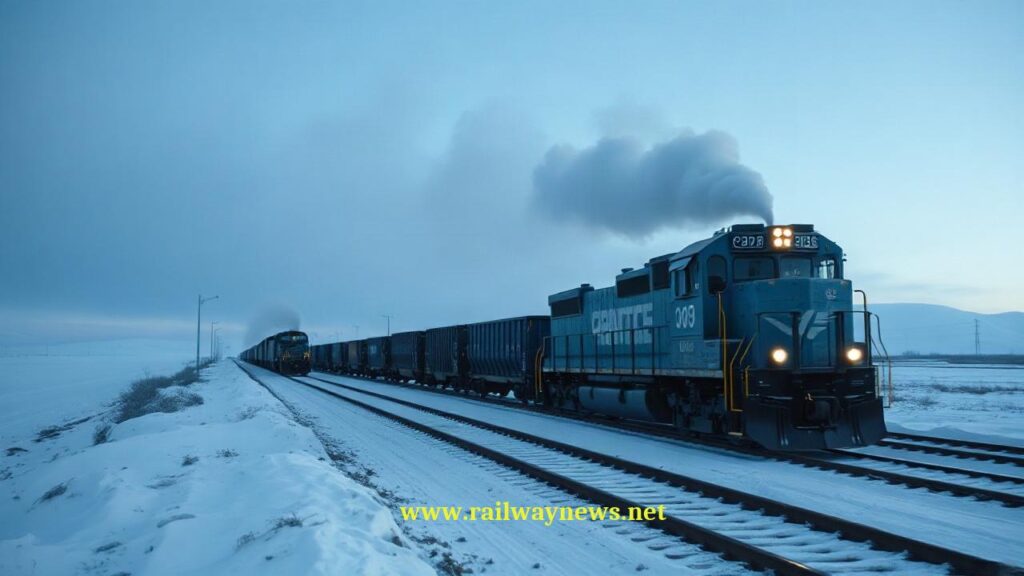
⚡ In Brief: Canadian National Railway deployed its 2026–2027 Winter Plan across its North American network, investing $64 million in high-flow brake technology and overhauling 21 compressor engines across 100 air-braking cars to counter extreme sub-zero brake pressure loss.
MONTREAL, CANADA – Canadian National Railway (CN) published its 2026–2027 Winter Plan in October 2026, committing $64 million in cumulative technology investments to mitigate sub-zero operating disruptions across its transcontinental network. The capital program targets equipment maintenance across a fleet of more than 100 distributed air-braking cars alongside cross-border operations between Chicago and Winnipeg under an active two-year regulatory waiver. CN is also petitioning Transport Canada for a permanent regulatory exemption to institutionalize high-flow brake operations throughout Canadian freight corridors.
What Are the Technical Specifications?
CN’s winter technology architecture combines high-flow brake pressure delivery with mechanical refurbishments across more than 100 specialized distributed air-braking cars. The maintenance schedule entails replacing 21 compressor engines while installing specialized valve and piping modifications engineered to withstand operating temperatures dropping below minus 25 degrees Celsius. In long-train configurations exceeding 10,000 feet, low ambient temperatures harden rubber gaskets and increase air-line leakage, compromising the brake pipe pressure required for standard stopping distances. CN’s high-flow brake system compensates for this pressure drop by establishing multiple supplementary air intake points along the length of the train. Total programmatic capital spending reached approximately $64 million since deployment began, though unit-level procurement and maintenance expenses were not disclosed by the carrier.
Key Technical Data
| Parameter | Value |
|---|---|
| Technology / System Name | High-Flow Brake System & Distributed Air-Braking Car Fleet |
| Total Value | Approximately $64 million (cumulative since launch) |
| Parties Involved | Canadian National Railway, Transport Canada, Federal Railroad Administration |
| Timeline / Completion | 2026–2027 winter season (two-year U.S. waiver active; Canadian exemption pending) |
| Country / Corridor | Canada and United States (Winnipeg, Manitoba to Chicago, Illinois corridor) |
Where Does This Technology Stand in the Market?
North American Class I railroads address cold-weather trainline air pressure drop through contrasting technological configurations rather than a uniform industry standard. Competitor Wabtec offers LOCOTROL Distributed Power, which supplies brake pressure and tractive force via remote mid-train locomotives vs CN’s standalone, unpowered distributed air-braking cars fitted with internal compressors (Source: Wabtec Corporation, 2024). Competitor New York Air Brake offers EP60 Electronically Controlled Pneumatic (ECP) braking, which commands trainline brake valves through digital cabling rather than pneumatic air reduction vs CN’s high-flow pneumatic augmentation operating under regulatory airflow waivers (Source: New York Air Brake, 2023). Across the broader Canadian rail sector, freight carriers expanded baseline investments into track assets, workforce readiness, and operating safety to mitigate extreme weather delays (Source: Railway Association of Canada, 2025). Comparable contract-level cost allocations for CN’s 2024 and 2025 winter operations were not publicly available at time of publication.
Editor’s Analysis
CN’s push for permanent regulatory relief reflects an asset-utilization strategy designed to preserve maximum train lengths during severe winter freezes without the cost of positioning additional locomotives. By formalizing bilateral standards with U.S. and Canadian regulators, the carrier prevents the capacity bottlenecks and mandatory train shortening that historically stall grain and container traffic across the Prairies. This deployment aligns with wider market adoption of condition-based rolling stock monitoring and specialized mechanical freight solutions to maintain throughput on critical bulk export arteries (Source: Straits Research, 2025).
FAQ
Q: What problem does CN’s high-flow brake system address?
A: The system prevents pressure depletion in trainline air brakes, which commonly occurs when extreme sub-zero temperatures harden rubber seals on trains exceeding 10,000 feet. By pumping supplemental air from multiple mid-train locations, trains can operate safely at full length without triggering cold-weather speed or tonnage restrictions.
Q: How much capital has CN committed to its distributed air-braking initiative?
A: CN has invested approximately $64 million in technology development and deployment since the program was launched. Specific overhaul expenditure figures for the 21 replacement compressors were not publicly disclosed.
Q: What regulatory approvals are governing CN’s winter train operations?
A: Trains running between Winnipeg, Manitoba, and Chicago, Illinois, operate under an active two-year Federal Railroad Administration waiver permitting higher airflow rates. In Canada, CN is petitioning Transport Canada for a permanent statutory exemption based on multi-year safety test data.

Railway infrastructure, rolling stock and transport technologies specialist focused on global rail industry developments, high-speed rail systems, signaling technologies and freight transportation. Covering railway investments, public transport modernization, rail operations and international mobility projects across Europe, Asia and North America.
RELATED POSTS

October 1, 2026 7:09 am
United States regulators confirmed a September 30 deadline for the...

October 8, 2026 1:15 pm
Alstom secured a €1bn contract to build 13 automated trains,...

October 4, 2026 5:14 pm
Alstom secured a CA$4.7 billion order from VIA Rail Canada...

October 1, 2026 12:13 am
Illinois approved $1.5 billion annually for the Northern Illinois Transit...

October 6, 2026 2:14 am
Union Pacific launched export rail shipments with Ferromex to deliver...

October 1, 2026 6:10 am
Amtrak approved a System Expansion Committee on July 30 to...