
DfT Approves Level Boarding at 4 Old Oak Common Platforms
UK Department for Transport approved level boarding for 4 Elizabeth line platforms at London Old Oak Common station to eliminate train ramps in March 2025.
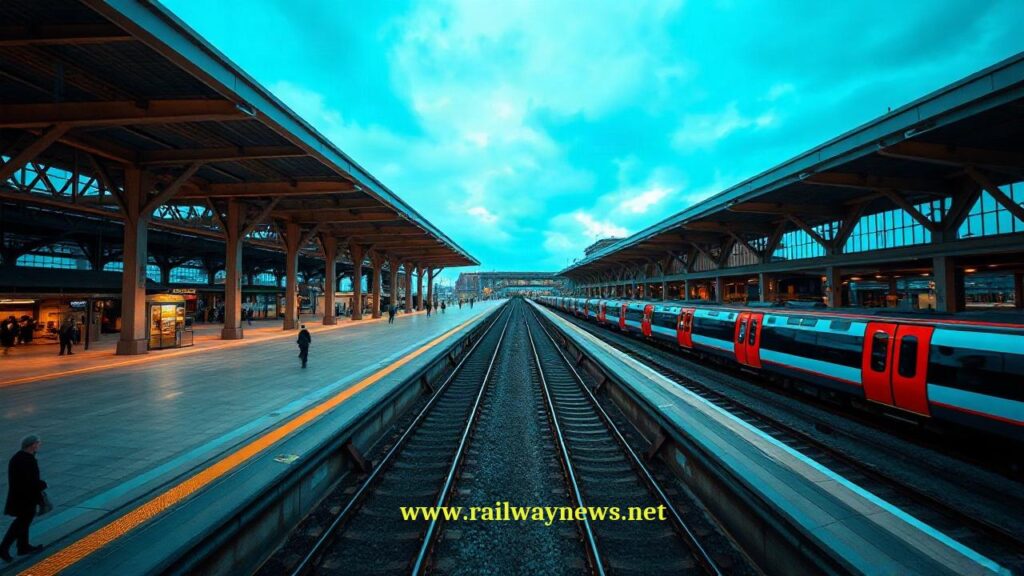
⚡ In Brief: The UK Department for Transport approved a platform height exemption at London’s Old Oak Common station, enabling level boarding across four Elizabeth line platforms ahead of the hub’s projected 2037 high-speed opening.
LONDON, United Kingdom – The Department for Transport granted a regulatory exemption in March 2025 allowing platforms 5 through 8 at Old Oak Common to match Elizabeth line train floors directly. Engineering teams will install concrete slab track and lower track beds across the 14-platform interchange to eliminate passenger boarding ramps. The station forms part of the UK passenger rail sector, which captured 45.6% of the national $108.15 billion rail market in 2025 (Source: Market Data Forecast, 2025).
What Is the Full Scope of This Project?
Old Oak Common station incorporates 14 platforms configured to manage passenger interchanges between High Speed 2, the Elizabeth line, the Great Western Main Line, and Heathrow Express services. Substructure teams have completed the six underground high-speed platforms, and surface construction has commenced on the eight ground-level conventional platforms (Source: Railway Pro, 2024). Under the revised track bed specifications, platforms 5 to 8 will feature lowered track alignments and solid concrete slab track rather than traditional ballast to maintain level boarding for Class 345 trains while preserving standard clearances for freight. Transport for London projects that Elizabeth line users will account for approximately 90% of all transfers at the facility. Arcadis economic assessments project that the broader station district will generate £10 billion in gross value over ten years, supporting 22,000 homes and 18,782 jobs. Capital expenditure figures specifically allocated to the platform lowering and slab track conversion were not disclosed.
Key Project Data
| Parameter | Value |
|---|---|
| Project / Contract Name | Old Oak Common Station (Platforms 5 to 8 Level Boarding Integration) |
| Total Value | Not disclosed (station envelope forms part of HS2 Phase 1) |
| Parties Involved | Department for Transport, HS2 Ltd, Network Rail, Transport for London |
| Timeline / Completion | High-speed services to Birmingham Curzon Street scheduled for 2037 |
| Country / Corridor | United Kingdom / Great Western Main Line & HS2 Southern Section |
How Does This Compare to Similar Projects?
Modifying platform interfaces on mixed-traffic rail corridors remains uncommon across the UK network due to strict vehicle gauge clearance rules. Most standard Network Rail platforms are fixed at 915 mm above rail level, whereas central Elizabeth line stations use bespoke 1,100 mm platforms with platform screen doors. Foundational work at Old Oak Common required extensive sub-surface excavation before advancing ground-level track adjustments (Source: Railway Pro, 2024). Internationally, hub operators managing mixed regional and express traffic face similar physical integration hurdles; for example, Alstom operates and maintains heavy-rail commuter transit under a C$1.3 billion Metrolinx agreement across Ontario, delivering 117,020 GO rail trips and 56,494 airport link trips in 2024–2025 on standard-height infrastructure (Source: Alstom, 2025). A direct cost comparison for Old Oak Common’s bespoke slab-track engineering adjustment was not publicly available at time of publication.
Editor’s Analysis
Exempting Old Oak Common from standard platform rules demonstrates a strategic shift toward passenger boarding speed over uniform vehicle gauge policy. With the UK rail market forecast to expand from $115.36 billion in 2026 to $185.31 billion by 2034 at a 6.65% CAGR, capital allocation is tilting toward accessibility retrofits on high-density commuter lines (Source: Market Data Forecast, 2025). Managing bespoke civil works without compromising freight access paths will determine whether this multi-agency delivery model is replicated on future network junctions.
FAQ
Q: Why was a regulatory platform exemption necessary at Old Oak Common?
A: British national standards require uniform 915 mm platform heights to accommodate varied freight and intercity rolling stock. The Department for Transport granted an exemption so platforms 5 to 8 align precisely with Elizabeth line train floors without requiring staff-operated boarding ramps.
Q: When will train services begin calling at Old Oak Common?
A: High-speed rail services linking Old Oak Common to Birmingham Curzon Street are scheduled to commence in 2037. The operational opening dates for conventional ground-level services have not been officially confirmed.
Q: Can freight trains still operate on the tracks serving platforms 5 to 8?
A: Yes, civil engineers lowered the track bed using concrete slab track to ensure standard rail freight clearances remain intact. Level boarding benefits will apply exclusively to Elizabeth line trains calling at their designated platforms.

Railway infrastructure, rolling stock and transport technologies specialist focused on global rail industry developments, high-speed rail systems, signaling technologies and freight transportation. Covering railway investments, public transport modernization, rail operations and international mobility projects across Europe, Asia and North America.
RELATED POSTS

October 1, 2026 7:09 am
United States regulators confirmed a September 30 deadline for the...

October 8, 2026 1:15 pm
Alstom secured a €1bn contract to build 13 automated trains,...

October 4, 2026 5:14 pm
Alstom secured a CA$4.7 billion order from VIA Rail Canada...

October 1, 2026 12:13 am
Illinois approved $1.5 billion annually for the Northern Illinois Transit...

October 6, 2026 2:14 am
Union Pacific launched export rail shipments with Ferromex to deliver...

October 1, 2026 6:10 am
Amtrak approved a System Expansion Committee on July 30 to...