
Budapest Siemens Combino 40-Tram Fleet Completes 20 Years
Budapest launched its 40 Siemens Combino Supra trams on July 1, 2006, operating 20 years on high-demand lines.
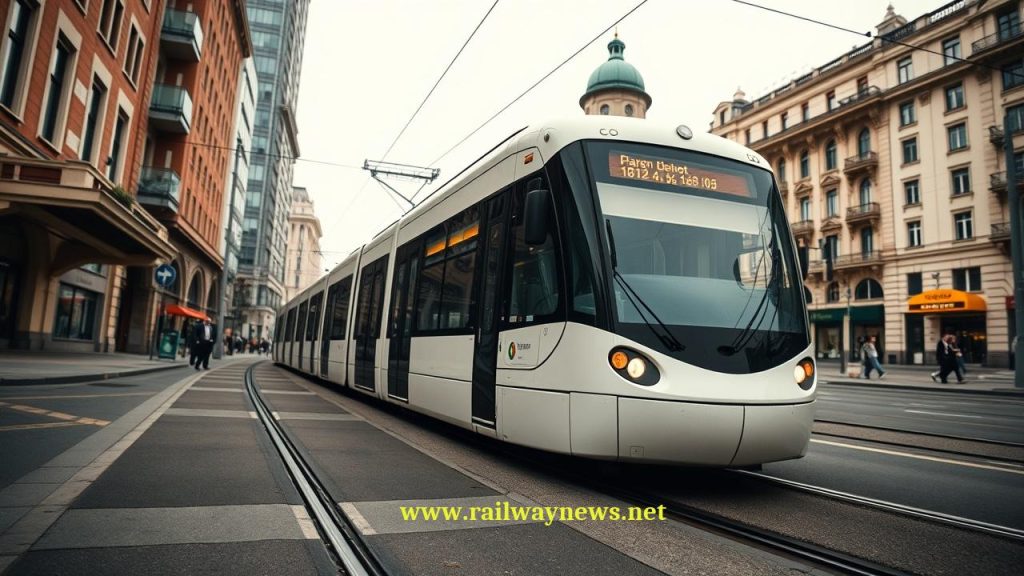
⚡ In Brief: Budapest’s fleet of 40 Siemens Combino trams is celebrating 20 years of service, having carried over two billion passengers on some of Europe’s busiest lines since its introduction on July 1, 2006.
BUDAPEST, HUNGARY – The public transport operator BKV is marking the 20th anniversary of its Siemens Combino tram fleet entering service on the city’s high-demand 4 and 6 tram lines. The first of 40 vehicles began operations on July 1, 2006, introducing the city’s first low-floor trams. The 54-meter-long vehicles currently carry over 300,000 passengers daily on a route that has been operating 24/7 since 2011.
What Are the Technical Specifications?
The Budapest fleet consists of 40 Siemens Combino Supra NF12B model trams, a specific variant designed with reinforced car bodies. Each six-section, bi-directional vehicle is 54 meters long, providing a fully accessible, single-space interior for passengers. Their introduction necessitated significant infrastructure work, including the rebuilding of platforms to accommodate their length and upgrades to the network’s power supply and depot facilities.
Key Technical Data
| Parameter | Value |
|---|---|
| Technology / System Name | Siemens Combino Supra (Budapest Fleet) |
| Total Value | Not disclosed |
| Parties Involved | Siemens Mobility (Manufacturer), BKV Zrt. (Operator) |
| Timeline / Completion | Delivery from March 2006 to May 2007 |
| Country / Corridor | Hungary / Budapest Lines 4 & 6 |
Where Does This Technology Stand in the Market?
At the time of their introduction, the 54-meter Combino trams were among the world’s longest, but they have since been surpassed by newer models. For instance, Budapest itself now operates the 56-meter CAF Urbos 3 trams, which currently hold the record for the world’s longest passenger tram. The Budapest Combino is a ‘Supra’ model, a reinforced design developed by Siemens following structural fatigue issues discovered in the original Combino platform in the early 2000s, which prompted a global recall and redesign effort affecting other cities.
In the current market, Siemens’ successor to the Combino platform is the Avenio, which has been adopted by cities such as Munich, The Hague, and Doha. Competing high-capacity articulated trams include Alstom’s Citadis family, with variants like the 44-meter Citadis 402 in Dublin, and Stadler’s TINA platform, ordered by cities including Basel and Darmstadt. (Source: Railway Technology, 2023).
Editor’s Analysis
The 20-year operational milestone of the Combino fleet highlights the long-term return on investment from acquiring high-capacity, standardized rolling stock for core urban corridors. The vehicle’s durability, following the manufacturer’s early redesign, proved essential for maintaining service on one of Europe’s most intensively used tram routes. This case validates the strategy of matching bespoke, high-capacity vehicles to high-demand lines, even when it requires significant initial infrastructure upgrades, a trend that continues in major urban light rail projects worldwide.
FAQ
Q: Why were the Combino trams so important for Budapest?
A: They were the first fully low-floor trams in the city, which dramatically improved accessibility for passengers with reduced mobility. At 54 meters, their high capacity was also a critical upgrade for the city’s busiest lines, which serve hundreds of thousands of people daily.
Q: What was the original cost of the Combino fleet?
A: The original contract value for the 40-tram fleet was not detailed in the anniversary information provided by the operator. Financial details of the 2006-2007 procurement are not readily available in public records.
Q: How do these trams compare to modern vehicles?
A: While the Combino Supra design is over two decades old, it remains a highly effective workhorse. Newer trams, such as Siemens’ own Avenio or the CAF Urbos 3, offer advancements in energy efficiency and digital passenger information systems, but the core high-capacity, low-floor concept pioneered by the Combino remains the industry standard.

Railway infrastructure, rolling stock and transport technologies specialist focused on global rail industry developments, high-speed rail systems, signaling technologies and freight transportation. Covering railway investments, public transport modernization, rail operations and international mobility projects across Europe, Asia and North America.
RELATED POSTS

October 8, 2026 1:15 pm
Alstom secured a €1bn contract to build 13 automated trains,...

October 8, 2026 12:18 pm
Siemens Mobility signed an agreement with VinSpeed to supply 350...

October 4, 2026 5:14 pm
Alstom secured a CA$4.7 billion order from VIA Rail Canada...

October 5, 2026 6:12 pm
AECOM and Jacobs secured a contract in September 2026 to...

October 1, 2026 12:13 am
Illinois approved $1.5 billion annually for the Northern Illinois Transit...

October 4, 2026 11:08 pm
Sound Transit confirmed the September 30 opening of Seattle Pinehurst...