
UIC Launches Global Hydrogen RISKS Safety Guidelines Málaga
UIC launched Hydrogen RISKS safety guidelines May 26, 2026, in Málaga, standardizing global risk mitigation for hydrogen storage and rail operations.
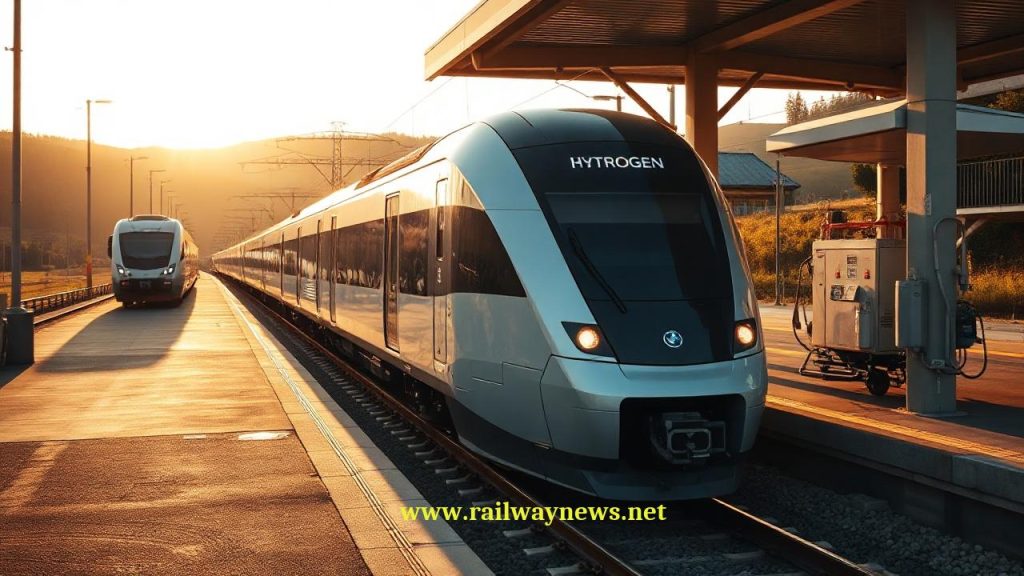
⚡ In Brief: The International Union of Railways (UIC) released its “Hydrogen RISKS” safety guidelines in Málaga, Spain, establishing a standardized framework to mitigate risks for hydrogen-powered rolling stock across global networks.
MÁLAGA, SPAIN – The International Union of Railways (UIC) officially concluded its Hydrogen RISKS project on May 26, 2026, presenting its final safety guidelines to 65 international industry delegates at the ADIF Railway Technology Center. The initiative establishes a unified risk assessment framework to transition regional rail networks from diesel traction to hydrogen fuel cell systems. This publication addresses critical technical challenges in high-pressure fuel storage, trackside refueling infrastructure, and localized emergency incident response.
What Are the Technical Specifications?
The “UIC Hydrogen Risks” guidelines establish a standardized methodology for assessing safety parameters across hydrogen storage, refueling, and operational environments. The framework targets non-electrified regional lines where traditional overhead line electrification is economically unviable. Key technical areas analyzed include high-pressure storage systems (typically 350-bar or 700-bar compressed gas), fuel cell thermal management, and hydrogen refueling station safety distances. While the guidelines establish safety protocols, the document does not disclose specific quantitative thresholds for gas dispersion tolerances or minimum safe clearance distances, leaving these to national safety authorities to define.
Key Technical Data
| Parameter | Value |
|---|---|
| Technology / System Name | UIC Hydrogen Risks Guidelines |
| Total Value | Not disclosed |
| Parties Involved | International Union of Railways (UIC), ADIF, RFI, SNCF, Ferrovie Nord Milano (FNM), European Union Agency for Railways (ERA), Korea Railroad Research Institute (KRRI), Korail |
| Timeline / Completion | Concluded on May 26, 2026 |
| Country / Corridor | Europe (with global applicability) |
Where Does This Technology Stand in the Market?
The deployment of hydrogen rolling stock is shifting from experimental prototypes to commercial market adoption, led by established European manufacturers. For example, the Alstom Coradia iLint, which entered commercial service in Germany in 2018, delivers an operating range of 1,000 km at a maximum speed of 140 km/h (Source: Alstom, 2018). In comparison, the Siemens Mireo Plus H offers a higher top speed of 160 km/h and a traction power of 1.7 MW, utilizing a 350-bar fueling system to achieve a similar 1,000 km range (Source: Siemens Mobility, 2022). Meanwhile, the Stadler FLIRT H2 set a continuous distance record of 2,803 km on a single fueling charge in 2024, demonstrating superior energy efficiency despite a lower operating speed of 127 km/h (Source: Guinness World Records, 2024).
This technical push aligns with broader green hydrogen market dynamics, where independent analysts project durable growth driven by industrial offtake in China and India (Source: Rystad Energy, 2026). Furthermore, Germany’s €2 billion subsidy scheme for green hydrogen-based e-SAF highlights the scale of public investment flowing into hydrogen-derived fuels (Source: German Federal Government, 2026). However, the European rail sector faces headwinds due to lack of clarity regarding EU green hydrogen mandates post-2030 and supply chain delays exacerbated by geopolitical conflicts.
Editor’s Analysis
The UIC’s standardized guidelines arrive at a critical juncture as European operators seek to bypass capital-intensive electrification on secondary routes, a strategy supported by Spain’s ongoing multi-billion high-speed rail network expansion (Source: Spanish Ministry of Transport, 2025). By harmonizing risk methodologies, the industry can reduce the fragmentation of national safety approvals that currently inflates procurement costs. Ultimately, the transition to hydrogen rail will stall unless infrastructure managers resolve the high capital expenditure required for dedicated green hydrogen production and trackside refueling networks.
FAQ
Q: What is the primary purpose of the UIC Hydrogen RISKS guidelines?
A: The guide provides a standardized international methodology for evaluating safety risks associated with hydrogen fuel cells on railways. It focuses specifically on storage, refueling operations, and incident response protocols for non-electrified regional lines.
Q: Who are the main railway organizations involved in this project?
A: The project was led by the UIC with key contributions from European infrastructure managers ADIF and RFI, French operator SNCF, and the European Union Agency for Railways (ERA). South Korean entities Korail and the Korea Railroad Research Institute (KRRI) also participated to align international standards.
Q: What are the estimated infrastructure costs for implementing these safety guidelines?
A: The specific compliance costs and infrastructure investment requirements were not disclosed in the official project guidelines. Implementation costs will vary heavily depending on national regulatory requirements and localized refueling station designs.

Railway infrastructure, rolling stock and transport technologies specialist focused on global rail industry developments, high-speed rail systems, signaling technologies and freight transportation. Covering railway investments, public transport modernization, rail operations and international mobility projects across Europe, Asia and North America.
RELATED POSTS

October 8, 2026 1:15 pm
Alstom secured a €1bn contract to build 13 automated trains,...

October 1, 2026 7:09 am
United States regulators confirmed a September 30 deadline for the...

October 8, 2026 12:18 pm
Siemens Mobility signed an agreement with VinSpeed to supply 350...

October 4, 2026 5:14 pm
Alstom secured a CA$4.7 billion order from VIA Rail Canada...

October 5, 2026 6:12 pm
AECOM and Jacobs secured a contract in September 2026 to...

October 1, 2026 12:13 am
Illinois approved $1.5 billion annually for the Northern Illinois Transit...