
Bombardier’s Metrolink Tram Expansion: UK Rail Insights
Greater Manchester’s Metrolink gets a £72 million boost with 27 new Bombardier trams! Learn how this expansion improves capacity and passenger experience.
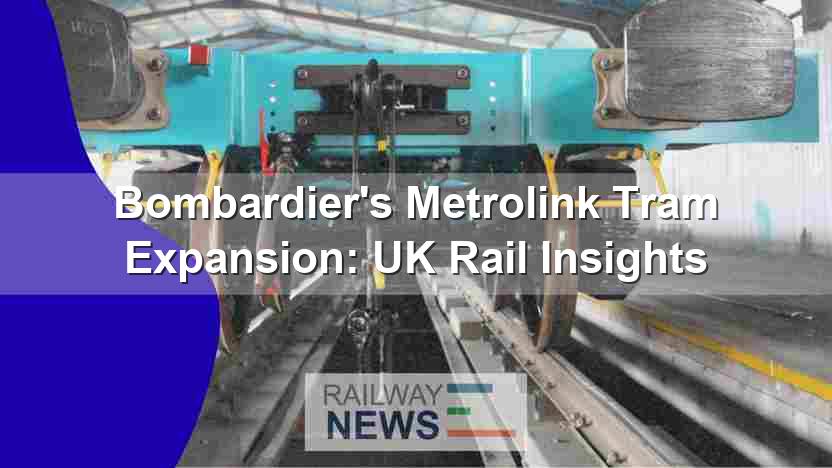
This article examines the significant contract awarded to Bombardier Transportation UK and Kiepe Electric for the delivery of 27 new trams to the Metrolink network in Greater Manchester, England. The £72 million deal represents a substantial investment in expanding the capacity of the Metrolink light rail system, addressing the growing transportation needs of a rapidly expanding urban area. The project’s implications extend beyond simply adding more rolling stock; it signifies a commitment to sustainable urban development, improved public transit options, and a reduction in traffic congestion. We will analyze the contract’s details, including the specifications of the new trams, the timeline for delivery, and the broader strategic context within Greater Manchester’s transportation planning. Finally, we will assess the long-term impacts of this investment on the region’s economy, environment, and overall quality of life.
Tram Specifications and Delivery
The contract calls for the delivery of 27 new trams, based on the existing M5000 model already in service on the Metrolink network. This ensures operational consistency and simplifies maintenance procedures. Each tram will have a capacity of approximately 206 passengers, with a top speed of 50 mph (80 km/h). The first tram was scheduled for delivery in February 2020, with subsequent monthly deliveries concluding by June 2021. This phased rollout allows for incremental integration into the existing system, minimizing disruption to service. The addition of these 27 trams is expected to increase Metrolink’s overall capacity by 15%, providing 4,800 additional passenger spaces. This increase will allow for the operation of more “double trams” (two trams coupled together) during peak hours on the busiest lines, significantly improving service frequency and reducing crowding.
Funding and Strategic Context
The £72 million contract is partially funded by the UK Government’s Transforming Cities Fund (TCF). This initiative aims to improve public transport in England’s major urban areas, promoting sustainable transportation options and boosting economic productivity. The Metrolink expansion aligns directly with the TCF’s goals, offering a concrete example of how targeted investment in public transport can contribute to broader regional development. The project also falls under the Congestion Deal, a detailed strategy employed by Greater Manchester to alleviate traffic congestion through enhanced public transport infrastructure and alternative transportation choices. By making public transport more efficient and appealing, the initiative aims to reduce car dependency and its associated negative consequences.
Economic and Environmental Impacts
The expansion of the Metrolink network carries significant economic and environmental benefits. The creation of additional capacity is expected to stimulate economic activity by facilitating improved access to jobs, services, and leisure opportunities. By encouraging more people to utilize public transport, the project aims to reduce car usage, leading to decreased traffic congestion, lower air pollution levels, and an improvement in overall air quality within Greater Manchester. This contributes directly to the region’s sustainability goals and enhances the quality of life for residents. The contract itself also supports employment within the rail manufacturing sector, boosting the UK economy.
Operational and Integration Challenges
While the expansion is positive, integrating the new trams into the existing Metrolink system requires careful planning and execution. Challenges include ensuring seamless integration with the existing signaling and control systems, coordinating the training of drivers and maintenance personnel on the new fleet, and effectively managing the influx of additional passengers. Addressing these operational aspects is crucial to realize the full potential of the increased capacity and prevent potential disruptions to service. Effective communication with passengers during the transition phase will also be important to ensure a smooth experience.
Conclusion
The award of the contract to Bombardier Transportation UK and Kiepe Electric for 27 new Metrolink trams represents a significant milestone in Greater Manchester’s ongoing efforts to improve its public transport infrastructure. The £72 million investment, supported by the Transforming Cities Fund and aligned with the Congestion Deal, signifies a commitment to sustainable urban development and improved public transit. The increased capacity, achieved through the addition of these trams with their enhanced passenger carrying capability, will address growing transportation demands in a rapidly expanding city region. The successful implementation of this project promises to deliver significant economic benefits, reduce environmental impact through decreased congestion and pollution, and ultimately improve the overall quality of life for residents of Greater Manchester. However, effective management of operational and integration challenges will be crucial to fully realize the potential of this substantial investment. The project serves as a model for other urban areas seeking to address similar transportation challenges through strategic investment in sustainable public transit systems. The success of this project will depend on the efficient integration of the new trams, proactive management of potential challenges, and effective communication with commuters. The long-term success will hinge on addressing the operational challenges seamlessly and delivering a high-quality and reliable service to the public. Additionally, continuous monitoring and evaluation will be crucial to ensure that the project’s positive impact aligns with the stated goals of increased capacity, reduced congestion, and enhanced quality of life for the citizens of Greater Manchester.

Railway infrastructure, rolling stock and transport technologies specialist focused on global rail industry developments, high-speed rail systems, signaling technologies and freight transportation. Covering railway investments, public transport modernization, rail operations and international mobility projects across Europe, Asia and North America.
RELATED POSTS

October 1, 2026 7:09 am
United States regulators confirmed a September 30 deadline for the...

October 1, 2026 12:13 am
Illinois approved $1.5 billion annually for the Northern Illinois Transit...

October 4, 2026 5:14 pm
Alstom secured a CA$4.7 billion order from VIA Rail Canada...
October 1, 2026 10:14 am
HS2 installed a 55-metre steel span in Birmingham, completing phase...
October 1, 2026 8:12 am
Knorr-Bremse expanded its UK rail adhesion trial on Chiltern Railways...

October 1, 2026 11:14 pm
CATS confirmed a six-mile streetcar route in Charlotte to add...