
Uzbekistan’s High-Speed Rail: Talgo’s T250 Expansion
Uzbekistan’s high-speed rail network expands with Talgo’s T250 trains, proving adaptable technology for diverse climates and boosting regional connectivity. Discover how!
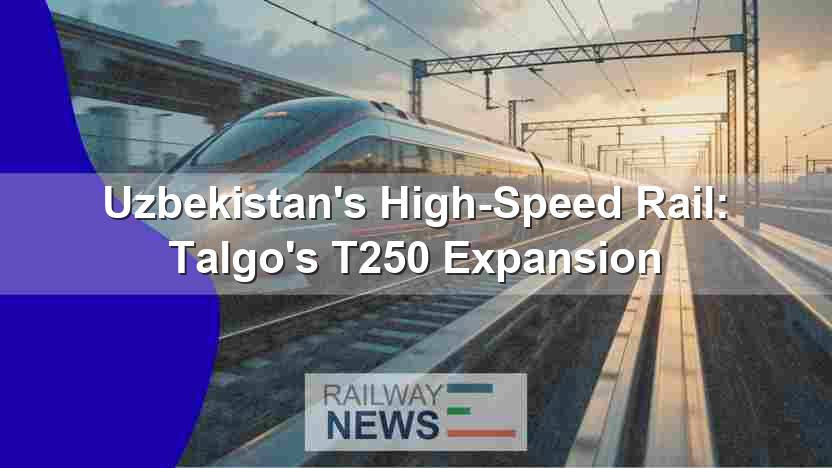
This article examines the recent contract awarded to Talgo, a Spanish rolling stock manufacturer, to supply two additional T250 high-speed trains to Uzbekistan’s national railway company (UTY). This procurement builds upon a long-standing relationship between Talgo and UTY, highlighting the ongoing development and expansion of Uzbekistan’s high-speed rail infrastructure. The agreement, valued at €57 million, underscores the strategic importance of reliable and efficient passenger transport in Uzbekistan’s economic development. We will explore the technical specifications of the T250 trains, their operational capabilities within Uzbekistan’s diverse geographical and climatic conditions, and the broader implications of this contract for the future of rail transport in the region. Further, we will analyze the significance of this deal within the context of Uzbekistan’s wider investments in its railway system and the role of international collaborations in supporting this infrastructure growth.
Technical Specifications and Operational Capabilities of the T250
The T250 high-speed train, already proven in Uzbekistan since 2011, is designed for operation on non-homogeneous railway networks at speeds up to 250 km/h. This capability is crucial for Uzbekistan, where track conditions and signaling systems might vary across different lines. A key feature is its adaptable traction equipment, allowing seamless operation across various gauges and signaling systems. Additionally, the incorporation of Talgo’s patented tilting technology allows for faster speeds on curves, enhancing the overall efficiency and travel time. This technology minimizes passenger discomfort associated with high-speed cornering by adjusting the train’s inclination to counter centrifugal forces.
Adaptability to Uzbekistan’s Diverse Operating Environment
The T250’s successful operation in Uzbekistan’s challenging climatic conditions is a testament to its robust design and engineering. The trains are capable of operating reliably in temperatures ranging from below -25°C in winter to over 40°C in summer. This extreme temperature range necessitates specialized materials and design considerations to ensure the continued functionality of all onboard systems, from air conditioning and heating to braking systems. This adaptability is a critical factor in the continued success of high-speed rail in the region, supporting year-round passenger service and economic activity.
Expansion of the Afrosiyob Network and National Rail Strategy
The delivery of these additional trains will further strengthen the Afrosiyob high-speed rail network, connecting Tashkent with key cities such as Samarkand, Qarshi, Bukhara, and Jiva. This expansion is directly aligned with Uzbekistan’s national rail strategy focused on modernizing its infrastructure and improving connectivity across the country. The increased capacity provided by the six 11-car T250 trains will not only improve passenger comfort and reduce travel times but also boost tourism and economic activity along these crucial routes. The recent Asian Development Bank (ADB) loan of $170 million for the acquisition of 24 electric locomotives further underscores this commitment to bolstering rail infrastructure.
International Collaboration and Future Prospects
The continued partnership between Talgo and UTY exemplifies the benefits of international collaboration in developing and implementing sophisticated rail systems. Talgo’s expertise in high-speed train technology, combined with UTY’s understanding of Uzbekistan’s specific needs and operational environment, has resulted in a successful and adaptable rail solution. This success is not only reflected in the operational efficiency and reliability of the existing T250 fleet but also in the ongoing expansion of the network, indicating a robust and promising future for high-speed rail in Uzbekistan. This model of international cooperation could serve as a blueprint for other countries seeking to modernize their rail infrastructure.
Conclusions
The contract awarded to Talgo for the supply of two additional T250 high-speed trains to Uzbekistan signifies a significant milestone in the country’s ongoing efforts to modernize its rail network. The T250 train, with its adaptable technology and proven ability to withstand Uzbekistan’s challenging climatic conditions, has become a cornerstone of the Afrosiyob high-speed rail system. The expansion of this network, including the addition of four more coaches to existing trains, will enhance connectivity, improve passenger comfort and travel times, and stimulate economic growth within the country. This project is not merely about the acquisition of trains; it embodies a strategic investment in national infrastructure development, enhancing Uzbekistan’s regional connectivity and contributing to its overall economic advancement. The success of this collaboration between Talgo and UTY serves as a compelling example of how international partnerships can effectively contribute to the modernization and expansion of vital rail infrastructure, improving the efficiency and sustainability of transportation systems worldwide. The strategic investment by Uzbekistan, coupled with the proven technology of Talgo’s T250, promises continued growth and modernization of the Uzbekistani railway system, setting a positive precedent for future railway infrastructure projects in the region and beyond. The $170 million loan from the Asian Development Bank further underscores the significant investment in Uzbekistan’s railway sector, demonstrating a long-term commitment to modernizing its transportation network. The successful integration of this new rolling stock will undoubtedly strengthen the country’s economic growth, improve regional connectivity, and enhance the overall passenger experience.

Transport and railway industry editor covering global rail infrastructure, sustainable mobility, urban transit systems and next-generation railway technologies with a focus on accessible and industry-focused reporting.
RELATED POSTS

October 8, 2026 1:15 pm
Alstom secured a €1bn contract to build 13 automated trains,...

October 1, 2026 7:09 am
United States regulators confirmed a September 30 deadline for the...

October 8, 2026 12:18 pm
Siemens Mobility signed an agreement with VinSpeed to supply 350...

October 4, 2026 5:14 pm
Alstom secured a CA$4.7 billion order from VIA Rail Canada...

October 5, 2026 6:12 pm
AECOM and Jacobs secured a contract in September 2026 to...

October 1, 2026 12:13 am
Illinois approved $1.5 billion annually for the Northern Illinois Transit...