
BNSF’s LA-Houston Intermodal: Rail Efficiency & Supply Chain Gains
BNSF launches 3-day expedited intermodal service between Los Angeles and Houston, boosting railway efficiency.
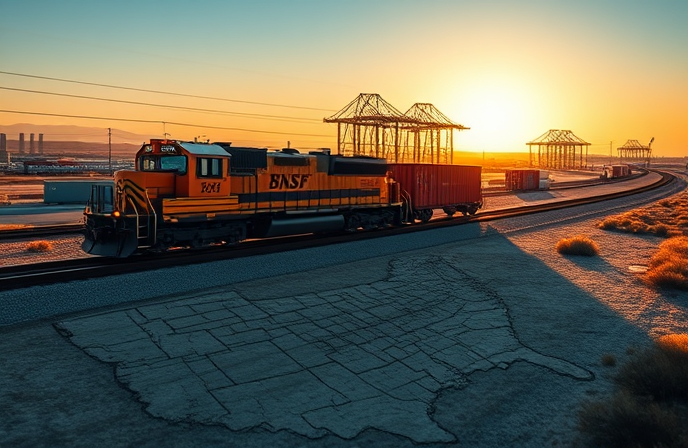
BNSF Launches Expedited Intermodal Service Linking Los Angeles and Houston
BNSF Railway Company (BNSF), a leading North American freight railroad, yesterday announced the launch of an expedited intermodal service connecting Los Angeles, California, to Houston, Texas. This new service, operational now, offers shippers a swift, reliable, and cost-effective alternative for transporting goods between two of the nation’s most significant economic hubs. The service aims to provide a faster transit time than conventional methods, ultimately improving supply chain efficiency. This article will delve into the specifics of the new intermodal service, highlighting its operational advantages, strategic implications, and the potential for further growth in the intermodal sector.
Speed and Efficiency: The Core of the New Service
The newly unveiled BNSF intermodal service promises a transit time of just three days. This accelerated schedule is a significant selling point for shippers seeking speed and predictability. The service leverages BNSF’s extensive Southern Transcon route, a crucial artery in the railway’s network. The Southern Transcon is known for its high-volume capacity and efficiency. This network allows BNSF to minimize transit times and provide reliable schedules. The service is anchored at BNSF’s Hobart intermodal facility in Los Angeles and concludes at the Pearland intermodal facility near Houston. The strategic choice of these facilities allows for efficient handling of containerized freight, minimizing delays and maximizing throughput. This emphasis on speed and reliability is crucial for attracting shippers who are accustomed to the speed of over-the-road trucking but are increasingly seeking the economic and environmental benefits of rail transport.
Supply Chain Optimization: Targeting Key Shipping Corridors
The expedited intermodal service is designed to optimize supply chains, particularly for businesses with distribution networks in the Southern United States. The service directly targets those that are currently draying freight from Dallas-Fort Worth to Houston. By switching to the new service, businesses can benefit from reduced congestion on roadways, lower fuel costs, and potentially, a reduction in carbon emissions associated with long-haul trucking. These factors are increasingly important to shippers focused on cost efficiency and sustainability. BNSF anticipates this direct, cost-effective solution will be particularly attractive to those moving consumer goods and other time-sensitive commodities. The focus is on converting over-the-road freight to rail which is more sustainable and efficient.
Strategic Advantages: Leveraging Existing Infrastructure and Expanding Reach
The introduction of this new service is a strategic move for BNSF, building upon its existing infrastructure and demonstrating its commitment to the intermodal market. By utilizing the Southern Transcon route, BNSF capitalizes on an already-robust network with established operational efficiencies. This allows for a relatively quick rollout of the new service without significant capital investment in new track infrastructure. The decision to focus on the Los Angeles-Houston corridor highlights BNSF’s understanding of the growing demand for freight movement in the Sun Belt region. This approach positions BNSF to capture a greater share of the intermodal market as the economies of both cities, and their surrounding areas continue to grow.
Conclusion
BNSF’s launch of an expedited intermodal service between Los Angeles and Houston represents a significant advancement in the railway’s commitment to efficiency and customer satisfaction. The three-day transit time, coupled with the strategic utilization of existing infrastructure and its focus on supply chain optimization, provides a compelling value proposition for shippers seeking a reliable and cost-effective alternative to over-the-road transport. This move signifies a broader trend within the industry of railroads adapting to the evolving demands of the market. The new service has the potential to serve as a model for other intermodal services and stimulate further innovation within the sector. The emphasis on speed, reliability, and environmental sustainability is consistent with the industry’s move towards more efficient and sustainable freight transport solutions. In the future, we can expect further expansions to these types of services.
Company Summary
BNSF Railway Company (BNSF), a subsidiary of Berkshire Hathaway Inc., is one of North America’s largest freight railroad networks. It operates across approximately 32,500 route miles in 28 states and three Canadian provinces. BNSF transports a wide variety of commodities, including agricultural products, consumer goods, and industrial products. It is a vital player in the North American economy. The railway’s focus on technological advancements and service enhancements, as seen with the new intermodal service, underscores its commitment to maintaining a leading position in the freight transport sector.

Railway infrastructure, rolling stock and transport technologies specialist focused on global rail industry developments, high-speed rail systems, signaling technologies and freight transportation. Covering railway investments, public transport modernization, rail operations and international mobility projects across Europe, Asia and North America.
RELATED POSTS

October 1, 2026 7:09 am
United States regulators confirmed a September 30 deadline for the...

October 8, 2026 1:15 pm
Alstom secured a €1bn contract to build 13 automated trains,...

October 4, 2026 5:14 pm
Alstom secured a CA$4.7 billion order from VIA Rail Canada...

October 8, 2026 12:18 pm
Siemens Mobility signed an agreement with VinSpeed to supply 350...

October 1, 2026 12:13 am
Illinois approved $1.5 billion annually for the Northern Illinois Transit...

October 6, 2026 2:14 am
Union Pacific launched export rail shipments with Ferromex to deliver...