
LA Metro Connects D Line Union Station Beverly Hills 21 Minutes
L.A. Metro opened its D Line extension, adding three stations and connecting Union Station to Beverly Hills for 21-minute transit.
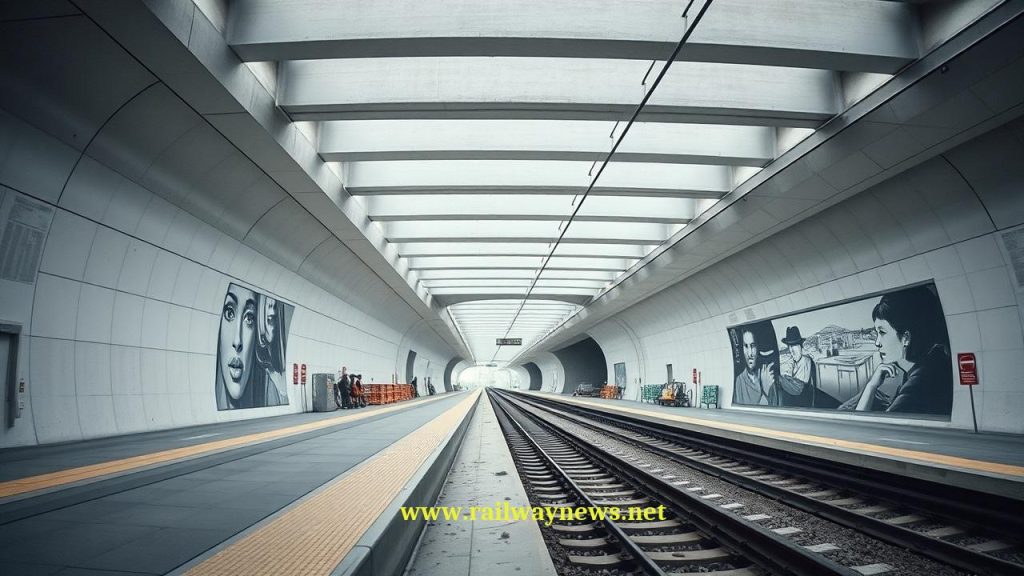
⚡ In Brief: The Los Angeles County Metropolitan Transportation Authority has opened the first section of its D Line subway extension, adding three new underground stations and enabling a 21-minute transit time from downtown Union Station to Beverly Hills.
LOS ANGELES, UNITED STATES – L.A. Metro opened the first phase of its D Line subway extension in May 2026, marking the first major rapid transit expansion into Beverly Hills in decades. The newly commissioned segment introduces three underground stations at Wilshire/La Brea, Wilshire/Fairfax, and Wilshire/La Cienega to the network. This expansion reduces travel times between downtown Los Angeles and Beverly Hills to approximately 21 minutes.
What Is the Full Scope of This Project?
The D Line subway extension is a three-phase heavy rail project designed to connect downtown Los Angeles with the Westside. Upon full completion of all three sections, the line will extend nine miles further west, terminating at Westwood/VA Hospital and serving the athlete village for the 2028 Olympic and Paralympic Games. The newly opened Section 1 traverses Koreatown, Hancock Park, Windsor Square, the Fairfax District, and Cathay Circle. Sections 2 and 3, which are currently under construction, are scheduled to open next year to establish a direct transit artery ahead of the games. While the initial release highlights the structural integration of large-scale artworks commissioned via the Metro Art program, the specific capital expenditure allocated exclusively to Section 1’s completion was not disclosed in the agency’s opening announcement.
Key Project Data
| Parameter | Value |
|---|---|
| Project / Contract Name | D Line Subway Extension (Section 1) |
| Total Value | Not disclosed in opening announcement |
| Parties Involved | Los Angeles County Metropolitan Transportation Authority (L.A. Metro) |
| Timeline / Completion | Section 1 opened May 2026; Sections 2 and 3 scheduled for 2027 |
| Country / Corridor | United States / Wilshire Boulevard Corridor (Los Angeles) |
How Does This Compare to Similar Projects?
The D Line extension represents one of the most significant federal-local transit partnerships in the western United States, aligning with broader national infrastructure spending trends. Under the proposed 2026 surface transportation legislation, the U.S. House committee has agreed to allocate $580 billion toward surface transportation, which heavily prioritizes public transit and Amtrak (Source: House Committee on Transportation and Infrastructure, 2026). However, local transit funding in California faces a shifting regulatory environment; the same federal legislation implements a two-year ban on federal grants specifically for the California High-Speed Rail project (Source: House Committee on Transportation and Infrastructure, 2026). Regionally, other major urban rail projects are facing distinct financial and structural pathways; for example, the City of Laguna Beach recently approved a much smaller $19.1 million local transit contract to sustain its municipal transit programs (Source: City of Laguna Beach, 2026). Nationally, urban rail operators are prioritizing modernization alongside expansion; Washington Metropolitan Area Transit Authority (WMATA) is currently seeking hundreds of millions in federal grants to automate its Red Line, showcasing a shift toward technological upgrades rather than purely physical track extensions (Source: WMATA, 2026).
Editor’s Analysis
The timely delivery of Section 1 positions L.A. Metro to meet its strict “Twenty-Eight by ’28” initiative, demonstrating to international stakeholders that the region can scale up its rapid transit capacity before the Olympic Games. However, as federal oversight tightens and legislative shifts restrict alternative high-profile projects like high-speed rail, regional operators must increasingly justify expansion costs through high day-one ridership and commercial integration. This mirrors international trends where rising construction costs require transit agencies to prioritize service consistency and operational efficiency to secure long-term financial recovery (Source: International Union of Railways, 2026).
FAQ
Q: What is the transit time between Union Station and Beverly Hills on the new D Line extension?
A: Passengers can travel between Union Station in downtown Los Angeles and Beverly Hills in approximately 21 minutes. This newly opened section bypasses highly congested street-level traffic along the Wilshire Boulevard corridor.
Q: When will the entire D Line subway extension be fully operational?
A: The remaining second and third sections of the extension are scheduled to open next year, ahead of the 2028 Olympic Games. Once completed, the line will extend all the way to Westwood and the Olympic athlete village.
Q: How much did it cost to construct the newly opened first section of the D Line?
A: The specific final cost for Section 1 was not disclosed in L.A. Metro’s opening announcement. However, the project relies heavily on federal funding agreements secured over the last decade.

Railway infrastructure, rolling stock and transport technologies specialist focused on global rail industry developments, high-speed rail systems, signaling technologies and freight transportation. Covering railway investments, public transport modernization, rail operations and international mobility projects across Europe, Asia and North America.
RELATED POSTS

October 8, 2026 1:15 pm
Alstom secured a €1bn contract to build 13 automated trains,...

October 1, 2026 7:09 am
United States regulators confirmed a September 30 deadline for the...

October 8, 2026 12:18 pm
Siemens Mobility signed an agreement with VinSpeed to supply 350...

October 5, 2026 6:12 pm
AECOM and Jacobs secured a contract in September 2026 to...

October 1, 2026 12:13 am
Illinois approved $1.5 billion annually for the Northern Illinois Transit...

October 4, 2026 11:08 pm
Sound Transit confirmed the September 30 opening of Seattle Pinehurst...