
USDOT Launches 2026 National Freight Strategic Plan
The United States launched its 2026 National Freight Strategic Plan, a five-year policy framework to modernize the 7 million-mile multimodal network.
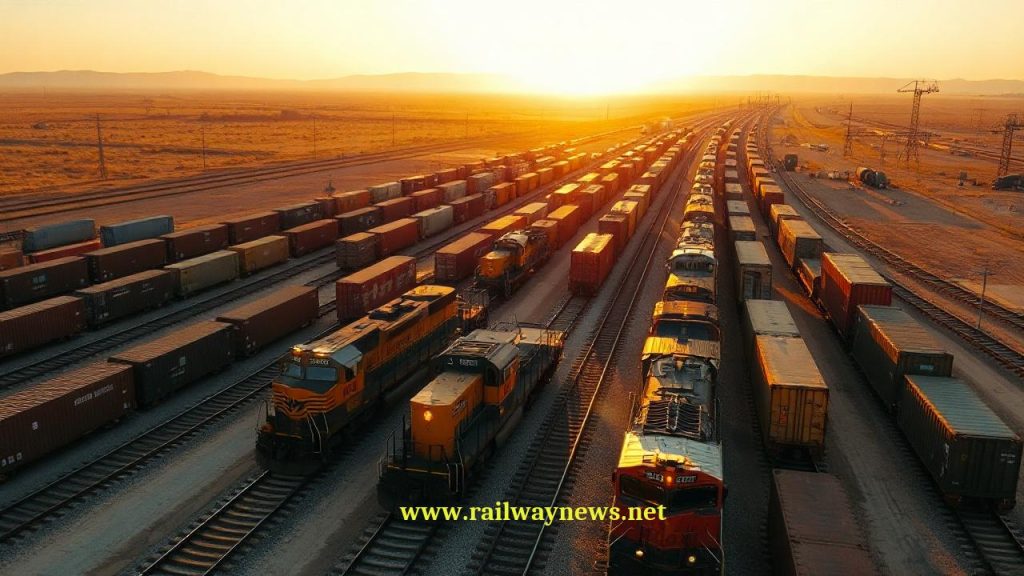
⚡ In Brief: The U.S. Department of Transportation has launched its 2026 National Freight Strategic Plan to modernize the country’s 7 million-mile multimodal network, addressing supply chain bottlenecks amidst a projected 1.25% annual growth in rail freight volumes.
WASHINGTON, D.C. – The U.S. Department of Transportation released the 2026 National Freight Strategic Plan on May 18, 2026, establishing a five-year policy framework to modernize the nation’s 7 million-mile multimodal freight network. The strategy targets critical supply chain bottlenecks across six core focus areas, including safety, efficiency, and workforce development. The plan’s rollout coincides with a projected 1.25% annual expansion in rail freight volumes through 2026 as industrial activity recovers.
What Does This Regulation Cover?
The 2026 National Freight Strategic Plan establishes a unified federal roadmap to guide funding allocation, cross-sector coordination, and state-level planning across the U.S. multimodal network. Building upon the inaugural 2020 plan, the updated framework addresses structural shifts in the energy sector, specifically the transition of the United States into a net energy exporter driven by liquefied natural gas (LNG) expansions in regions like Louisiana. The plan directs USDOT’s competitive grant programs to prioritize projects that resolve bottlenecks, enhance cyber and physical security, and integrate advanced freight technologies. However, specific capital allocation targets for the rail sector under this five-year framework were not disclosed.
Key Regulatory Data
| Parameter | Value |
|---|---|
| Regulation / Policy Name | 2026 National Freight Strategic Plan (NFSP) |
| Total Value | Not disclosed |
| Parties Involved | U.S. Department of Transportation (USDOT), State Departments of Transportation, multimodal freight operators |
| Timeline / Completion | Five-year implementation framework (2026–2031) |
| Country / Corridor | United States (multimodal network) |
How Does This Compare to Global Standards?
The U.S. freight network is experiencing severe capacity pressures that contrast with steady long-term volume projections. While the Intermodal Association of North America (IANA) projects a modest rail volume growth of 1.25% annually through 2026, the domestic trucking market is facing extreme short-term volatility, with spot rates reaching $3.55 per mile in May 2026 and projected to hit $5.00 per mile due to pre-holiday capacity constraints (Source: FreightWaves, 2026). This rate surge highlights the vulnerability of U.S. supply chains compared to European corridors, where long-term infrastructure funding provides greater rate stability. Additionally, the rapid rise of the U.S. as a net energy exporter—fueled by the shale revolution and Gulf Coast LNG exports—demands rapid infrastructure adaptation that outpaces traditional five-year regulatory planning cycles (Source: Wall Street Journal, 2026).
Editor’s Analysis
The 2026 NFSP arrives at a critical juncture where severe highway capacity constraints and soaring truck rates could drive a significant modal shift toward rail. For rail operators, capturing this potential windfall requires immediate capital investment in intermodal terminal capacity to overcome the fragile industrial recovery noted by economists (Source: IANA, 2026). Ultimately, the plan’s success will depend on whether federal competitive funding can be deployed quickly enough to relieve the immediate bottlenecks choking major energy and import corridors.
FAQ
Q: What is the primary objective of the 2026 National Freight Strategic Plan?
A: The plan aims to modernize the 7 million-mile U.S. multimodal freight network over the next five years. It focuses on six key areas: safety, efficiency, security, resiliency, innovation, and workforce development.
Q: How does the U.S. energy transition affect the 2026 freight plan?
A: The U.S. transition into a net energy exporter, driven by booming Gulf Coast LNG exports, requires the plan to address new infrastructure bottlenecks. Increased energy transport is shifting domestic freight flows and depleting local inventories, demanding targeted infrastructure investments.
Q: How much federal funding is allocated specifically to rail projects under this plan?
A: The exact funding allocation for rail-specific projects was not disclosed in the USDOT’s initial plan announcement. Instead, the framework will be used to guide future competitive funding selection priorities.

Railway infrastructure, rolling stock and transport technologies specialist focused on global rail industry developments, high-speed rail systems, signaling technologies and freight transportation. Covering railway investments, public transport modernization, rail operations and international mobility projects across Europe, Asia and North America.
RELATED POSTS

October 1, 2026 7:09 am
United States regulators confirmed a September 30 deadline for the...

October 4, 2026 5:14 pm
Alstom secured a CA$4.7 billion order from VIA Rail Canada...

October 6, 2026 2:14 am
Union Pacific launched export rail shipments with Ferromex to deliver...

October 1, 2026 12:13 am
Illinois approved $1.5 billion annually for the Northern Illinois Transit...

October 1, 2026 6:10 am
Amtrak approved a System Expansion Committee on July 30 to...
October 1, 2026 3:12 am
Greenbrier confirmed Brian Comstock as new president and CEO effective...